
Lieferung heute & morgen

Qualitätsgarantie

Willkommens-Angebote freischalten: KOSTENLOSE Lieferung | Bis zu 80 % RABATT | Kostenlose 30-Tage-JoyPlus-Testphase
App herunterladen
The choice of wine glasses ranges from simple everyday glasses to hand-crafted crystal glasses for special occasions. However, the price alone says little about whether a glass suits your household, your type of wine or the level of care you are prepared to provide. The key factors are shape, capacity, material, number of glasses and the specific cleaning instructions.
A large red wine glass with a capacity of 725, 860 or even 950 ml provides room for swirling and appreciating the aromas. That does not mean it is suitable for every wine or every table. A very large bowl requires more storage space, is often more delicate and is not usually filled to capacity in everyday use.
For many households, wine glasses with a capacity of 280 to 410 ml are more versatile. A larger bowl can be useful for full-bodied red wines such as Cabernet Sauvignon or Merlot. It is important to remember that the stated capacity usually refers to a completely full glass, not the usual serving size.
Many dishwasher-safe wine glasses can be put in the dishwasher but still require gentle handling. High temperatures, harsh detergents and contact with other dishes can cause clouding, scratches or stress fractures over time.
Pay attention to:
For delicate hand-crafted wine glasses, hand washing may be the more practical choice, even when the glasses are advertised as dishwasher-safe.
A thin rim can feel pleasant to drink from, but it is not automatically more practical for everyday use. The connection between the bowl, stem and base is particularly vulnerable when lifting, polishing and putting the glass away. On models with metal decoration or a coated base, scouring agents and the dishwasher can damage the finish.
Before buying, you should therefore check whether the glass is intended for daily use, special occasions or professional catering.
Red wine glasses often have a larger bowl than white wine glasses. For Cabernet and Merlot, a generous, rounded shape is often chosen to provide room for swirling. Large bowls are also common for Pinot Noir and Burgundy, as the wine’s aromas develop across a larger surface area in the glass.
White wine glasses are usually more compact. This helps you serve smaller portions appropriately and prevents the wine from being exposed to room temperature for longer than necessary. For rosé, medium-sized glasses with a versatile shape may be sufficient.
Champagne glasses are available as narrow flutes or as glasses with a somewhat wider bowl. A wider bowl provides more space for aromas, while a so-called mousse point in certain models is intended to support the formation of bubbles. For sparkling wine and Prosecco, follow the relevant manufacturer’s instructions.
Traditional glasses are often made from soda-lime glass. It is transparent, practical and suitable for many everyday situations. Crystal glasses can offer exceptional clarity and a thin, lightweight construction. However, the name alone is not a sufficient quality indicator: also check the manufacturing method, weight, care instructions and warranty terms.
Hand-crafted wine glasses may show slight differences between individual pieces. This is part of the stated manufacturing method and should be taken into account when buying a gift set or creating a coordinated table setting.
For balconies, gardens, picnics or households with children, shatter-resistant wine glasses made from plastic may be worth considering. The Wine Glass 160ml Pp 4pcs Transparent is made from polypropylene and, according to the product description, is shatter-resistant and dishwasher-safe. Plastic may, however, have a different weight and feel from glass.
A set of two glasses is suitable for couples or as a gift. Wine glasses in sets of four or six are more practical for families, dinner parties and regular entertaining. Catering businesses should also consider availability of replacement items, stackability, glass weight and durability during daily dishwasher use.
Measure the available storage space before buying. A glass measuring 27 to 28 cm in height will not fit in every kitchen cupboard. Glasses should not be wedged inside one another, and the stem should not be twisted when polishing. Damaged or chipped glasses should be taken out of use.
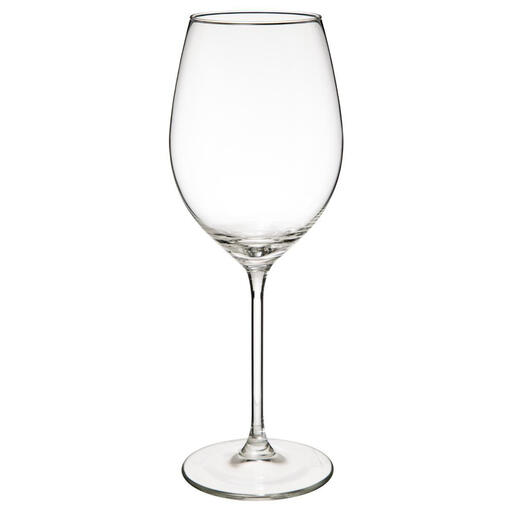
Why this product suits the profile: The transparent 410 ml glass is suitable for red, white and rosé wines and, according to the product details, can be cleaned in the dishwasher.
Its moderate size avoids an unnecessarily large specialist glass for beginners. The care instructions nevertheless advise using gentle cycles and warn of possible clouding with intensive dishwasher cleaning.
410 ml capacity, soda-lime glass and stated dishwasher suitability.
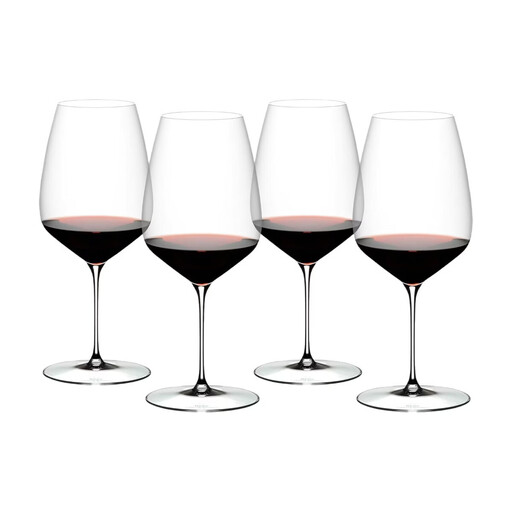
Why this product suits the profile: According to the product description, this machine-made crystal glass is designed for full-bodied red wines such as Cabernet Sauvignon and Merlot, and is supplied as a set of 4.
The recommended grape varieties are indicated on the base. This makes the glass’s intended use clearer than with a large bowl marketed purely for decorative appeal.
860 ml capacity, set of 4, crystal glass and, according to the supplier, dishwasher suitability.
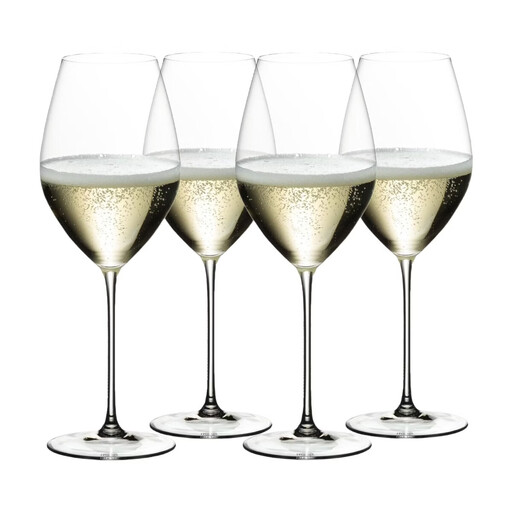
Why this product suits the profile: This egg-shaped Champagne glass is designed for Champagne, sparkling wine, Prosecco and other sparkling wines. Its pack size makes it suitable for entertaining or regular use.
If you focus solely on finding a narrow flute, you may overlook the desired surface area for aroma development. Here, the wider bowl shape is explicitly part of the product concept.
445 ml capacity, crystal glass, set of 4 and, according to the supplier, dishwasher suitability.
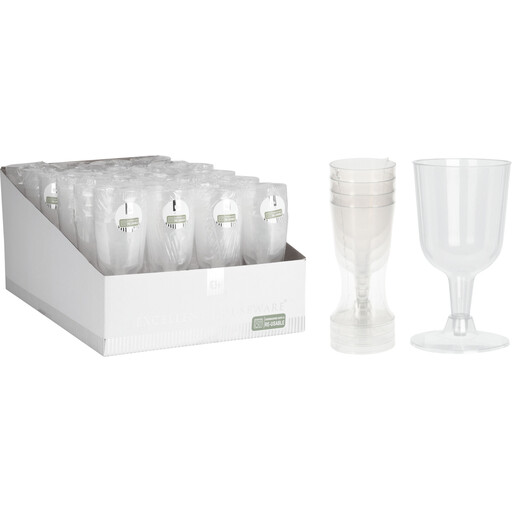
Why this product suits the profile: This polypropylene set of 4 is lightweight, transparent and, according to the product description, designed for families, outdoor use and everyday use.
The material specification prevents confusion with genuine crystal glass. If you want to reduce the risk of breakage outdoors, this is an explicitly shatter-resistant plastic option.
160 ml capacity, four pieces, low weight and, according to the supplier, dishwasher suitability.
We have put together a complete, regularly updated list of products that fully meet these strict selection criteria and the safety regulations applicable in the EU.
For materials that come into contact with food, the manufacturer’s information is decisive. The products mentioned use different materials depending on the model, including soda-lime glass, crystal glass or polypropylene. Their suitability for dishwashers, microwaves or particular temperatures must therefore not be assumed across the board.
Large, rounded red wine glasses are often recommended for Cabernet Sauvignon and Merlot. Pinot Noir is frequently served in generous Burgundy or Pinot Noir glasses. For everyday use, however, a medium-sized universal glass is sufficient if you only occasionally drink different types of wine.
Two to four glasses are enough for two people. If you regularly entertain guests, a set of 4 or 6 gives you greater flexibility. Catering businesses also need spare glasses, as breakages, replacements and different serving styles should be taken into account.
Some crystal glasses are explicitly dishwasher-safe, including several RIEDEL models in this selection. Even so, you should use a gentle cycle, leave sufficient space between items and choose mild detergents. With hand-crafted wine glasses, hand washing can help preserve their clarity, stems and decoration.