
Lieferung heute & morgen

Qualitätsgarantie

Willkommens-Angebote freischalten: KOSTENLOSE Lieferung | Bis zu 80 % RABATT | Kostenlose 30-Tage-JoyPlus-Testphase
App herunterladen
Choosing the right wine glasses isn't just about design. Capacity, glass shape, material and care instructions all determine whether a glass remains practical for everyday use or ends up unused in the cupboard after a short time. This applies equally to private households, restaurants, bars and event organisers.
As a Joybuy Product Recommendation Officer, I filter market data according to clear, understandable criteria. Three common buying mistakes are at the heart of this:
The shape of the glass mainly influences how aromas collect and how the wine hits the palate when you drink. However, it doesn't replace a proper quality assessment of the wine itself.
When pouring, the bowl should not be filled to the brim. With wine, only about a third of the glass's volume is usually filled, so the wine can be swirled and the aromas don't sit right at the rim.
Capacity is usually given to the brim and does not correspond to the recommended fill level. A 650 ml Bordeaux glass, for example, offers plenty of space but also needs a larger storage spot. Before buying, you should therefore check height, diameter and cupboard clearance.
For everyday use, smaller wine glasses are often easier to handle. Large models can be useful for formal dinners or with certain red wines, but they are harder to store and clean.
Common materials are soda-lime glass, crystal glass and lead crystal. For the products listed here, the materials are specified in the product details:
The manufacturing method is therefore more important than any single marketing word. For a uniform wine glass set, machine production can offer consistent shape; with handcrafted models, the individual character takes centre stage.
Dishwasher-safe wine glasses should be loaded with enough space between them and other items. The stem must not be under tension. A gentle cycle or a glass-specific wash programme reduces the risk of damage, but doesn't replace careful handling.
Not every glass is suitable for the dishwasher. The Secret de Gourmet Champagne Glass Set is explicitly listed as not dishwasher-safe according to product details. Different rules apply to plastic or polystyrene glasses: the 12-piece set from 5Five is stated as not suitable for the dishwasher and not intended for hot liquids.
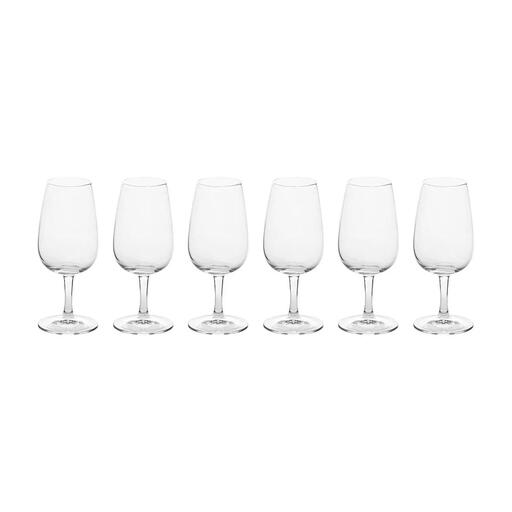
Why this product suits the profile: This transparent soda-lime glass with a 215 ml capacity is ideal for smaller households and straightforward table settings.
The moderate size avoids unnecessary space taken up by oversized bowls. According to product details, the glass is dishwasher-safe.
215 ml capacity, transparent soda-lime glass and suitability for both red and white wines.

Why this product suits the profile: This handcrafted crystal glass is aimed at buyers who prefer a large Bordeaux-style shape and individual details such as the black foot.
The product details clearly state the 950 ml capacity and the handcrafted components. This allows you to plan for the significant storage space needed before purchase.
Handcrafted stem, black crystal foot, 950 ml capacity and, according to product details, dishwasher-safe.
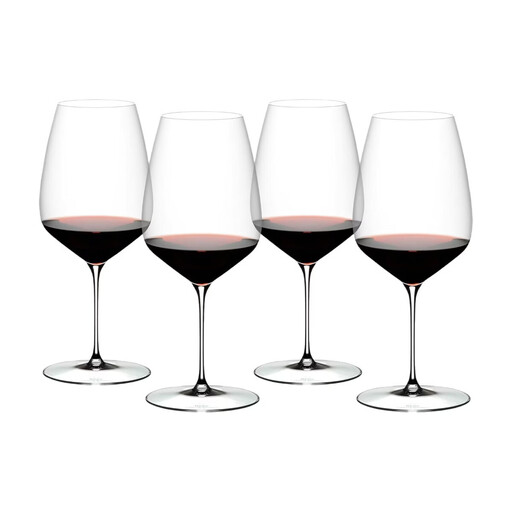
Why this product suits the profile: This 4-piece set with 860 ml per glass is designed for hosts, wine-tasting groups and households with a regular need for red wine glasses.
Set size and individual capacity are clearly stated. The dishwasher suitability reduces manual care effort with frequent use.
Four machine-made crystal glasses, 860 ml capacity and, according to product details, dishwasher-safe.
We've put together a complete, regularly updated list of products that fully meet these strict selection criteria and the safety regulations in force in the EU.
No. Crystal glasses can be thin-walled and lightweight, but that doesn't make them inherently break-resistant. What matters are the material specifications, glass thickness, stem construction and how you handle them during cleaning and storage.
For full-bodied red wines, larger red wine glasses or Bordeaux glasses are often used. White wines are usually served in more compact bowls. A versatile model, such as a 21 to 40 cl glass, can be a sensible choice for households that don't want to buy a separate wine glass set for every grape variety.
The glasses should be loaded with space between them and not stacked inside one another. Use a suitable programme, avoid strong temperature changes and carefully remove the glasses once they have cooled down. Damaged or chipped glasses should not be used any further.