
Lieferung heute & morgen

Qualitätsgarantie

Willkommens-Angebote freischalten: KOSTENLOSE Lieferung | Bis zu 80 % RABATT | Kostenlose 30-Tage-JoyPlus-Testphase
App herunterladen
A wine fridge can store wine bottles neatly and bring them to a suitable drinking temperature. However, appliances differ considerably in capacity, cooling technology and energy consumption. If you focus only on the design or the number of bottles, it is easy to overlook important details.
Typical buying and marketing pitfalls include:
A 6-bottle wine fridge is suitable for small households, occasional guests or a limited selection. For regular entertaining, a 15-bottle wine fridge may be more practical. However, when planning, you should not consider only the nominal number of bottles.
Important factors include:
If you would like to store beer, water or cans as well as wine, consider a drinks cooler or a large drinks fridge with a flexible interior layout instead of a dedicated wine storage cabinet.
A temperature range of around 4 to 18 °C covers a variety of cooling requirements. The specific setting should be based on the type of wine and your preferred serving temperature. For long-term storage, consistently stable conditions and low-vibration operation are also important.
A quiet wine fridge is particularly useful in living rooms, offices or open-plan kitchens. Check the sound level in dB(A) in the product specifications. Under comparable measurement conditions, a lower figure indicates quieter operation.
Thermoelectric appliances are often compact and do not use a conventional compressor. They can be suitable for smaller capacities, but are more sensitive to the ambient temperature. Compressor models often offer different performance characteristics in larger interiors, but may produce operating noise and vibrations.
The energy efficiency class on the EU energy label ranges from A to G. The stated annual consumption in kWh is also important, as it enables a specific comparison. An appliance with a larger capacity may be suitable for your intended use despite having a different efficiency class, provided that the capacity is actually used.
Other objectively verifiable points include:
The following models and solutions cover different household and usage situations. The information is based on the product data provided.
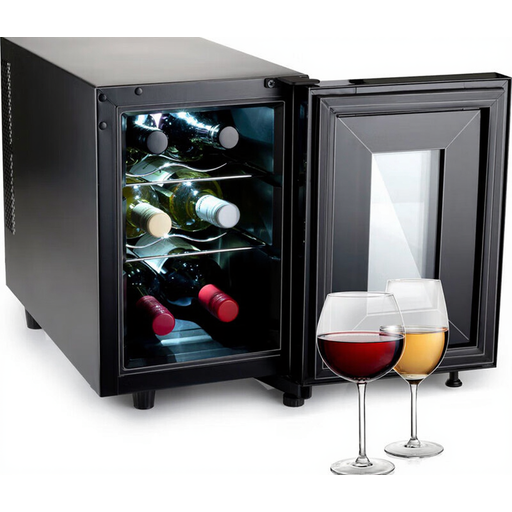
Why this product suits this profile: According to the product specifications, this compact wine fridge holds six standard bottles and takes up comparatively little space, measuring 24.6 × 39.5 × 50.8 cm.
The stated capacity and two shelves set clear expectations. Operation without a compressor is described as offering minimal noise and no vibrations.
Temperature selection from 11 to 18 °C, digital touch display, automatic defrosting and switchable interior lighting.
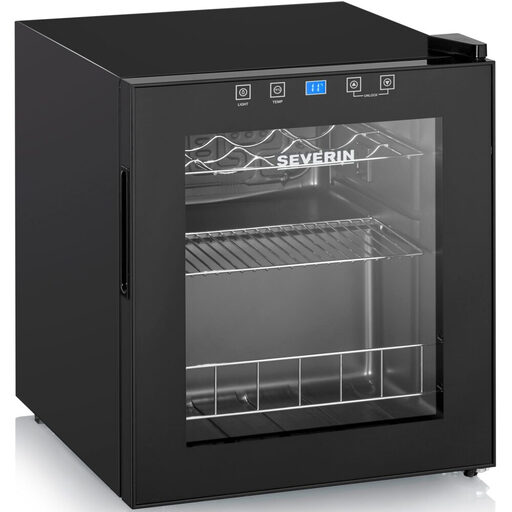
Why this product suits this profile: This wine storage cabinet combines 46 litres of usable capacity with space for up to 15 standard bottles, making it suitable for private households or smaller offices.
The product data states a sound level of 42 dB(A) and annual consumption of 97 kWh. This makes it easier to assess noise and energy consumption before buying.
Temperature range of 4 to 18 °C according to the product description, touch display, automatic defrosting, height-adjustable shelf and switchable LED lighting.
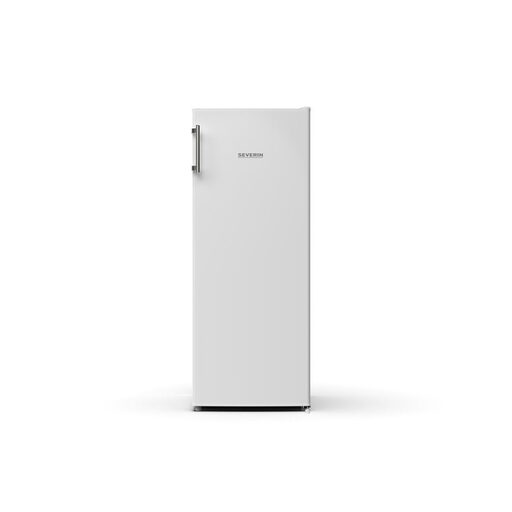
Why this product suits this profile: With 225 litres of usable capacity and five height-adjustable shelves, this drinks cooler is aimed at frequent users, hosts, offices or catering areas.
The metal door reduces the glass area. The stated annual consumption is 81 kWh and the sound level is 39 dB. Before installation, ensure that the required ventilation clearances are observed.
225-litre capacity, LED interior lighting, adjustable thermostat, energy efficiency class D and reversible door hinge.
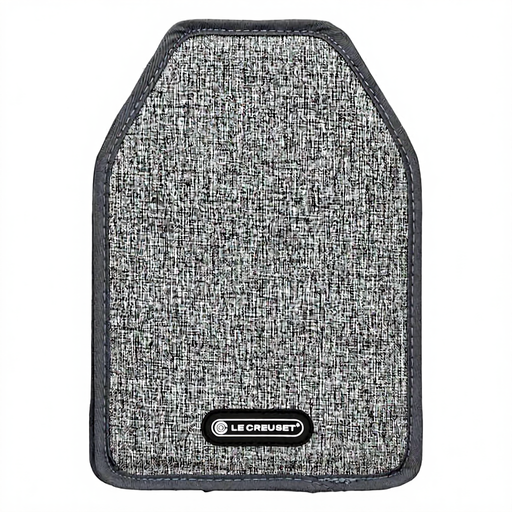
Why this product suits this profile: This portable wine cooling sleeve requires no electricity and can be prepared for parties, picnics, camping or transport.
Its use is clearly defined: the sleeve is pre-chilled in the freezer and is designed for standard 75 cl bottles. Unusual bottle shapes are not suitable.
Water-repellent nylon, stretchable design, hand-washable construction and, according to the product specifications, approximately 20 minutes of cooling time when previously stored in the freezer.
We have put together a complete, regularly updated list of products that fully meet these strict selection criteria and the safety regulations applicable in the EU.
The right product type depends on how you intend to use it:
This depends on the type of wine and the desired serving condition. The key point is that the appliance reliably covers the required range. Models with a range of around 4 to 18 °C offer more adjustment options than coolers intended purely for short-term chilling.
The manufacturer’s dB(A) rating provides a useful guide. Perceived noise also depends on the location, the floor and whether the appliance has been positioned correctly. For living spaces, models rated at 39 to 42 dB(A) according to the product specifications may be worth considering. Electrically powered appliances should not be expected to provide completely silent cooling.
For a rough estimate, multiply the stated annual consumption in kWh by your electricity tariff. Actual consumption depends on factors including the ambient temperature, ventilation, temperature setting and how often the door is opened. A wine fridge that is well ventilated and positioned level can deliver its cooling performance more predictably under the intended conditions.