Households with damp laundry in winter
If you often dry cotton laundry indoors, room humidity and regular ventilation are important considerations. The German Environment Agency lists damp laundry as an additional source of moisture.


A suitably sized heat pump tumble dryer could be a worthwhile investment if you regularly dry cotton laundry in winter and want to free up space taken by an airer. Compare the condensation efficiency, kWh per 100 Eco cycles, capacity and Eco cycle duration for the specific model. If you only need to dry clothes occasionally and have a well-ventilated place to air them, an airer remains an option that uses no additional electricity for an appliance. Even with a tumble dryer, you should keep an eye on the room’s humidity.
If you often dry cotton laundry indoors, room humidity and regular ventilation are important considerations. The German Environment Agency lists damp laundry as an additional source of moisture.
If you regularly wash large loads of cotton laundry, the capacity, Eco cycle duration and electricity consumption should all work for you. The German Environment Agency recommends choosing a drum size that matches the amount of laundry you usually wash.
If you want to free up space taken by an airer but have limited room, check the dimensions, door opening and, where relevant, whether the appliance can be stacked.
The German Environment Agency identifies damp laundry as an additional source of moisture, while the consumer advice centre recommends using kWh per 100 Eco cycles and condensation efficiency to compare models. The main difference between an airer and a heat pump tumble dryer is whether you prefer to avoid using extra electricity and floor space, or having less laundry hanging around your home.
A good fit if: you only dry laundry occasionally, have enough space and can ventilate the room well.
The trade-off: your laundry takes up space while it dries, and damp laundry adds moisture to the room.
A good fit if: you regularly dry suitable cotton laundry and have a suitable place for the appliance.
The trade-off: you’ll need to factor in the purchase price, electricity, maintenance and floor space. Eco figures apply under defined conditions and won’t necessarily reflect every load.
| Buying priority | What to check | Most important for |
|---|---|---|
| Room humidity in winter | The condensation efficiency class and percentage for the specific appliance, and the ventilation options where you plan to install it. | If you currently hang damp cotton laundry indoors, it’s worth checking how much moisture the dryer collects. Around 33 % of consumers say room humidity is their main concern. |
| Electricity consumption | The current energy class and kWh per 100 Eco cycles. Use figures based on the same programme when comparing models. | If you dry laundry often, you’ll want to weigh up the appliance’s running costs against using an airer. Around 27 % of consumers put electricity costs first. |
| Load size and time | Compare your usual cotton load with the rated capacity in kg. Check the Eco cycle duration and the maximum load for the programme you want to use. | If you regularly dry large loads of cotton laundry, a suitably sized drum and predictable cycle times matter. Around 20 % of consumers prioritise load size and planning when to dry their laundry. |
| Installation location | Check the appliance dimensions and required clearance, door hinge, noise level in dB(A), how to empty or drain the condensate, and whether the appliance is compatible with a stacking kit. | If space is limited, the appliance needs to be accessible and its door should open in a way that works for you day to day. Around 20 % of consumers say installation space is their main concern. |
Since 1 July 2025, household tumble dryers have used the rescaled EU energy label from A to G. The European Commission explains the change; when comparing models, consumption per 100 Eco cycles also matters.
Check the current label and product fiche for the exact model variant you’re considering.
Condensation efficiency shows what proportion of the moisture removed from laundry is collected. It doesn’t mean the appliance prevents all moisture from escaping into the room.
If the installation location is sensitive to moisture, check the class and percentage, and keep an eye on the room’s humidity.
The rated capacity and Eco cycle duration don’t automatically tell you how much laundry a quick programme is designed for. According to the German Environment Agency, a large tumble dryer that is often only half full may use more energy per kilogram of laundry.
Choose a capacity that suits the amount of cotton laundry you usually wash. If you need to dry something quickly, check the programme table for the specific appliance.
The DV90DG52A0TEEG is a 9-kg model with moisture sensors and a reversible door.
According to Gorenje, the DHNE93/DE combines a rated capacity of 9 kg with a moisture sensor.
According to Siemens, the iQ700 WQ46B2D41 is designed for 9 kg.
According to the manufacturer, the DH3S802BW3 is a freestanding heat pump model with an 8-kg capacity.
The TR9W75780 is an 8-kg model with a published condensation efficiency figure for comparing models.
This selection includes freestanding heat pump tumble dryers for households looking to dry cotton laundry in a machine and free up space taken by an airer.
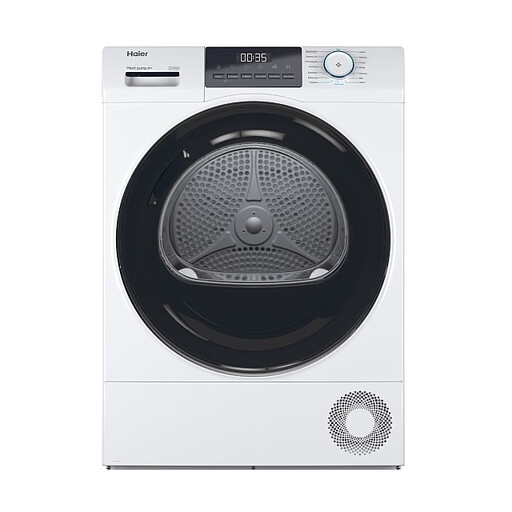 No image available
This 8-kg heat pump tumble dryer could suit households looking to dry cotton laundry in a machine. The product name mentions sensor drying and several drying programmes.
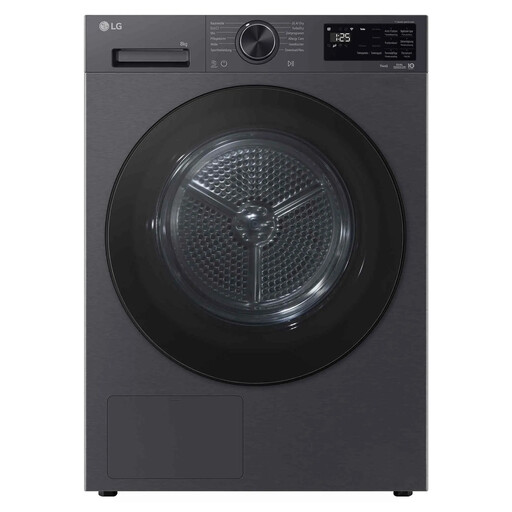 No image available
This 8-kg model could suit households looking to dry cotton laundry in a machine. The product name mentions a cotton programme, Dual Inverter Heat Pump and SensorDry, among other features.
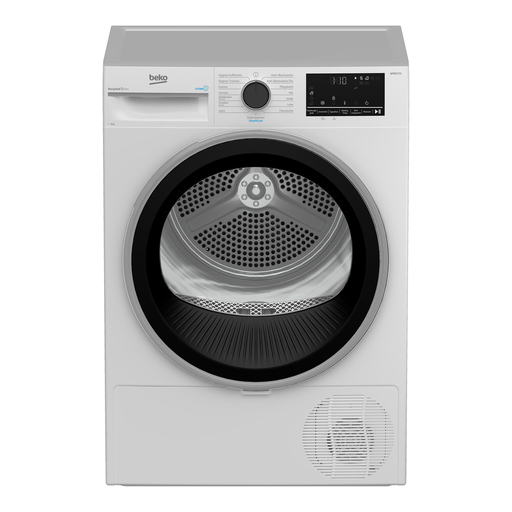 No image available
This 8-kg model could suit regular loads of cotton laundry, as long as its capacity and programmes match the amount of laundry you usually wash. The product name mentions 15 programmes, sensor drying and a Silent programme. You’ll need a compatible Beko stacking kit if you want to stack it.
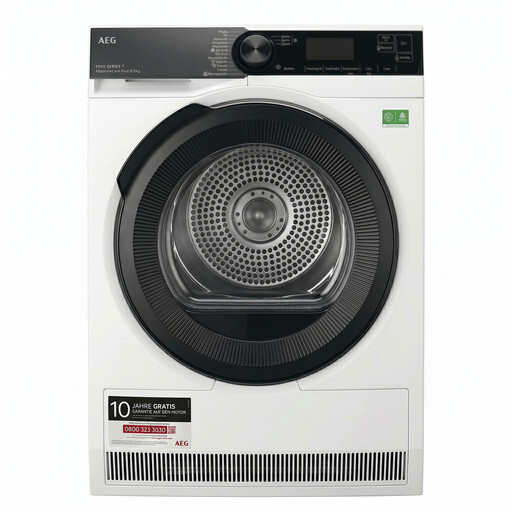 No image available
This model could suit cotton laundry if its 8-kg capacity matches your usual load. AEG quotes consumption of 85 kWh per 100 cycles, condensation efficiency of 91 % and noise emissions of 63 dB(A).
 No image available
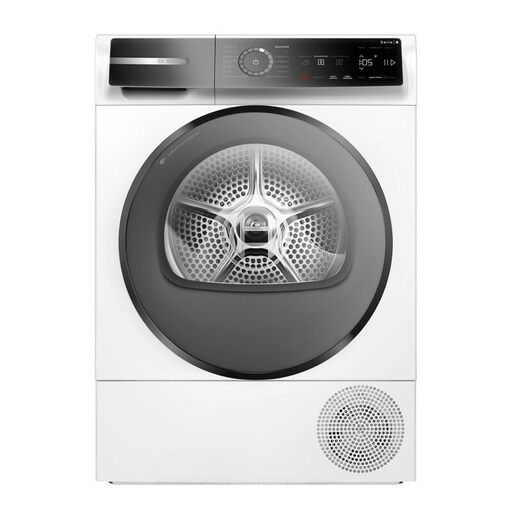
With a rated capacity of 9 kg, this model could suit larger loads of cotton laundry, provided the programme table allows for your chosen load size. The product name mentions a self-cleaning condenser and a cotton programme.
Compare kWh per 100 Eco cycles alongside capacity, programme duration and condensation efficiency. The consumer advice centre describes an Eco test basis for cotton laundry; other programmes and load sizes may differ.
Yes. A tumble dryer doesn’t replace ventilation when there are other sources of moisture, or the need to keep an eye on your home’s humidity. If you continue to hang laundry indoors, the German Environment Agency recommends ventilating more frequently.
Follow the instructions for your model. Bosch recommends cleaning the lint filter after every drying cycle on its tumble dryers; this manufacturer’s advice shouldn’t automatically be treated as the complete maintenance guide for other brands.
Since 1 July 2025, household tumble dryers have used the rescaled EU energy label from A to G. The European Commission explains the change; older A+++ ratings aren’t directly comparable with the new classes.