
Lieferung heute & morgen

Qualitätsgarantie

Willkommens-Angebote freischalten: KOSTENLOSE Lieferung | Bis zu 80 % RABATT | Kostenlose 30-Tage-JoyPlus-Testphase
App herunterladen
Maintaining a pristine lawn requires time and consistency. Robotic lawn mowers have significantly simplified this task in recent years. However, the installation of a boundary wire has often remained a major hassle. The process of laying the cable, troubleshooting breaks, and making adjustments for garden redesigns is a significant hurdle for many garden owners.
Modern robotic mowers without boundary wires solve this problem by using intelligent navigation technologies. These devices orient themselves using GPS, cameras, or laser sensors, enabling flexible and straightforward lawn care. This article explains how these technologies work, offers guidance on selecting the right model, and presents a curated selection of mowers for various needs.
Choosing the right model depends on the technology, garden size, and desired smart features. The following points will help guide your decision.
The method the robot uses to determine its position and map the garden is the key differentiator.
Area capacity is a crucial factor. Manufacturers specify the maximum lawn area a model is designed for, such as up to 600 m? or up to 1500 m?. It's advisable to choose a model with a recommended capacity slightly larger than your actual garden size to ensure a performance buffer.
For gardens on a slope, the mower's maximum incline capability is important. This value is given as a percentage (%) and should match the steepest part of your garden. Models with all-wheel drive or special all-terrain tyres offer an advantage here.
Intuitive app control is standard for wire-free robotic mowers. The app allows you to define mowing zones, set up no-go areas, create mowing schedules, and monitor the robot's status. Other useful features include a rain sensor that pauses mowing during precipitation, and an especially quiet operation to avoid disturbing the neighbours.
Based on the criteria mentioned, we have compiled a selection of models for different garden sizes and requirements.
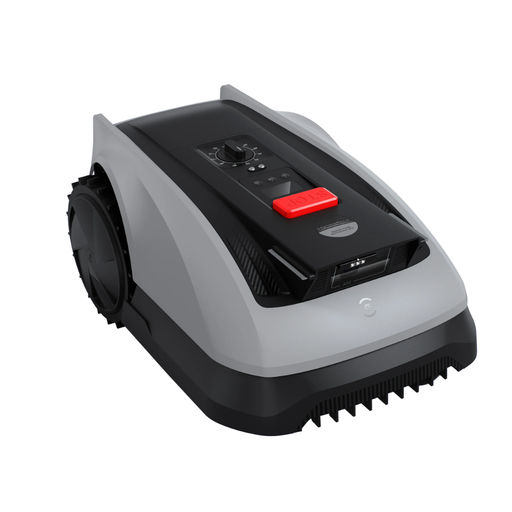
Why this model stands out: The GOAT O600 combines high-precision RTK navigation with an AI-powered camera for obstacle avoidance. This combination ensures an efficient, systematic mowing result and a high level of operational safety.
Advantages:
Who is this model for? This model is an excellent choice for owners of medium-sized, even complex, gardens who value a precise cutting pattern and quiet, intelligent operation.
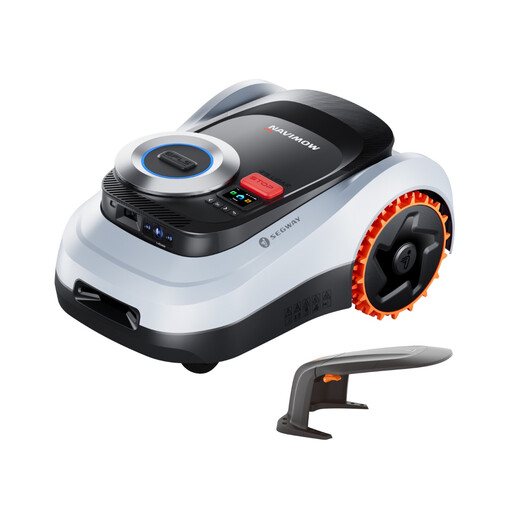
Why this model stands out: The Navimow i215 uses a dual navigation system combining LiDAR and a vision camera. This provides stable, satellite-independent orientation, day or night. Its all-terrain tyres and powerful motor make it particularly suitable for challenging terrain.
Advantages:
Who is this model for? Ideal for owners of large and complex properties, including those with significant slopes. Tech-savvy users will appreciate the advanced LiDAR technology and extensive smart integration options.
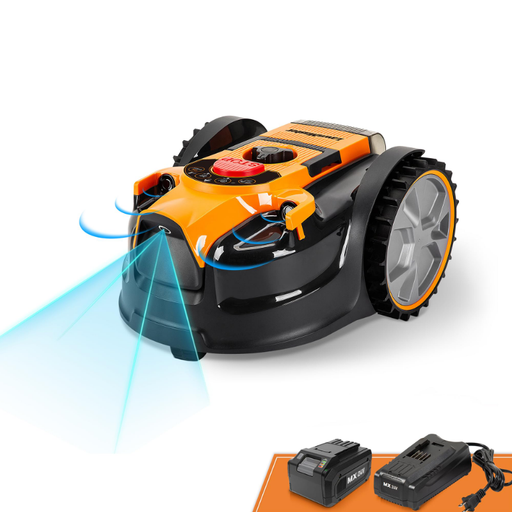
Why this model stands out: The LawnMaster VBRM16 OcuMow focuses on the essentials: automatically maintaining smaller lawns without any wire installation. Its ease of use and quiet operation make it a straightforward solution.
Advantages:
Who is this model for? Perfect for owners of small city gardens or front yards who want to buy a simple, cost-effective, and wire-free solution for lawn care and don't need complex smart features.
The models presented here offer a glimpse into the current possibilities. However, the market for robotic mowers is constantly evolving. If you want to compare more models or search for other garden tools, you can find a wider selection in our Lawn Mowers & Garden category.
These mowers use advanced sensor technologies for orientation. Models with RTK navigation use a corrected GPS signal for centimetre-level positioning. Other devices scan their surroundings with LiDAR (laser) or a camera and create a digital map of the garden, which they use to navigate systematically and avoid obstacles.
Installation is generally simpler than laying a boundary wire. For RTK models, a reference antenna must be placed in the garden with a clear view of the sky. The garden is then typically mapped via the app by manually driving the robot on an initial tour. For LiDAR or camera models, no antenna is needed; mapping is usually done fully automatically or through a guided process in the app.
All wire-free robotic mowers feature obstacle avoidance. Different sensors are used depending on the model. Camera systems with AI support can recognise objects like balls, shoes, or pets and navigate around them specifically. LiDAR sensors create a 3D map of the environment and thus also detect obstacles. Simpler models use bump sensors that trigger a change of direction upon contact.