
Lieferung heute & morgen

Qualitätsgarantie

Willkommens-Angebote freischalten: KOSTENLOSE Lieferung | Bis zu 80 % RABATT | Kostenlose 30-Tage-JoyPlus-Testphase
App herunterladen
By Joybuy, your Product Recommendation OfficerDate: July 28, 2026
Maintaining a pristine lawn requires time and effort. While robotic mowers have already simplified this process, the installation of a boundary wire, which must be manually laid out, remains a significant hurdle for many. The latest generation of robotic mowers solves this problem: wire-free robotic lawn mowers navigate autonomously using GPS, cameras, and sensors.
This article serves as an objective guide. It explains how these devices work and presents a selection of models to help you make an informed purchasing decision based on the specific needs of your garden.
Choosing the right model depends on several technical factors. Here are three key aspects to consider.
A wire-free robotic mower uses advanced systems for orientation. The two most common technologies are:
A robotic mower's suitability for your garden is determined by two key metrics:
Modern robotic mowers offer much more than just automatic mowing. A robotic mower with app control allows you to create mowing schedules, define mowing zones, set no-go areas, and monitor the device's status in real time. Other useful features include rain sensors that automatically pause mowing in wet conditions, as well as anti-theft mechanisms via GPS tracking.
Based on objective product specifications, we have compiled a selection of models for various needs.
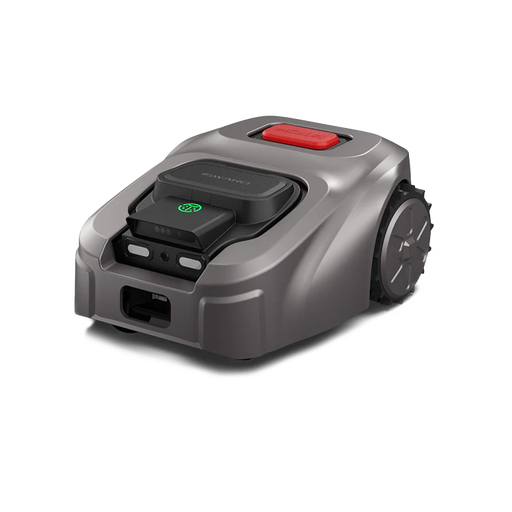
Why this model stands out: The ISWARD GX AI is designed for very large and demanding lawns. Its navigation is based on a combination of RTK signal and GPS, enabling high precision on open areas. Its ability to handle extreme slopes is particularly noteworthy.
Advantages:
Who is it for? For owners of very large properties (up to 2500 m?) with open lawns and significant slopes who are looking for a precise, GPS-based solution.
View the ISWARD GX AI on Joybuy.de
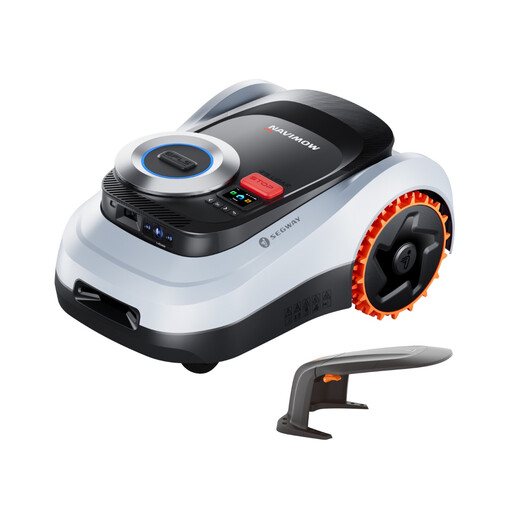
Why this model stands out: The Segway Navimow i215 operates entirely without satellite signals or external antennas. It uses a dual system of solid-state LiDAR and an integrated camera. This enables reliable navigation even in complex gardens with trees or buildings that could interfere with GPS signals.
Advantages:
Who is it for? For tech-savvy users with medium to large gardens (up to 1500 m?) who value a simple, antenna-free setup and highly precise obstacle detection in complex environments.
View the Segway Navimow i215 on Joybuy.de
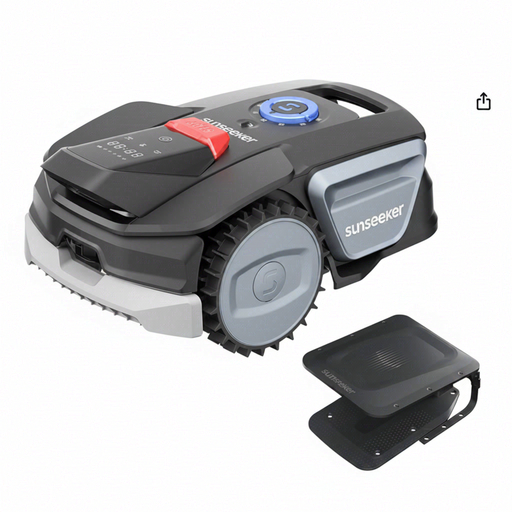
Why this model stands out: The Sunseeker V1 is a compact and accessible solution for smaller gardens. It also uses camera-based AI Vision for navigation and obstacle avoidance, eliminating the need for a boundary wire.
Advantages:
Who is it for? For owners of smaller city or townhouse gardens seeking a straightforward and cost-effective solution for wire-free lawn care.
View the Sunseeker V1 on Joybuy.de
Proper care ensures the longevity of your high-quality garden technology. For the maintenance and cleaning of your devices, you can find a selection of specialised electronics cleaners and other accessories to keep your investment in top condition.
These devices use advanced technologies for orientation. They either determine their position via satellite signals (GPS), often enhanced by an RTK base station for centimetre-level precision, or they use optical sensors like cameras and LiDAR to create a visual map of the garden and detect obstacles and lawn edges.
The accuracy of standard GPS can be insufficient for a precise lawn edge. Therefore, high-end models use RTK (Real-Time Kinematic) technology. An RTK mower communicates with a fixed base station (antenna) in your garden that receives correction data. This enables navigation with an accuracy of just a few centimetres, ensuring clean and repeatable mowing paths.