
Lieferung heute & morgen

Qualitätsgarantie

Willkommens-Angebote freischalten: KOSTENLOSE Lieferung | Bis zu 80 % RABATT | Kostenlose 30-Tage-JoyPlus-Testphase
App herunterladen
A fine wine deserves to be opened with the right tool. However, the selection of corkscrews is vast, and the differences are in the details. Whether you opt for a classic waiter's friend, a practical wing corkscrew, or a model with a unique mechanism, your choice impacts not only the handling but the entire wine-opening experience.
This guide is here to help. We will introduce different types of wine openers and explain the key features you should look for when making your choice. Our goal is to provide you with a solid foundation to find the corkscrew that best suits your needs.
Before you decide on a model, there are a few fundamental aspects to consider. These criteria will help you objectively evaluate the functionality and quality of a wine opener.
The type of mechanism is crucial for ease of use. The two most common types are the sommelier knife and the wing corkscrew.
The quality of a corkscrew is often reflected in its materials. Models made of stainless steel are durable, rust-proof, and hygienic. Pay special attention to the worm—the spiral part that twists into the cork. A good worm is non-stick coated (often with Teflon) and has a "soul," or a hollow channel down the middle. This prevents the cork from crumbling because the worm wraps around the cork's core instead of piercing through it. A sharp tip makes it easier to insert into the cork.
Many modern corkscrews are multifunctional. An integrated bottle opener with a foil cutter is now standard on most waiter's friends and can also be found on some other models. This saves you from having to find a separate knife to remove the capsule and makes the wine opener a versatile tool, also suitable for bottles with crown caps. For those looking for a corkscrew as a gift, models with high-quality craftsmanship and attractive packaging are an excellent choice.
Here, we present three models that stand out for their design, materials, and functionality.
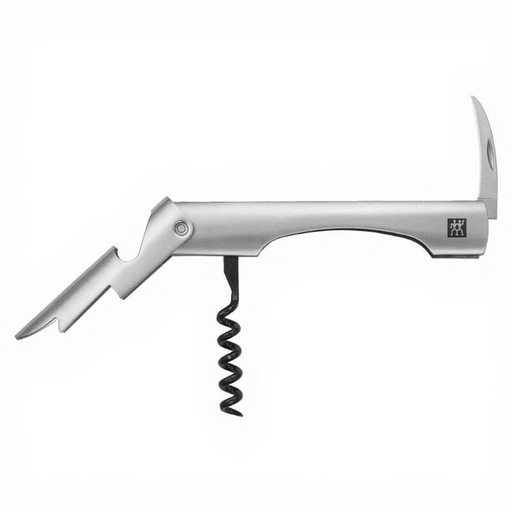
Why It's a Great Choice This sommelier knife from Zwilling combines three functions in one elegant design. Made from high-quality, rust-proof 18/10 stainless steel, it offers a durable and robust solution for wine lovers. The hardened and forged worm with a non-stick coating ensures effortless insertion into the cork. The tool is foldable and highly portable, weighing just 0.2 kg.
Pros
Who It's For Ideal for wine connoisseurs who appreciate a classic sommelier knife with a professional feel and high-quality craftsmanship. Thanks to its elegant packaging, it also makes an excellent corkscrew as a gift.
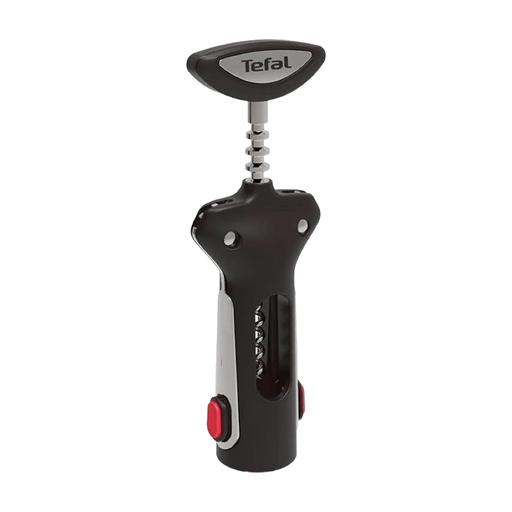
Why It's a Great Choice The Tefal 2-in-1 wing corkscrew is designed for efficiency and ease of use. It combines a wing mechanism with an integrated foil cutter, simplifying the entire opening process. Its robust plastic body makes it lightweight and durable. As part of the Ingenio range, which won the Good Design Award in 2015, it blends functionality with a simple, modern design.
Pros
Who It's For Perfect for anyone looking for a straightforward and reliable solution for opening wine bottles. Its intuitive operation makes it a great choice for casual users and households that prioritize practicality.
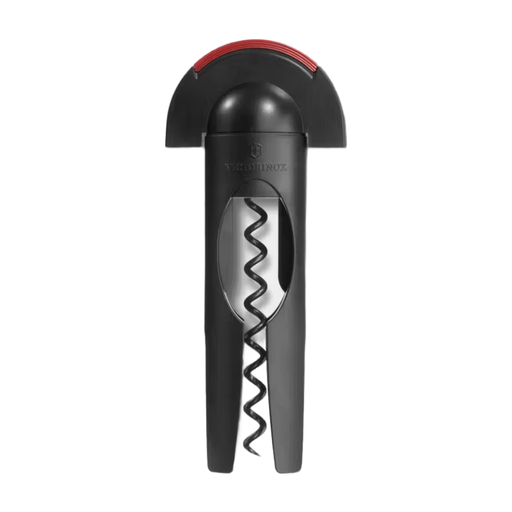
Why It's a Great Choice This corkscrew from Victorinox stands out with its unique mechanism and Swiss precision. The integrated capsule cutter removes foil cleanly and safely. The key feature is its opening mechanism: after twisting the worm in, a simple turning motion lifts the cork gently and effortlessly from the bottle. The durable polyamide body is lightweight and fits comfortably in your hand.
Pros
Who It's For For tech and design enthusiasts who prefer an innovative and particularly effortless method for opening wine bottles. A professional-grade corkscrew in its application, it's also suitable for individuals with less hand strength.
A good corkscrew is essential, but sometimes you need a specialized opener for other types of bottles. If you're specifically looking for a tool to open crown caps, you can find more models in our category.
? Discover our selection of beer bottle openers here
1. What is the difference between a waiter's friend and a wing corkscrew? A waiter's friend (or sommelier knife) uses a single or double-hinged lever that rests on the lip of the bottle to pull out the cork. It's compact and multifunctional but requires some practice. A wing corkscrew has two levers ("wings") that rise as you twist the worm into the cork. Pushing them down pulls the cork straight up. This method is often easier and requires less force.
2. How do you clean a corkscrew properly? Most corkscrews should be cleaned by hand to protect the materials, especially a coated worm. Use a damp cloth to wipe away wine residue and cork crumbs. For more stubborn dirt, warm water with a little mild dish soap can help. Dry the tool thoroughly afterwards to prevent rust on any non-stainless parts.
3. How can I identify a high-quality corkscrew? Look for the material (e.g., stainless steel), solid construction with no wobbly parts, and a well-formed worm. A worm with a "soul" (hollow channel) and a non-stick coating is gentle on the cork and makes insertion easier. On a waiter's friend, the lever mechanism should be sturdy and lock securely against the bottle's lip.