Picking out bass notes accurately
If you want to compare pitches and individual entries in a recording, a sound signature you can follow is more helpful than simply having as much bass as possible.


For repeated comparisons of a bass line, a wired in-ear with a sound signature you can follow is a sensible starting point; more bass alone does not prove that transcription will be more accurate. If you move around a lot, a wireless model may be more practical, but you’ll need to charge it and get to grips with some extra controls. Sennheiser describes the IE 200 as fairly balanced, while Etymotic describes the ER2SE as having a flat sound signature. These are manufacturers’ descriptions, not proof of better transcription.
If you want to compare pitches and individual entries in a recording, a sound signature you can follow is more helpful than simply having as much bass as possible.
When household appliances are running, a good fit matters, as does choosing how much isolation you want without losing track of your surroundings.
If you often move from place to place while doing the housework, going wireless may matter more than a wired connection. The controls should also suit your routine.
A good fit if: you want to compare the same passage repeatedly and avoid having to charge your earphones.
The trade-off: The cable needs a compatible connection and can get in the way when you move.
A good fit if: you move around a lot while doing the housework and don’t want a cable trailing from your device.
The trade-off: The earphones need charging, and an ambient mode doesn’t guarantee that you’ll hear every warning signal.
| What matters | What to check before buying | Who it matters most to |
|---|---|---|
| Hearing differences between bass notes | The sound signature of the specific model; compare it with a familiar bass passage. | If I want to pick out individual notes and entries, a reliable reference matters more to me than having as much bass as possible. Around 36% of consumers put distinguishing between bass notes accurately first. |
| Fit and isolation | Ear tips and fit during the movements you plan to make; whether you can reach the pause button. | When household appliances are running, I need a comfortable, secure fit and still want to hear the bass line. Around 29% of consumers prioritise fit and isolation around household noise. |
| Freedom of movement and connection | A compatible connection on your playback device or a wireless design; consider charging and controls. | If I often move between rooms while doing the housework, I don’t want a cable getting in my way. Around 21% of consumers say freedom of movement is their top priority. |
| Awareness of your surroundings and volume | Being able to pause playback quickly; keeping the volume at a sensible level. | When I’m doing something that means I need to hear other people or warning signals, I want to be able to stop playback straight away. Around 14% of consumers put awareness of their surroundings first. |
Etymotic describes the ER2SE as flat and the ER2XR as having more bass. That doesn’t mean either model has been shown to help you identify individual notes more accurately.
Listen to the same familiar passage with each sound signature and pay attention separately to pitch, entries and the amount of bass.
The German Environment Agency warns that sound levels that are too high can cause permanent hearing damage. Strong isolation can also mask sounds around you.
Try suitable ear tips at a volume that’s loud enough for you. Pause if you need to hear what’s going on around you, rather than turning the volume up.
With wired models that have a 3.5 mm plug, direct use depends on whether your playback device has a compatible connection.
Check the connection and cable routing before you buy. If you choose a wireless model, factor in charging and the controls instead.
The IE 200 is a wired option that Sennheiser describes as fairly balanced; the IE 100 PRO belongs to a separate monitoring range.
The SE215 is a wired in-ear monitor with passive isolation and an over-ear cable fit.
Etymotic describes the ER2SE and ER2XR as having different sound signatures: the ER2SE is flatter, while the ER2XR has more bass.
beyerdynamic describes the DT 71 IE as designed for drums and bass, and the DT 70 IE for mixing and critical listening.
The WF-1000XM5 is a true wireless alternative if freedom of movement matters more to you than a wired connection.
The Joybuy products below are wireless in-ear headphones that give you more freedom of movement while doing the housework. As well as the design, check which details about controls, noise cancelling and charging matter for your day-to-day routine.
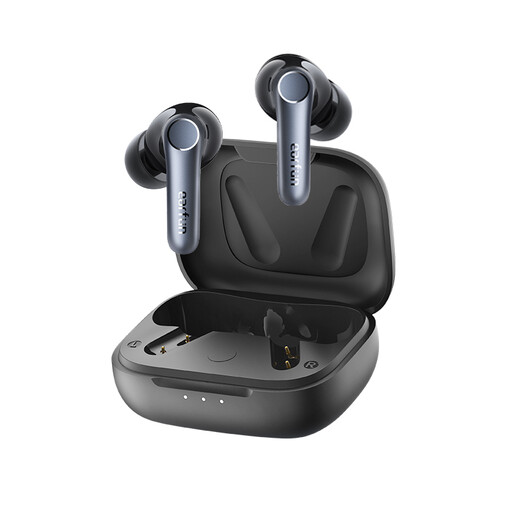 No image available
The wireless design is a good choice if you want to move around while listening without a cable connecting you to your device.
Bluetooth 5.4, 10 mm drivers, adaptive noise cancelling and up to 52 hours of playback, according to the product name.
The earphones and charging case need to be charged.
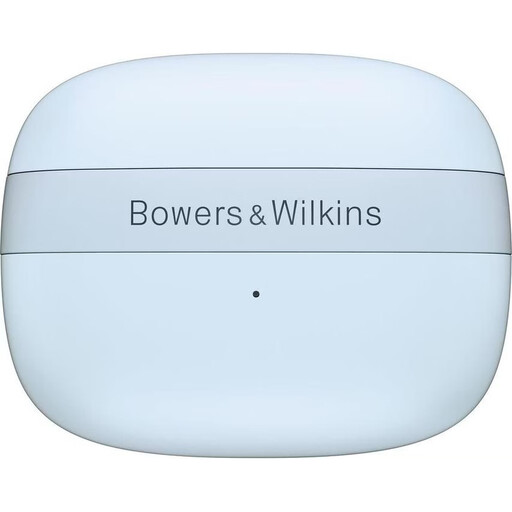
 No image available
The wireless design is an option if you want to move around while listening without a cable connecting you to your device.
Bluetooth 5.4 and a charging case with a Type-C connection.
The charging case needs to be charged for wireless use.
 No image available
The true wireless design is worth considering if you want to move around without a cable connecting you to your device while doing the housework.
12 mm bio-cellulose drivers, active noise cancelling, Bluetooth 5.4 and aptX Adaptive.
Up to 8 hours of playback per charge; the earphones need to be charged.
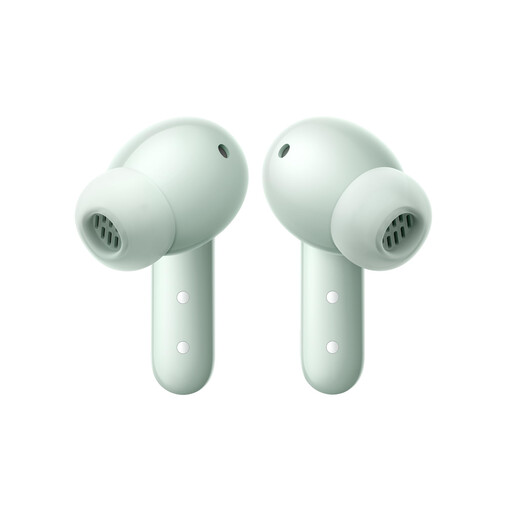 No image available
The wireless design is an option if you want to move around while listening without a cable connecting you to your device.
Bluetooth 5.4, 11 mm drivers, active noise cancelling and IP55, according to the product name.
Up to 7.5 hours of playback per charge; the earphones need to be charged.
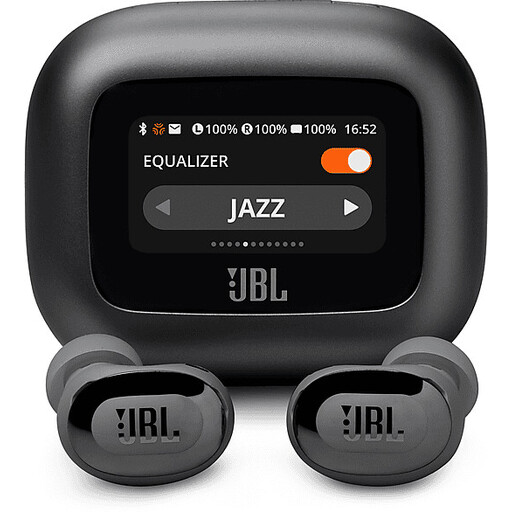 No image available
The true wireless design is a good fit if you want to listen without a cable connecting you to your device while doing the housework.
True wireless, noise cancelling and Smart Case; the product description lists headset controls.
Up to 10 hours of playback per charge with noise cancelling off; the earphones need to be charged.
No. What matters is whether you can distinguish individual notes and entries in your recording with the sound signature in question. Etymotic describes the ER2SE and ER2XR as having different bass signatures; a frequency specification alone measures neither your hearing ability nor how successfully you can transcribe.
Try suitable ear tips at a volume that’s loud enough for you, and pause if you need to hear other people or warning signals. Don’t turn the volume up to drown out household noise. The German Environment Agency warns that sound levels that are too high can cause permanent hearing damage.
Check whether the 3.5 mm plug fits your playback device directly or whether you need a suitable adapter. The IE 200 and SE215 have detachable cables; keep the ear tips clean and follow the instructions for the specific model when cleaning them.
Under the EU consumer rules outlined here, faulty goods are generally covered by a legal guarantee of at least two years from receipt; the seller is responsible. This is separate from any additional manufacturer’s guarantee and, under these rules, does not apply to purchases from private individuals.
When you buy online from a business, you generally have a 14-day right to cancel, although exceptions may apply, such as for certain sealed goods once they’ve been opened. It’s not possible to say in every case whether a particular in-ear headphone package and opening it fall under an exception.