
Lieferung heute & morgen

Qualitätsgarantie

Willkommens-Angebote freischalten: KOSTENLOSE Lieferung | Bis zu 80 % RABATT | Kostenlose 30-Tage-JoyPlus-Testphase
App herunterladen
Wireless Bluetooth headphones are part of everyday life for many people: on the train, in the office, while exercising, travelling or making calls. The choice ranges from True Wireless Earbuds and classic Bluetooth in-ear headphones to open-ear and over-ear models. Although the technical specifications often look similar, they can differ significantly in practice.
If you focus only on a high battery figure or powerful noise reduction, you may overlook important details. Three common buying habits particularly often lead to the wrong decision.
A figure such as “up to 55 hours” usually refers to the combined battery life of the earbuds and charging case. Playback time per charge may be considerably shorter. For commuters and frequent users, both figures are therefore important:
Activated features such as ANC can also reduce battery life. Specifications should therefore always be considered in the relevant operating mode.
ANC, or Active Noise Cancelling, reduces ambient noise during playback using electronic anti-noise technology. This can be useful when travelling or using public transport. ENC, or Environmental Noise Cancellation, usually refers to microphone processing during calls. ENC does not automatically make music listening quieter.
A model with ENC may therefore be suitable for professional calls without offering active noise reduction for music. Conversely, ANC is no substitute for a good microphone.
IPX4 typically indicates protection against splashing water, while IPX5 covers water jets from certain directions. Higher IP ratings may provide additional protection against dust or water. However, many waterproof Bluetooth headphones are not designed for swimming or submersion.
Sweat, rain and the charging case should be considered separately: the earbuds’ protection rating does not automatically apply to the case. Before charging, damp contacts must be completely dry.
Bluetooth in-ear headphones sit in the ear canal and often provide a stronger seal against the surroundings. Different silicone ear tips, for example in sizes S, M and L, help achieve a better fit. A secure fit affects sound, stability and the level of outside noise you perceive.
Open-ear headphones or clip-on models sit outside the ear canal. Ambient sounds remain more noticeable, which can be useful in the office, on a walk or in traffic. However, the open design provides less isolation and may be less suitable on noisy forms of transport.
Over-ear Bluetooth headphones surround the ear. They offer larger ear cushions and often longer battery life, but are heavier and less compact. Foldable models are better suited to bags and travelling.
Bluetooth 5.3 or Bluetooth 5.4 describes, among other things, connection and power characteristics, but is not in itself a guarantee of an uninterrupted connection. Other relevant factors include:
If you regularly switch between a smartphone and laptop, look specifically for Multipoint. For online meetings and calls, Bluetooth headphones with a microphone and ENC are useful, provided this feature is explicitly stated.
Technical specifications such as frequency range or impedance help with comparison, but on their own say little about your personal listening experience. Details about driver size, equaliser, app support and different sound modes are more useful in practice.
With wireless in-ear headphones, weight, ear-tip sizes and the shape of the charging case also matter. Sports headphones should stay securely in place and have at least a protection rating suitable for their intended use. Touch controls can be convenient, while physical buttons are easier to operate in the rain or while wearing gloves.
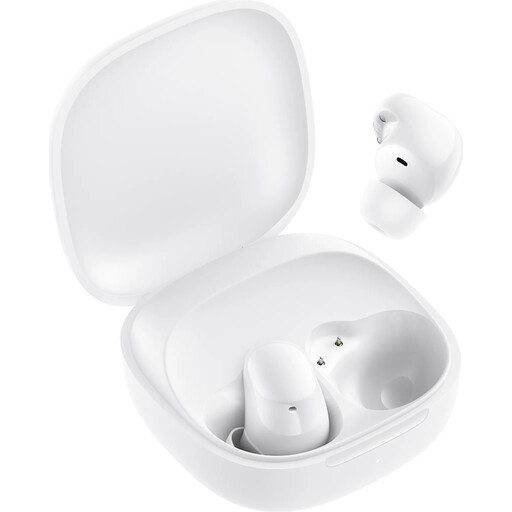
Why this product suits this profile: These True Wireless Earbuds combine Bluetooth 5.4, a charging case and up to 36 hours of combined battery life. For everyday use, commuting and occasional calls, the focus is on essential features.
Battery life is stated as a total including the charging case; up to 5 hours per charge and fast charging for up to 3 hours of music playback after 10 minutes are also specified.
10 mm dynamic drivers, Bluetooth 5.4, USB-C charging case and AI-based noise reduction for calls, according to the product specifications.

Why this product suits this profile: These in-ear headphones are designed for users who want to combine ANC, app control, an adjustable equaliser and an extensive microphone set-up.
The specifications distinguish between battery life with and without ANC: up to 6 and 7 hours per charge respectively. However, the IP57 rating should not be taken to mean that the earbuds are suitable for swimming.
Two-way speaker system, 6 microphones, ANC, 360 Audio, USB-C and wireless charging, plus up to 30 hours of total playback without ANC, according to the product data.
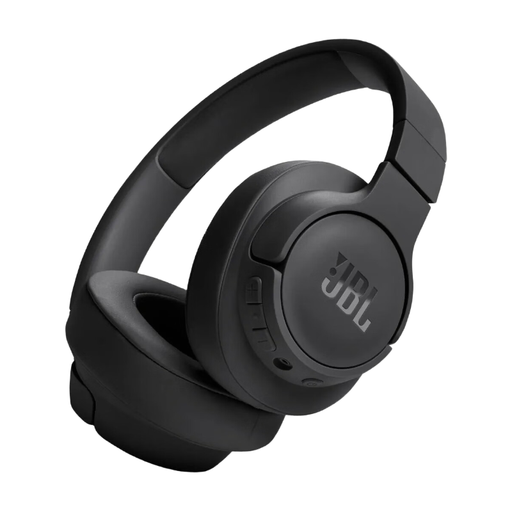
Why this product suits this profile: These over-ear Bluetooth headphones are designed for long listening sessions, travelling and use with multiple devices. The larger design also offers traditional button controls.
The product data states up to 76 hours of playback, as well as wired use via 3.5 mm AUX. This reduces reliance on the battery when used with compatible devices.
40 mm drivers, Bluetooth 5.3, Multipoint connection, integrated microphone, foldable design and fast charging for up to 3 hours of playback after 5 minutes.
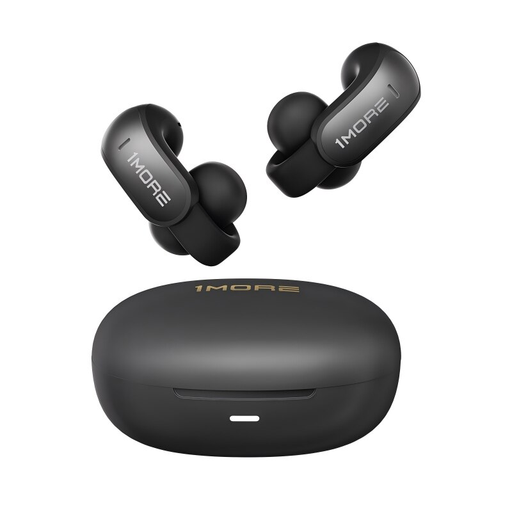
Why this product suits this profile: The clip-on, open-ear design leaves your ears uncovered. This makes it suitable for everyday situations where awareness of your surroundings matters more than strong isolation.
The open design avoids creating the expectation of complete noise isolation. According to the product specifications, IPX5 and ENC are intended for sports and calls, not for submersion.
Bluetooth 5.4, dual-microphone ENC, clip-on design, IPX5 and up to 28 hours of combined playback, according to the product description.
We have put together a complete, regularly updated list of products that fully meet these strict selection criteria and the safety regulations applicable in the EU.
Open the charging case or headphones and take out both earbuds. Then activate Bluetooth on your smartphone and select the model shown. During the first pairing, both earbuds should be outside the case at the same time. After that, many True Wireless Earbuds connect automatically when the charging case is opened.
Battery life depends on the battery, charging cycles, volume, temperature and activated features. Battery capacity decreases over time. A replaceable battery is not common in many compact in-ear headphones. For longer use, headphones should not be left completely discharged for extended periods and should only be charged with suitable chargers.
ANC can be helpful with consistent sounds such as train or aeroplane noise. For calls, however, microphone quality with ENC is often more important. If you need to hear your surroundings while cycling or in traffic, consider an open design or ambient mode, and take the safety situation into account.