
Lieferung heute & morgen

Qualitätsgarantie

Willkommens-Angebote freischalten: KOSTENLOSE Lieferung | Bis zu 80 % RABATT | Kostenlose 30-Tage-JoyPlus-Testphase
App herunterladen
Wireless in-ear headphones with noise cancelling are designed to reduce unwanted noise on trains, in the office, while exercising and when travelling. The choice ranges from simple True Wireless Earbuds to models with Hi-Res Audio, Bluetooth Multipoint and wireless charging cases. However, technical terms alone reveal little about whether a model is genuinely suitable for everyday use.
Manufacturer claims such as “up to 50 dB Noise Cancelling” refer to specific testing conditions and frequency ranges. Low, consistent sounds such as train or aircraft engine noise are generally easier to reduce than voices or sudden noises. The seal created by the ear tips also has a significant impact on the result.
Active Noise Cancelling is no substitute for paying attention in traffic. A Transparency or Ambient mode is useful for announcements, conversations and situations involving warning signals.
With many wireless headphones, the longest battery life only applies when noise cancelling is switched off. You should therefore check the following separately:
A model with long battery life when ANC is switched off may deliver considerably shorter playback times during your daily commute.
Ratings such as IPX4, IP55 or IP57 describe protection according to the relevant IP rating. IPX4, for example, means protection against splashing water, not immersion. IP55 adds protection against dust, while IP57 describes limited protection against temporary immersion. The charging case and earbuds may have different protection ratings.
When choosing in-ear headphones for sport, you should therefore check carefully whether the protection only covers sweat and light splashes, or whether it also protects against more demanding conditions. No model should be used for swimming unless the manufacturer expressly permits it.
A proper fit improves comfort, bass reproduction and passive noise isolation. Look for several sizes of ear tips. The EarFun Air Pro 4i, for example, is supplied with different attachments. The JBL Tune Buds 2 include ear tips in three sizes, while the JBL Live Buds 4 lists four sizes.
Open-ear adapters may be suitable if you want greater awareness of your surroundings, but they provide less of a seal. For long train journeys or flights, closed in-ear designs are often more practical.
Adaptive ANC systems adjust noise reduction to suit your surroundings and the fit of the earbuds. This is particularly useful in changing noise conditions. Microphone technology is also important for phone calls. Beamforming microphones and voice processing can reduce background noise, but they cannot replace a quiet environment for conversations.
Also check whether the controls are located directly on the earbud, accessed through an app or operated via the charging case. A Smart Case can be convenient, but it contains additional electronics and should be protected from moisture.
Bluetooth Multipoint allows you to connect to several devices, such as a smartphone and laptop. This is practical for professionals who need to switch between video conferences and phone calls. Actual support may depend on the smartphone, operating system and codec being used.
Hi-Res Audio, LDAC and aptX Lossless can enable higher data transmission rates. However, the source device, app and headphones must all support the same standard. With streaming services that use compressed audio files, the audible difference is not guaranteed.
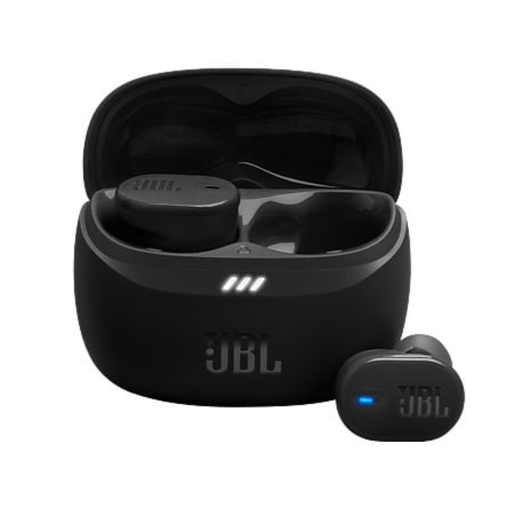
Why this product suits this profile: The JBL Tune Buds 2 combine adaptive noise cancelling, touch controls and Bluetooth Multipoint in a compact design. According to the product specifications, they offer up to 10 hours of playback with ANC and up to 30 additional hours via the charging case.
Battery life is stated separately with ANC switched on and off. This makes it easier to compare the figures with your own usage profile.
10-mm drivers, adaptive ANC, three ear-tip sizes and water resistance according to the product description.

Why this product suits this profile: According to the manufacturer, this model features a two-way speaker system, 24-bit/96-kHz audio, adaptive ANC and 360 Audio. Galaxy users also benefit from Auto Switch and integration with the Samsung ecosystem.
The relevant audio and protection specifications are clearly stated. However, IP57 should not be confused with unrestricted use underwater.
Bluetooth 6.1, wireless charging, six microphones and up to 30 hours of total playback without ANC according to the product specifications.
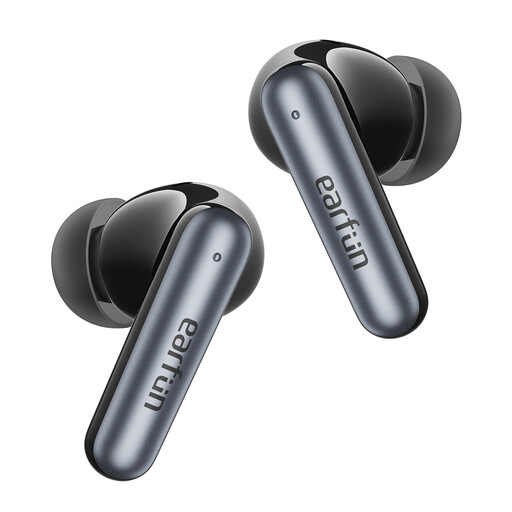
Why this product suits this profile: For commuters, travellers and active users, the product description lists adaptive hybrid ANC of up to 50 dB, IP55, LDAC, Bluetooth Multipoint and up to 40 hours of total playback time.
The ANC, battery-life and protection ratings are stated separately. IP55 protects against dust and splashing water, not swimming.
11-mm drivers, six microphones, Wireless Charging and fast charging according to the manufacturer.
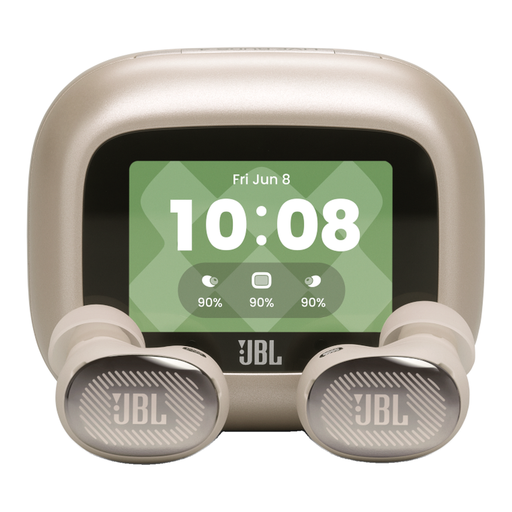
Why this product suits this profile: According to the product description, the Smart Charging Case lets you control the volume, ANC and equaliser directly from the case. Bluetooth Multipoint supports switching between multiple devices.
Operation does not depend solely on the smartphone app. At the same time, the display and charging case should be protected from liquids and impacts.
Six microphones, IP55, Wireless Charging and up to 40 hours of total playback without ANC according to the product specifications.
We have put together a complete, regularly updated list of products that fully meet these strict selection criteria and the safety regulations applicable in the EU.
First charge the earbuds and charging case, then open the case and switch on Bluetooth on your smartphone. Next, select the model name from the list of devices. The relevant manufacturer’s app may unlock additional functions such as an equaliser, ANC levels, firmware updates and Multipoint.
Daily battery life depends on ANC, volume, codec and phone calls. The batteries are built in and usually lose capacity over time. Do not leave the earbuds completely discharged for extended periods, avoid excessive heat and clean the charging contacts while dry.
There are normally no ongoing costs for the basic functions. A manufacturer’s app is usually free, although individual additional functions or services may have their own terms and conditions. Before buying, also check whether your smartphone supports the audio codecs you want and whether you have a USB-C or Qi charger.