
Lieferung heute & morgen

Qualitätsgarantie

Willkommens-Angebote freischalten: KOSTENLOSE Lieferung | Bis zu 80 % RABATT | Kostenlose 30-Tage-JoyPlus-Testphase
App herunterladen
A wireless electric breast pump can make expressing milk easier in everyday life – especially when there is little time between breastfeeding, household tasks, work and being out and about. At the same time, product claims such as “hands-free”, “discreet” or “powerful” do not automatically mean a pump is right for you. Technical details often matter more in everyday use than the design.
A hands-free electric breast pump usually sits inside your bra and does not require an external tubing system. However, its weight, shape and fill level can still be noticeable. When choosing a wearable breast pump, you should therefore check:
A compact wearable breast pump is particularly useful when it stays securely in place and the controls remain easy to reach.
A breast pump with different suction levels allows for more personalised adjustment. However, higher intensity is not automatically more comfortable or more efficient. A poorly fitting flange can cause pressure points, leaks or an uneven seal.
Pay attention to the sizes included in the box. A 24 mm flange is often supplied as standard; additional inserts such as 17, 19 or 21 mm can make it easier to achieve a better fit. The right size depends not only on breast size, but on the diameter of the nipple and the shape of the breast tissue. If pain or unusual discomfort persists, stop using the pump and seek medical advice.
A breast pump with a rechargeable battery is mobile, but it still needs to be charged regularly. Manufacturers’ stated battery life applies to specific operating conditions and may vary depending on the suction level, battery age and how the pump is used. For the office or a longer journey, it is sensible to plan for a USB charging cable and, if necessary, a power bank.
Cleaning requirements are equally important. All parts that come into contact with milk must be dismantled and cleaned according to the manufacturer’s instructions. The motor housing must generally not come into contact with water. Also check whether replacement parts such as membranes, valves and silicone components are available. These ongoing costs form part of a realistic purchasing decision.
With a BPA-free breast pump, the information about the parts that come into contact with milk should be clear. BPA-free material describes a material property, but is not a general quality assessment of the entire pump. In practical terms, look for:
A pump should only be used by one person. Damaged or discoloured components should be replaced in accordance with the manufacturer’s instructions.
Typical operating modes include stimulation, expressing and a combined mode. Some models save settings or have a timer. Nine suction levels offer finer adjustment than a small number of fixed programmes; however, they alone say nothing about whether a pump is suitable for you personally.
A breast pump with app control can provide additional operating options, such as adjusting modes and intensity via smartphone. However, you should also consider Bluetooth or app compatibility, privacy information and whether the pump can be operated conveniently without a smartphone.
A double breast pump contains two pump units and allows you to express milk from both breasts at the same time. For regular expressing, it can save time, but it also means more individual parts, more cleaning and greater overall weight. A single pump may be sufficient for occasional expressing, supplementing breastfeeding or trying out a particular design.
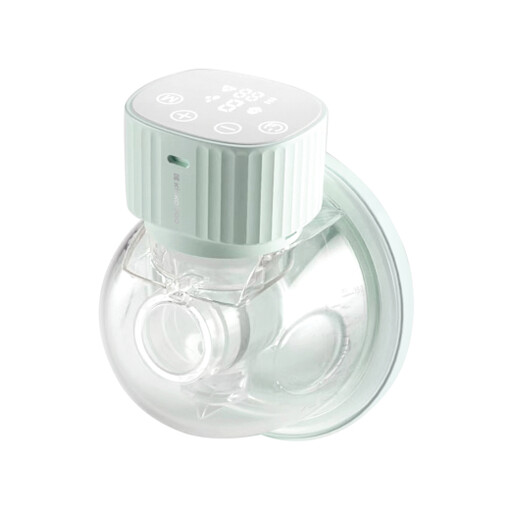
Why this product suits the profile: This compact single pump is aimed at parents who want to try a mobile solution for occasional expressing. It offers three modes, nine suction levels and a stated battery life of up to 120 minutes.
The nine suction levels allow finer adjustment than a system with only a few settings. Anti-backflow protection and a timer are listed as practical features.
1100-mAh battery, USB-C charging, three modes and BPA-free materials according to the product details.
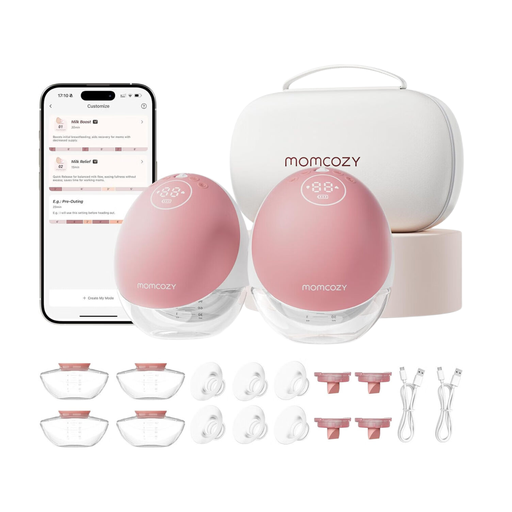
Why this product suits the profile: This double set combines hands-free expressing with app control. It is an interesting option for users who regularly express from both breasts at the same time and want to manage settings via smartphone.
Four stated flange sizes or inserts help achieve a better fit. This means your purchasing decision does not depend solely on the standard 24 mm size.
Two pumps, up to 15 suction levels, USB-C batteries and a storage case according to the product description.
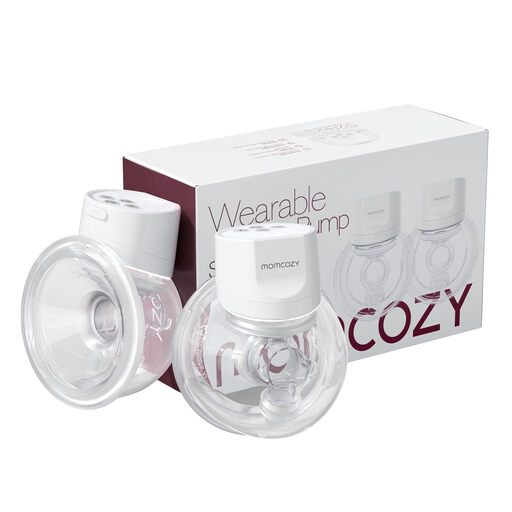
Why this product suits the profile: This double breast pump is designed for regular, simultaneous expressing at home, in the office or while travelling. According to the product details, it provides up to 180 minutes of use per charge.
Flange inserts in several sizes are included, reducing reliance on the standard flange. The standing design of the milk container can make decanting easier.
Two wearable units, nine suction levels, several modes and BPA-free silicone according to the manufacturer’s details.
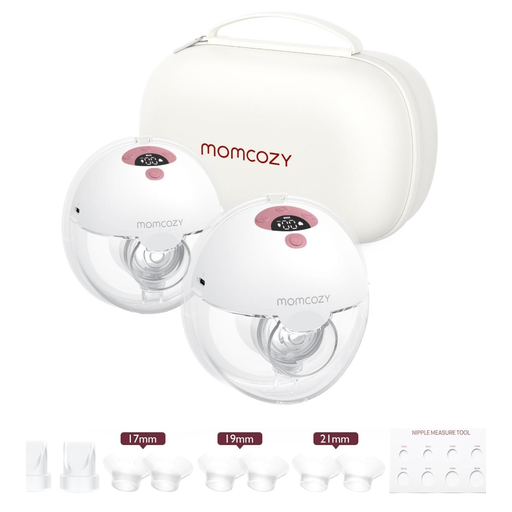
Why this product suits the profile: This single wearable breast pump is suitable for parents looking for a lightweight solution for work, travel or occasional use, with several flange sizes to choose from.
Three modes, nine suction levels and inserts for 17, 19, 21 and 24 mm allow more precise adjustment. The weight is stated as 225 g.
BPA-free, food-grade silicone, a wireless design and four stated flange sizes.
We have put together a complete, regularly updated list of products that fully meet these strict selection criteria and the safety regulations applicable in the EU.
Check the following before placing your order:
Assemble the pump according to the instructions, making sure that the flange, seals, valve and collection container are connected correctly. The contact parts should be clean and completely dry. Start at a low suction level and increase it only as far as remains comfortable. Stop using the pump if you experience pain.
Battery life depends on the model, suction level, charge level and battery age. The products mentioned here, for example, are stated to provide up to 120 minutes or up to 180 minutes of use. These figures are supplied by the manufacturer and are intended as a guide. For longer periods of use, fully charging the pump beforehand is recommended.
In addition to the purchase price, you may need to pay for replacement parts, cleaning products and, if necessary, additional flanges. Silicone components such as valves and seals are subject to wear and should be replaced according to their condition or the manufacturer’s instructions. Even with an inexpensive breast pump, it is therefore worth checking the availability and prices of compatible replacement parts.