
Lieferung heute & morgen

Qualitätsgarantie
App herunterladen
Kategorien
Selecting a Wireless Gaming Headset requires an analysis of technical specifications crucial for an immersive and responsive gaming experience. Factors like latency, audio quality, microphone performance, and cross-platform compatibility determine a device's practical utility. A wireless setup offers freedom of movement but places specific demands on signal transmission to ensure perfect synchronisation between audio and video. This article analyses the technical criteria for choosing a suitable headset and presents models that meet these requirements.
The decision to purchase a Wireless Gaming Headset should be based on an objective evaluation of its core features. The following parameters are central to performance and versatility.
The type of connection significantly impacts latency and compatibility.
Audio reproduction is the heart of any headset.
Clear team communication requires a high-quality microphone.
A versatile headset must work with multiple platforms. A PS5 Headset Wireless is not automatically compatible with other devices. It is crucial to check the connectivity options for each platform:
Long gaming sessions demand a comfortable design.
Based on the technical criteria above, we present two models that stand out for their versatility and performance features.
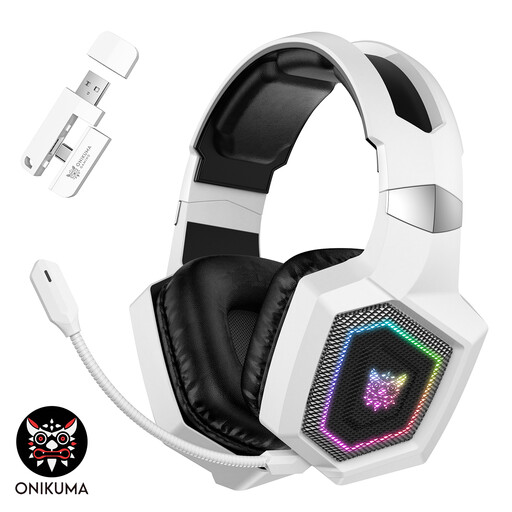
Why we recommend this product: The ONIKUMA GT806 is designed as a triple-mode headset, offering flexibility through 2.4 GHz, Bluetooth 5.4, and wired connections. The 2.4 GHz technology enables an ultra-low latency connection of under 30 ms, which is fundamental for responsive gaming on PC, PS5, and PS4. The 50 mm drivers, combined with virtual 7.1 surround sound, deliver precise spatial audio. The detachable noise-cancelling microphone ensures clear communication. Its long battery life of up to 40 hours in gaming mode supports extended use.
Pros:
Who it's for: This model is suitable for multi-platform gamers who want a single headset for PC, PlayStation, and mobile devices. It is ideal for players who prioritise a low-latency connection for competitive gaming while also valuing the flexibility of Bluetooth for mobile use.
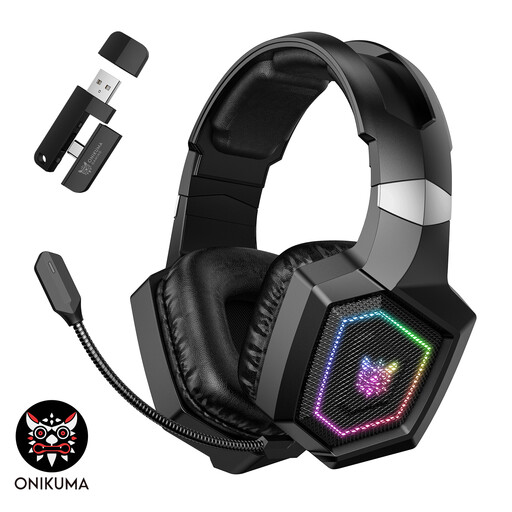
Why we recommend this product: The black version of the ONIKUMA GT806 shares the same technical specifications as the white model, offering an alternative aesthetic. The combination of lossless 2.4 GHz wireless technology and 50 mm drivers delivers a clear and immersive sound experience. The ultra-low latency of under 30 ms is a decisive factor for a smooth gaming experience without audio delay. Its cross-platform compatibility makes it a practical solution for users with multiple devices. The design, featuring breathing RGB lighting and high comfort, completes the package.
Pros:
Who it's for: This headset is aimed at gamers who need reliable, low-latency wireless performance for their main gaming platform (PC/console) but don't want to give up the option of using the headset on the go with their smartphone. It is a solid choice for anyone looking to combine a functional headset for PS4, PS5, and PC in one device.
If you are considering other gift options besides technical equipment, you can find a curated selection of products for various occasions in our Anniversary Gifts category.
1. What is more important in a wireless gaming headset: 2.4 GHz or Bluetooth? For gaming, a 2.4 GHz connection via a USB dongle is preferable. It offers significantly lower latency than Bluetooth, which is essential for synchronising audio and video in fast-paced games. Bluetooth, on the other hand, is well-suited for listening to music or for mobile games on smartphones and tablets where minimal delay is less critical.
2. Does every wireless headset work with the PS5? No. The PS5 does not support audio transmission via Bluetooth from third-party headsets. A PS5 Headset Wireless must be connected via a dedicated 2.4 GHz USB dongle to function wirelessly. When making your choice, ensure that the manufacturer explicitly states compatibility with the PS5.
3. How important is 7.1 surround sound for gaming? Virtual 7.1 surround sound can offer a significant advantage, especially in first-person shooters or open-world games. It improves the spatial location of sounds, allowing you to more accurately determine the position of opponents by their footsteps or other noises. This not only enhances immersion but also increases tactical possibilities in the game.