
Lieferung heute & morgen

Qualitätsgarantie

Willkommens-Angebote freischalten: KOSTENLOSE Lieferung | Bis zu 80 % RABATT | Kostenlose 30-Tage-JoyPlus-Testphase
App herunterladen
A wireless gaming headset gives you freedom of movement, fewer cables on your desk and often direct controls for volume or muting. However, not every wireless gaming headset suits every setup. The key factors are the connection type, actual compatibility, wearing comfort and microphone solution.
Many buyers look first at RGB lighting, surround sound or particularly large speakers. These features can be interesting, but on their own they reveal little about everyday usability. Three common purchasing misconceptions are especially likely to lead to the wrong decision:
A 2.4 GHz gaming headset normally uses a USB receiver. This connection is practical for PC gaming and consoles, provided a suitable USB port is available. Before buying, check whether the headset works with your specific platform:
A headset with three modes, such as 2.4 GHz, Bluetooth and wired, can offer greater flexibility across several devices. However, switching between modes should still be straightforward in practice. The stated range is also only a guide: walls, furniture and other wireless sources can affect the connection.
A gaming headset with microphone should provide clear voice transmission and allow you to mute it quickly when needed. Detachable microphones and flip-to-mute mechanisms are useful features. However, a wireless microphone is not automatically the same as a headset microphone: for streams, podcasts or interviews, a lavalier microphone or separate streaming microphone may be more suitable.
Look out for:
A separate microphone such as the MSI Immerse GV60 uses USB, offers four selectable pickup patterns and has a 3.5 mm headphone output for latency-free monitoring. It is designed for a fixed desk setup and does not replace a mobile headset microphone.
Weight alone does not determine comfort. The headband, ear cushions, clamping force and shape of the ear cups are also important. Over-ear models passively block out ambient noise, but may feel warmer during long sessions. On-ear models are more compact, but sit directly on your ears.
When considering battery life, compare the manufacturer’s stated figure with how you intend to use the headset:
For safer listening, use a moderate volume and take regular breaks. Lithium-ion and lithium-polymer batteries should not be opened or exposed to excessive heat or liquids.
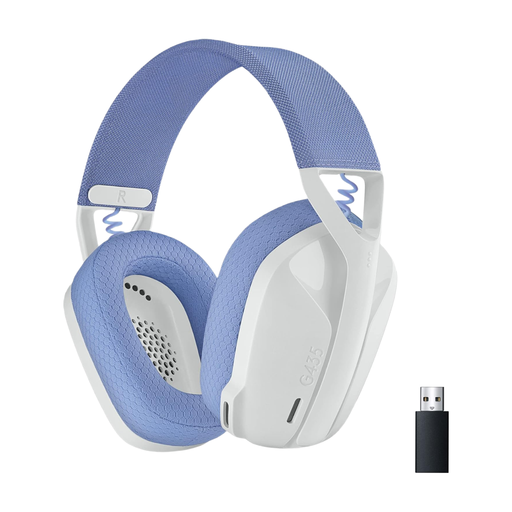
Why this product suits this profile: According to the product specifications, this lightweight over-ear model weighs 165 g and is intended for PCs, consoles and laptops. Bluetooth enables use with compatible mobile devices.
The stated battery life is up to 12 hours. This makes it easier to plan around realistically than a blanket promise without usage conditions.
165 g weight, Bluetooth connection and compatibility with PC, desktop, laptop and games consoles.
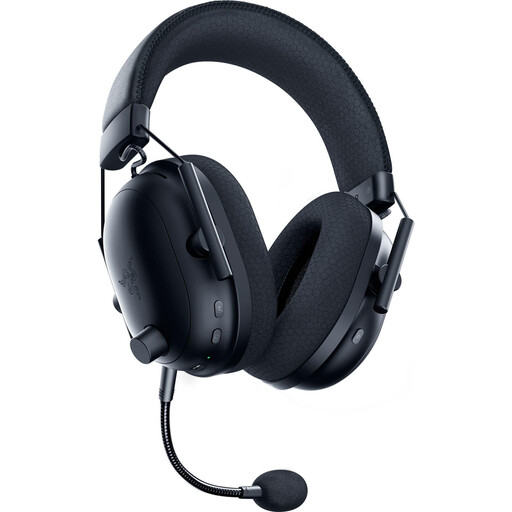
Why this product suits this profile: This model combines 2.4 GHz Razer HyperSpeed, Bluetooth 5.2, a detachable microphone and THX Spatial Audio. It is ideal for users who want several advanced features in a single headset.
Battery life is stated as up to 70 hours. Bluetooth and 2.4 GHz are listed separately, allowing you to choose the connection that best suits your needs.
50 mm drivers, detachable HyperClear microphone, USB-C charging and up to 70 hours of battery life according to the product specifications.

Why this product suits this profile: This headset offers 2.4 GHz, Bluetooth 5.3 and a 3.5 mm wired connection. The combination is designed for PC, console and mobile use.
If the battery runs out, a wired alternative is available. The RGB lighting can be considered separately from the headset’s core function.
Three connection types, 50 mm drivers, RGB lighting and stated battery life of around 60 hours without lighting.
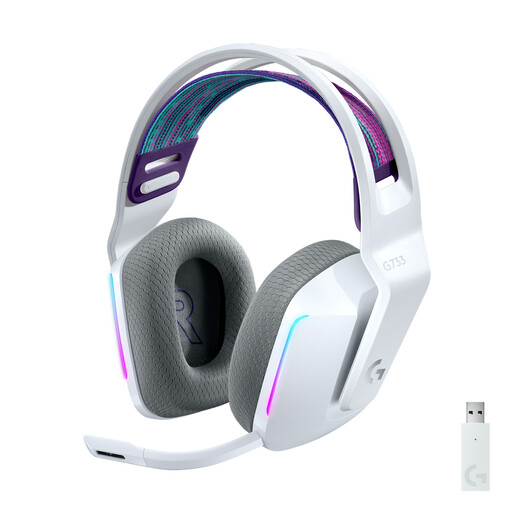
Why this product suits this profile: USB LIGHTSPEED, a detachable microphone with Blue VO!CE technology and DTS Headphone:X 2.0 are aimed at PC gamers and users who want to customise voice communication.
The technical specifications distinguish between PC surround sound and console use. This makes it easier to assess the advertised feature realistically for each platform.
278 g weight, up to 20 m range, USB-C charging and up to 29 hours of battery life without lighting.
We have put together a complete, regularly updated list of products that fully meet these strict selection criteria and the safety regulations applicable in the EU.
That depends on the model and connection type. USB receivers may work with PlayStation 4 or PlayStation 5, provided the manufacturer states that they are supported. With the Nintendo Switch, support is often limited to “docked mode”. Bluetooth compatibility should be checked separately for each device.
Battery life varies depending on the model and how it is used. Lighting, volume and wireless connection affect power consumption. The manufacturer’s figures should therefore be treated as a guide. A headset with long battery life, such as the Razer BlackShark V2 Pro, is stated to offer up to 70 hours; the Logitech G733 has different figures with and without RGB lighting.
For occasional conversations, the integrated or detachable headset microphone is often sufficient. Anyone who streams, records podcasts or conducts interviews regularly may benefit from a desktop streaming microphone with headphone monitoring and several pickup patterns. For mobile recordings, however, a lavalier microphone and a suitable USB-C or Lightning connection are more practical.