
Lieferung heute & morgen

Qualitätsgarantie

Willkommens-Angebote freischalten: KOSTENLOSE Lieferung | Bis zu 80 % RABATT | Kostenlose 30-Tage-JoyPlus-Testphase
App herunterladen
The search for the right Wireless Gaming Headset can quickly become overwhelming. Manufacturers advertise limitless freedom and immersive audio experiences, but not every model delivers on its promise. Before you make a decision, it's crucial to understand the most common pitfalls that can lead to disappointment and unnecessary expense. As your Joybuy Product Recommendation Officer, I'm here to help you separate the wheat from the chaff and make an informed choice.
Two marketing promises often prove problematic in practice:
To avoid buyer's remorse, you should focus on objective, technical parameters. These three criteria are crucial for a satisfying gaming experience.
The type of wireless connection directly impacts latency—the delay between the action in the game and the sound you hear.
A single headset for all systems is the dream for many gamers. Pay close attention to the compatibility details in the product description:
A good gaming headset with a microphone must excel in two areas: audio playback and voice transmission.
Here are a few models that represent a compelling option for specific user profiles based on their technical specifications.
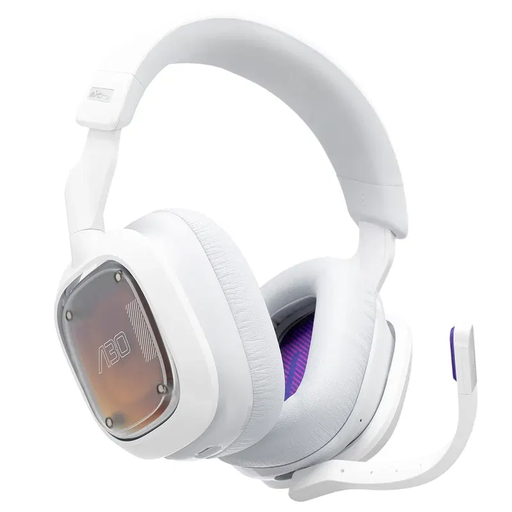
Why This Fits Their Persona: Ideal for gamers who switch seamlessly between PC, console, and mobile devices. The ability to simultaneously mix audio from a 2.4 GHz source (game) and Bluetooth (music/call) offers maximum daily flexibility.
It bypasses the compatibility trap with clear specifications and by providing three connection types (LIGHTSPEED 2.4 GHz, Bluetooth, 3.5mm cable), ensuring true multi-platform use.
Simultaneous audio connection from two devices; detachable boom mic and integrated mic for on-the-go use; over 27 hours of battery life according to the manufacturer.
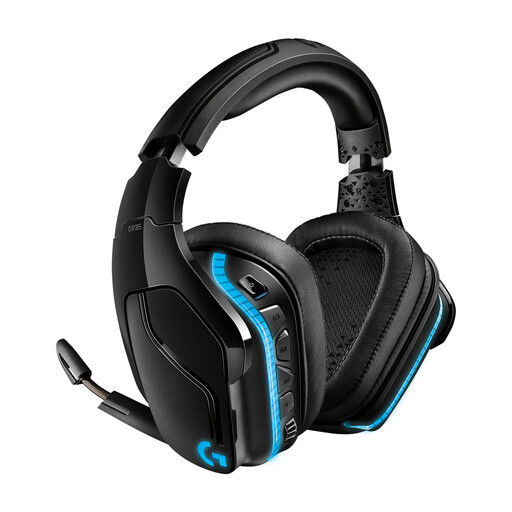
Why This Fits Their Persona: Designed for gamers who prioritise low latency and precise positional audio. The combination of LIGHTSPEED wireless technology and DTS Headphone:X 2.0 surround sound is tailored for the demands of esports and high-stakes PC gaming.
It focuses on a core competency: a stable, low-latency 2.4 GHz connection for PC. The battery life is stated transparently with and without lighting (up to 12 hours without, approx. 8 hours with).
PRO-G 50mm drivers for detailed sound; DTS Headphone:X 2.0 for precise spatial awareness; 6mm microphone with flip-to-mute function.
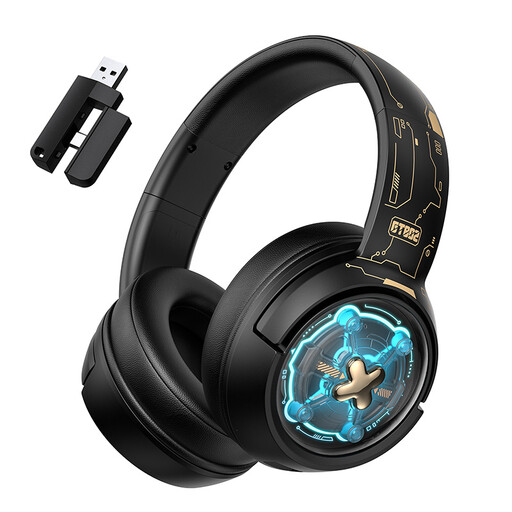
Why This Fits Their Persona: This model offers a high degree of functionality for a potentially lower price. It's suitable for gamers who want flexibility (PC, console, mobile) and don't want to miss out on features like RGB lighting, but are working with a limited budget.
By clearly stating the three connection modes (2.4 GHz, Bluetooth 5.3, wired), it answers the compatibility question transparently. The battery life is also differentiated (up to 20h with RGB, up to 60h without).
Three connection modes for high flexibility; large 50mm drivers; long battery life with lighting disabled.
If a wireless connection isn't your top priority, a wired model often provides a latency-free alternative. Discover our selection of high-performance PC headsets.
Not necessarily. A multi-platform headset is designed to work with multiple devices. The key lies in the connection options. For example, models with a 2.4 GHz dongle and additional Bluetooth can be used on a PC or PS5 (via dongle) and a smartphone (via Bluetooth) simultaneously. However, for Xbox, a specially licensed headset or a model with a dedicated Xbox-compatible transmitter is almost always required.
For casual or mobile games, Bluetooth is often sufficient. However, for fast-paced, competitive PC or console games like first-person shooters or fighting games, a 2.4 GHz wireless connection is recommended. The latency with Bluetooth is typically higher, which can lead to a noticeable delay between video and audio, putting you at a competitive disadvantage.
It's important to distinguish between two types. Active Noise Cancellation (ANC) for the earcups reduces ambient sounds, allowing you to focus better on the game. This is especially useful in noisy environments. At least as important is the microphone's noise cancellation. This filters out background noise like keyboard clicks or other voices in the room, ensuring your teammates can hear you loud and clear.