
Lieferung heute & morgen

Qualitätsgarantie

Willkommens-Angebote freischalten: KOSTENLOSE Lieferung | Bis zu 80 % RABATT | Kostenlose 30-Tage-JoyPlus-Testphase
App herunterladen
For competitive gamers, every millisecond and micro-movement counts. Imprecise or slow equipment can mean the difference between victory and defeat. The search for the right wireless gaming mouse is therefore no trivial task. The freedom of a wireless setup must not come at the expense of latency, weight, or precision.
This article serves as your guide. It analyses the technical features of relevant models and presents a selection of wireless gaming mice tailored to the needs of demanding gamers. Our goal is to enable an informed decision based on objective data.
Selecting a professional gaming mouse depends on specific technical parameters. Three criteria are particularly crucial.
A lightweight gaming mouse reduces hand and arm fatigue during long gaming sessions and enables faster, smoother movements. Models under 70 grams are common in the esports scene as they support high agility. The shape of the mouse is just as important. An ergonomic gaming mouse should match your individual grip style (palm, claw, or fingertip) to ensure maximum comfort and control.
A high-DPI gaming mouse (Dots Per Inch) offers high sensitivity, but the raw DPI number isn't the sole indicator of quality. The overall performance of the optical sensor is what's crucial. Key metrics include maximum speed (measured in IPS, Inches Per Second) and maximum acceleration (G). A high-quality sensor ensures precise 1:1 tracking of your movements without unwanted corrections like smoothing or acceleration, which is essential for pixel-perfect aiming.
Modern wireless technologies have overcome the latency issues of previous generations. Today, a high-quality wireless gaming mouse offers connection stability and response times comparable to wired models. Pay attention to the polling rate, measured in Hertz (Hz). A rate of 1000 Hz is the standard for gaming peripherals, while some esports mouse models already reach 4000 Hz or even 8000 Hz to further minimise the delay between your movement and the cursor's response.
Based on the criteria above, we have compiled a selection of models that stand out for their technical specifications, making them ideal for demanding gaming.
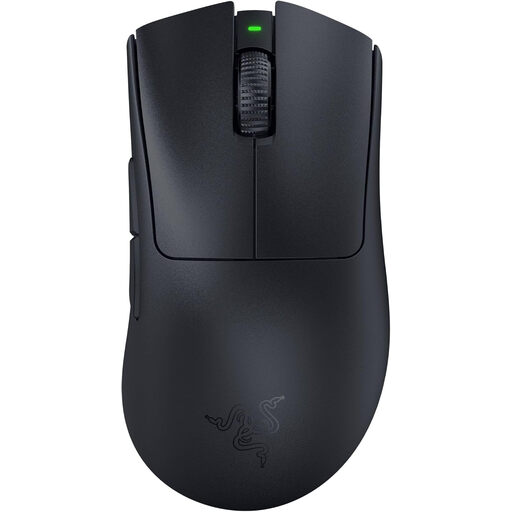
Why It Stands Out
The Razer DeathAdder V3 Pro combines an ultra-lightweight build with a highly refined ergonomic shape, optimised in collaboration with esports pros. At just 63 grams, it is over 25% lighter than its predecessor and designed for maximum speed and control.
Pros
Who Is It For?
Gamers looking for an extremely lightweight, ergonomic right-handed mouse who value a proven shape optimised for precision in fast-paced FPS titles.
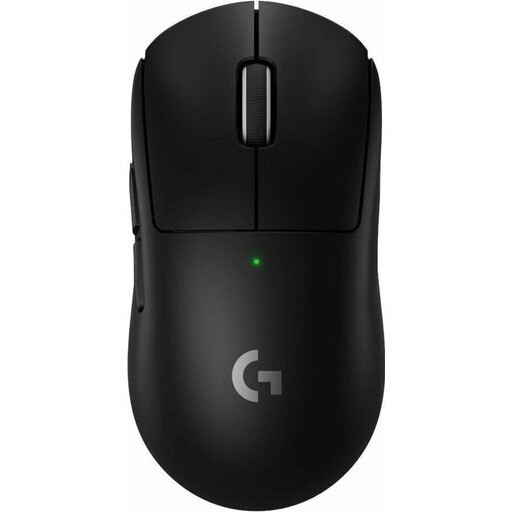
Why It Stands Out
The Logitech G PRO X SUPERLIGHT 2 is the evolution of a model already established among pros. Weighing just 60 grams and featuring the advanced HERO 2 sensor, it is engineered for maximum performance. The LIGHTFORCE hybrid switches combine the speed of optical switches with the tactile feedback of mechanical ones.
Pros
Who Is It For?
Competitive gamers who need an extremely lightweight, symmetrical mouse with state-of-the-art sensor technology and a very high polling rate for the fastest possible responses.
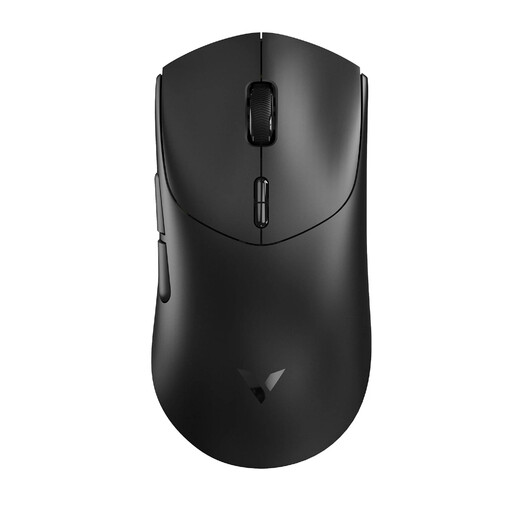
Why It Stands Out
The RAPOO VT7 stands out with an exceptional overall technical package. At 53 grams, it is the lightest mouse in this selection and offers a native wireless 8K polling rate. Particularly noteworthy is the manufacturer-stated battery life of up to 750 hours at 1000 Hz.
Pros
Who Is It For?
Gamers who want the lowest possible weight, an extremely long battery life, and future-proof 8K wireless technology without compromising on sensor performance.
The models featured here cover a broad spectrum of requirements. However, if you need a mouse with specific features, such as a higher number of side buttons for MMO or MOBA games, you can find more specialised models in our category.
? Discover our selection of gaming mice with 4 side buttons here
1. Is a wireless gaming mouse really as good as a wired one? Yes, modern wireless gaming mice from leading manufacturers use advanced transmission technologies (e.g., 2.4 GHz wireless) that achieve latency as low as one millisecond. In practice, this difference is imperceptible to human players compared to a wired mouse.
2. What does DPI mean on a gaming mouse, and how much do I need? DPI (Dots Per Inch) indicates how sensitive a mouse is to movement. A high DPI number means the cursor travels far across the screen with only a small hand movement. Most professional gamers use relatively low DPI settings (often between 400 and 1600) as this allows for more precise control. A mouse with a high maximum DPI usually has a high-quality sensor, but the setting you actually use is a matter of personal preference.
3. How important is the weight of an esports mouse? Weight is a critical factor. A lighter mouse requires less force to initiate movements and change direction. This leads to faster reactions, less wrist fatigue, and can improve aiming accuracy during quick "flick shots." Consequently, the trend in the esports scene is clearly towards ultra-lightweight models under 70 grams.