
Lieferung heute & morgen

Qualitätsgarantie

Willkommens-Angebote freischalten: KOSTENLOSE Lieferung | Bis zu 80 % RABATT | Kostenlose 30-Tage-JoyPlus-Testphase
App herunterladen
For competitive PC gamers, especially in fast-paced FPS titles like Valorant or CS2, every millisecond counts. A cable can not only restrict freedom of movement but also represent a critical hindrance. However, modern wireless gaming mice now offer latency-free performance that is indistinguishable from their wired counterparts. This article presents a selection of high-performance models and explains the key criteria relevant to choosing a wireless gaming mouse in 2026.
Choosing the right mouse is a highly personal decision that depends on hand size, grip style, and gaming preferences. However, three technical aspects are fundamental to making an informed choice.
In the esports scene, a clear trend towards ultra-lightweight mice has been established. A lightweight gaming mouse weighing under 70 grams allows for faster, less fatiguing movements across the mousepad. This is particularly advantageous in games that demand rapid directional changes and precise tracking. The shape of the mouse should also suit your grip style. While a symmetrical shape is suitable for various grip types, an ergonomic gaming mouse for right-handers often provides more comfort during long gaming sessions, especially for a palm grip.
The sensor is the heart of every pro gaming mouse. Modern optical sensors offer extremely high DPI (Dots Per Inch) values, but for most gamers, settings between 800 and 3200 DPI are the most practical. More important are a high tracking speed (IPS) and flawless tracking without any unwanted acceleration.
A crucial factor for a fast gaming mouse is its polling rate, measured in Hertz (Hz). It indicates how often the mouse reports its position to the computer. While 1000 Hz was the long-standing standard, technologies like Razer HyperPolling enable rates of up to 8000 Hz. This reduces latency to a minimum and ensures visibly smoother cursor movement on high-refresh-rate monitors.
The mouse buttons must be precise and durable. Optical switches, like those found in many Razer mouse models, use a light beam for signal actuation. This eliminates the risk of unintentional double-clicks (debouncing delay) and allows for extremely fast response times. The lifespan is often rated in millions of clicks and is an indicator of durability. For wireless models, long battery life is also crucial to ensure uninterrupted gaming sessions.
Based on the criteria above, we have compiled a selection of models suitable for demanding gamers.
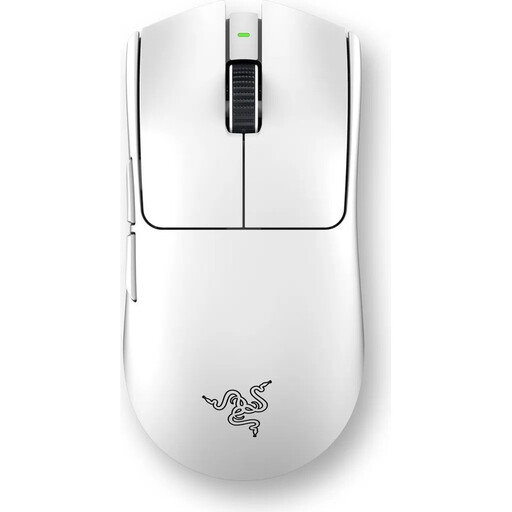
Why It Stands Out: The Razer Viper V3 Pro was developed in collaboration with esports professionals and is engineered for maximum performance at a minimal weight. At just 54 grams, it is one of the lightest mice on the market. Its true strength lies in the combination of the precise Focus Pro 35K Sensor and Razer's 8000Hz HyperPolling technology, which ensures extremely low latency for competitive play.
Pros:
Who It's For: This esports mouse is aimed at competitive players of FPS games who are looking for a symmetrical, ultra-lightweight mouse and refuse to compromise on response speed.
View Details for the RAZER Viper V3 Pro
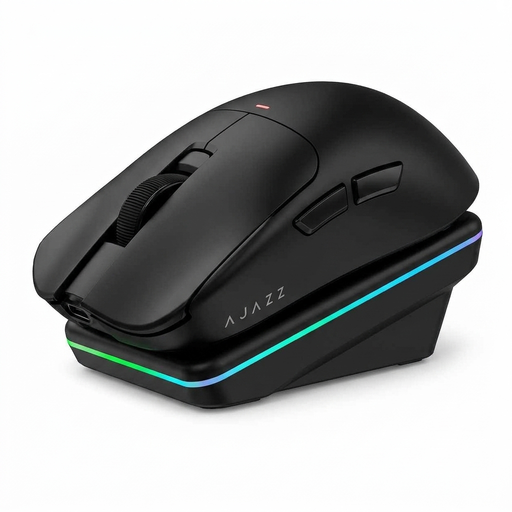
Why It Stands Out: The AJAZZ AJ200P goes beyond being just a gaming mouse. It integrates AI features like voice commands and smart assistant functions. The included magnetic charging dock provides convenience and doubles as an RGB-lit desktop accessory. With tri-mode connectivity (2.4G, Bluetooth, wired), it offers high flexibility for both gaming and office use.
Pros:
Who It's For: Tech-savvy users looking for a versatile mouse for gaming and productivity tasks who appreciate innovative features like AI support and a practical charging dock.
View Details for the AJAZZ AJ200 AI MC
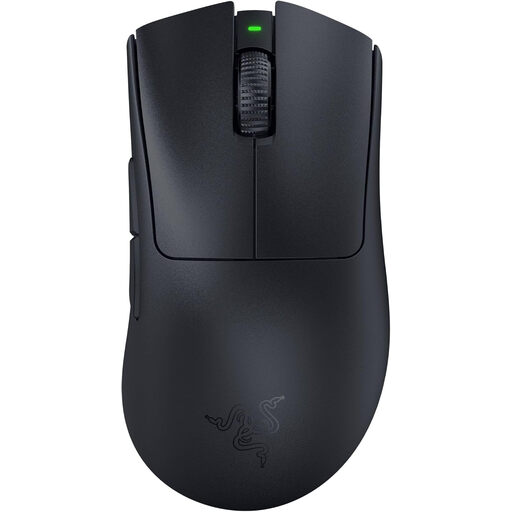
Why It Stands Out: The DeathAdder series is renowned for its iconic ergonomic shape. The V3 Pro continues this legacy but drastically reduces the weight to just 63 grams. It combines proven right-handed comfort with the top-tier wireless performance of Razer HyperSpeed technology and a precise Focus Pro 30K sensor.
Pros:
Who It's For: Right-handed gamers who prefer an ergonomic gaming mouse for long gaming sessions without sacrificing the low weight and high performance of a modern pro gaming mouse. Ideal for palm and claw grip users.
View Details for the Razer DeathAdder V3 Pro
The models presented here cover a broad spectrum of requirements for competitive gaming. However, if you are looking for specific features like ultra-quiet clicks or different form factors, you can find more models in our comprehensive category.
? Explore more silent wireless gaming mouse models here
Yes. Modern wireless mice that use a dedicated 2.4GHz connection (like Razer HyperSpeed) offer signal stability and latency that are virtually indistinguishable from wired connections. For competitive gaming, using a Bluetooth connection is not recommended as it has higher latency.
For fast-paced FPS games, a lower weight is generally preferred as it allows for quick, broad mouse movements with less effort. Mice under 70 grams are considered lightweight, while models under 60 grams are classified as ultra-lightweight. The choice ultimately depends on personal preference.
The polling rate indicates how many times per second the mouse reports its position to the computer. A higher rate (e.g., 4000 Hz or 8000 Hz) results in lower delay between your movement and the on-screen response. This can make cursor movement appear smoother and reduce click latency, which can make a noticeable difference in fast-paced games.