
Lieferung heute & morgen

Qualitätsgarantie

Willkommens-Angebote freischalten: KOSTENLOSE Lieferung | Bis zu 80 % RABATT | Kostenlose 30-Tage-JoyPlus-Testphase
App herunterladen
As a Joybuy Product Recommendation Officer, I analyse product information daily to provide you with objective and practical advice. When searching for a new wireless gaming mouse, it's easy to get lost in a jungle of marketing terms and technical data. This guide will help you identify the crucial features and make an informed decision that will actually improve your in-game performance.
Manufacturers often advertise with impressive numbers, but not every specification automatically leads to a better gaming experience. Here are three common assumptions that can lead to a poor purchase.
Many products are advertised with values exceeding 20,000 DPI (Dots Per Inch). In practice, however, most competitive players use settings between 400 and 1,600 DPI. An extremely high DPI number does not necessarily mean greater precision. In fact, it can lead to uncontrollable cursor jumps with small hand movements. The quality and flawlessness of the sensor at lower DPI levels are far more critical.
A mouse can have the most advanced sensor, but if it's uncomfortable in your hand or too heavy, your performance will suffer. Especially in fast-paced FPS (First-Person Shooter) games, a lightweight gaming mouse is advantageous as it allows for quick changes in direction and reduces arm fatigue. An ultra-lightweight mouse under 65 grams can make a noticeable difference, but only if its ergonomic shape fits your grip style (e.g., Palm, Claw, or Fingertip Grip).
An 8K Polling Rate (8000 Hz) means the mouse reports its position to the computer 8,000 times per second. On paper, this reduces latency to a minimum. However, the actual advantage over 1000 Hz or 4000 Hz is barely perceptible to the human eye and requires a high-performance PC system to process the data volume without performance drops. Furthermore, a higher polling rate significantly shortens battery life.
Instead of being swayed by marketing superlatives, you should focus on the following practical parameters.
A modern optical sensor is the heart of any gaming mouse. More important than a maximum DPI value is flawless tracking. Pay attention to specifications like IPS (Inches Per Second), which indicates how fast you can move the mouse before the sensor loses tracking. A good sensor delivers consistent and precise performance across the entire DPI range without unwanted acceleration or smoothing.
Weight directly influences how agilely and quickly you can aim. A lightweight gaming mouse is particularly beneficial for players who use low mouse sensitivity and make large, sweeping movements. The ergonomic shape must match your hand size and grip style to ensure long-term comfort and prevent strain. Symmetrical mice are suitable for various grip styles, while ergonomic, right-handed models often offer more support.
Programmable buttons allow you to store important commands or macros directly on the mouse, which can provide an advantage in complex games. The wireless connection should use a stable 2.4 GHz radio technology to ensure latency-free transmission that is indistinguishable from a wired connection.
Here are some recommendations tailored to different needs and playstyles.
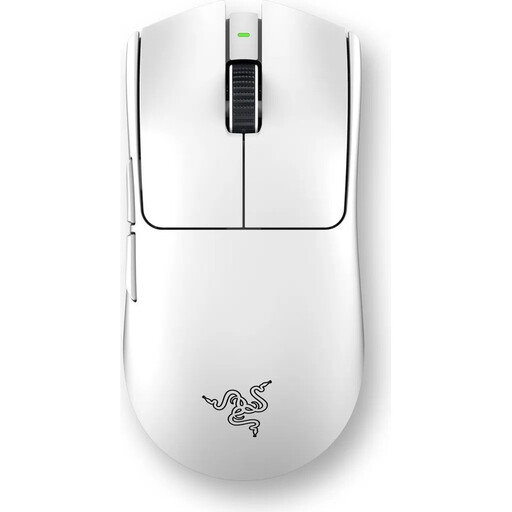
Why This Fits Their Persona: Designed for competitive players seeking maximum performance without compromise. The combination of an extremely low weight and state-of-the-art sensor technology is engineered for rapid reactions in FPS and MOBA titles.
The focus here is not solely on the 8K polling rate, but on the complete package. The ultra-lightweight 54g design and the precise sensor offer a tangible advantage that goes beyond pure marketing numbers.
The combination of a mere 54g weight, a Razer Focus Pro 35K Sensor, and 8000Hz HyperPolling technology provides market-leading responsiveness for professional gaming.
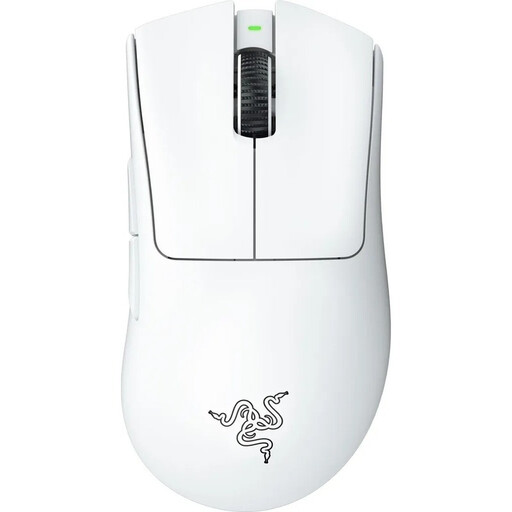
Why This Fits Their Persona: Ideal for gamers who value comfort during long gaming sessions and prefer a proven, ergonomic shape. It offers an excellent balance of low weight and a stable grip.
Instead of just following the trend of ever-lighter mice, this model relies on an ergonomic shape refined over years. It avoids the pitfall of an uncomfortable ultra-lightweight mouse and prioritises comfort.
The renowned ergonomic shape perfectly fits many right-handed users and reduces fatigue. At 64g, it is still very light and highly precise with the Focus Pro 30K sensor.
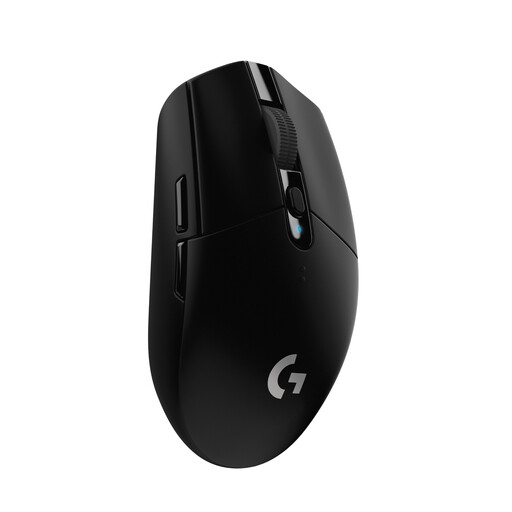
Why This Fits Their Persona: For gamers who want a reliable, latency-free wireless mouse without paying for high-end specs they may not need. A solid entry into the world of wireless gaming.
This model skips the hype around extremely high DPI and polling rates, focusing instead on the essentials: a proven sensor and a stable, fast wireless connection at an accessible price.
Offers excellent value for money. The HERO sensor is very energy-efficient and precise, and the LIGHTSPEED technology ensures a lag-free gaming experience.
We have compiled a complete, up-to-date list of products that fully meet these strict selection criteria and German safety regulations.
Yes, modern wireless gaming mice that use 2.4 GHz radio technology offer a latency that is indistinguishable from a wired connection to human perception. Technologies like Razer HyperSpeed or Logitech LIGHTSPEED are designed for e-sports use and ensure a stable and responsive connection.
For fast-paced games like FPS or MOBAs, weight is a very important factor. A lightweight gaming mouse (typically under 75 grams) reduces inertia and arm fatigue, allowing for faster and more precise mouse movements over extended periods. Many professional players prefer an ultra-lightweight mouse to maximise their responsiveness.
Most gaming mice work for basic functions right out of the box ("Plug and Play"). However, to access advanced settings such as adjusting DPI levels, configuring programmable buttons, or controlling RGB lighting, installing the manufacturer's software is usually required. Some models also offer the ability to adjust basic settings directly on the mouse.