
Lieferung heute & morgen

Qualitätsgarantie

Willkommens-Angebote freischalten: KOSTENLOSE Lieferung | Bis zu 80 % RABATT | Kostenlose 30-Tage-JoyPlus-Testphase
App herunterladen
The search for the right Wireless Gaming Mouse can quickly become complex. Manufacturers advertise ever-higher DPI figures, extremely lightweight designs, and polling rates that push the limits of what's technically possible. But not every innovation translates to a real in-game advantage. As your Joybuy Product Recommendation Officer, I'll help you distinguish decisive features from pure marketing hype and make an informed decision.
Before we dive into the technical details, it's important to know the most common pitfalls that often lead to a bad purchase.
Focus on the following three factors in your decision to find a mouse that truly enhances your performance.
Weight is crucial for agility. An ultralight mouse under 60 grams allows for fast, fatigue-free movements, making it the ideal FPS mouse. However, the shape is at least as important. An ergonomic gaming mouse should fit your hand size and grip style (Palm, Claw, or Fingertip Grip). An ill-fitting shape can lead to cramping and impair precision, even at a low weight.
The quality of the optical sensor determines accuracy. Look for proven sensors (e.g., from the Pixart PAW series) and high IPS (Inches Per Second) values, which indicate how fast you can move the mouse before tracking becomes inaccurate. For a wireless gaming mouse, a stable, low-latency 2.4 GHz connection is essential to ensure a response time comparable to wired mice. Bluetooth is suitable for office tasks, but not for competitive gaming.
Long battery life ensures you don't run out of power in the heat of battle. Values over 70 hours at a 1000 Hz polling rate are a good benchmark. Note that RGB lighting and higher polling rates significantly shorten the runtime. For buttons, optical switches are a modern alternative to mechanical ones, as their light-based actuation makes them more durable and minimises the risk of unintentional double-clicks. For MMO or MOBA players, a programmable gaming mouse with additional side buttons for macros and abilities is a critical advantage.
Instead of creating a generic ranking, we have identified models that are precisely tailored to the needs of different types of gamers.
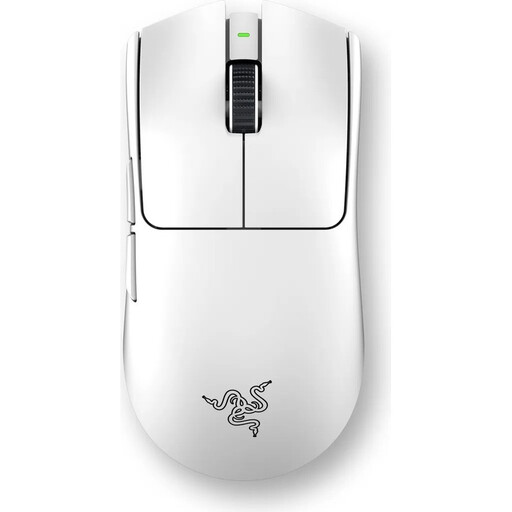
Why This Fits Their Persona: This model is purpose-built for the needs of FPS players. The ultralight 54g weight and symmetrical shape enable extremely rapid flicks and precise tracking. The focus is clearly on speed and control.
The Viper V3 Pro achieves its low weight with a closed, stable shell, thus bypassing the drawbacks of honeycomb designs. The 8000 Hz polling rate is a true performance feature for pros, not just a marketing figure.
The combination of an ultralight design, the Razer Focus Pro 35K Sensor, and 3rd-gen optical switches delivers performance geared for maximum competitive play.
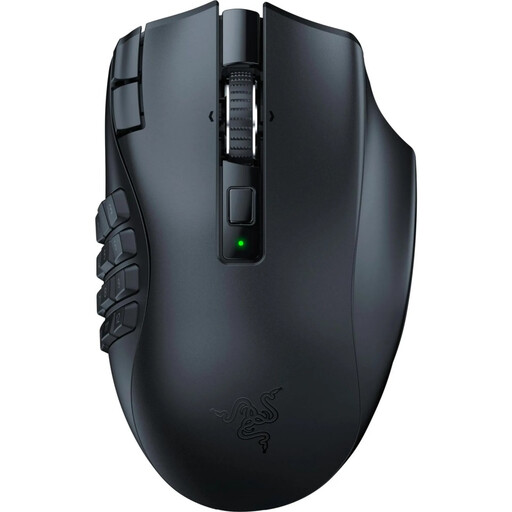
Why This Fits Their Persona: For MMO and MOBA players, quick access to a wide array of abilities is crucial. With 19 programmable buttons, the Naga V2 HyperSpeed offers unmatched control for complex command strings and macros.
This model doesn't focus on minimal weight, but on maximum functionality. The high button count is a clearly defined benefit for a specific target audience, not an empty marketing promise.
The 19 programmable buttons in an ergonomic layout allow for intuitive control. The long battery life of up to 250 hours (HyperSpeed) ensures uninterrupted sessions.
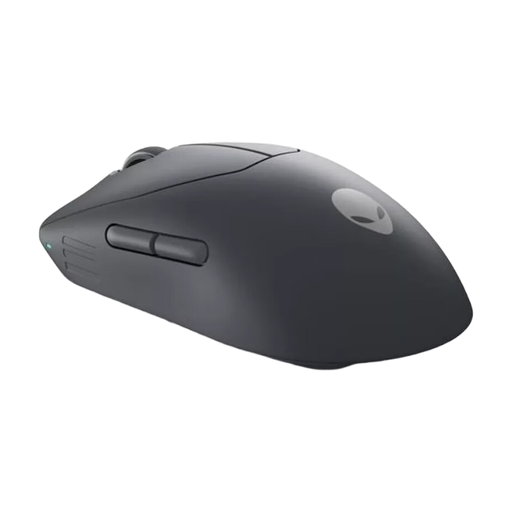
Why This Fits Their Persona: For gamers who value cutting-edge technology and seek a competitive edge. This mouse combines an ultralight design with extremely high polling rates for minimal input lag.
The high polling rate (4K Hz wireless, 8K Hz wired) is a core feature for a target audience that can leverage it. The sub-60g weight is achieved without structural compromises.
Offers extremely low response times of 0.25 ms (wireless) and 0.125 ms (wired). The magnetic-optical switches are designed for durability and rapid actuation.
We have compiled a complete, up-to-date list of products that fully meet these rigorous selection criteria and comply with regional safety standards.
Yes. Modern wireless gaming mice using a dedicated 2.4 GHz connection offer latency that is indistinguishable to humans from that of a wired mouse. Technologies like Razer HyperSpeed or Alienware's 4K Hz wireless connection deliver stable and extremely fast response times suitable for professional esports.
An 8000 Hz polling rate can smoothen cursor movement on the screen and theoretically reduce input lag further. However, a noticeable advantage is almost exclusively seen in combination with a monitor that has a very high refresh rate (e.g., 240 Hz or higher) and a powerful PC that can handle the high data load. For most gamers, the 1000 Hz standard is perfectly sufficient.
Clean the surface regularly with a dry microfibre cloth. For models with a honeycomb design, canned compressed air can help remove dust from the interior. Avoid liquids. Check the mouse skates (feet) every few months for wear and replace them if necessary to ensure smooth movement. Charge the battery before it is completely depleted to maximise its lifespan.