
Lieferung heute & morgen

Qualitätsgarantie

Willkommens-Angebote freischalten: KOSTENLOSE Lieferung | Bis zu 80 % RABATT | Kostenlose 30-Tage-JoyPlus-Testphase
App herunterladen
By Joybuy Product Recommendation Officer, July 10, 2026
For competitive PC gamers, every millisecond counts. An imprecise mouse or a snagging cable can be the difference between victory and defeat. However, the search for the right Wireless Gaming Mouse is often clouded by marketing jargon and an overwhelming number of models.
This guide is designed to bring clarity. We will analyze the technical features that are truly relevant for high in-game performance and present a selection of models tailored to the specific needs of esports enthusiasts. Our goal is to provide you with an informed basis for your decision, grounded in objective facts.
Choosing the right mouse depends on individual preferences and playstyle. However, three technical aspects are particularly crucial for performance.
A mouse's weight directly impacts agility and fatigue during long gaming sessions. A lightweight gaming mouse weighing under 60 grams allows for faster changes in direction and more precise “flick shots.” The shape is just as important. A symmetrical gaming mouse is suitable for a variety of grip styles (palm, claw, fingertip) and can often be used by both left- and right-handed players. Models with a very low front profile bring your fingers closer to the mousepad, which can improve control during micro-adjustments.
The sensor is the heart of any gaming mouse. Models like the Pixart 3395 sensor have established themselves as the industry standard for precise and flawless tracking. It ensures that fast movements are translated to the screen without delay or inaccuracy.
Another critical factor for a fast gaming mouse is the polling rate, measured in Hertz (Hz). It indicates how often the mouse reports its position to the computer. While 1000 Hz has long been the standard, an 8K polling rate mouse allows for data transmission up to 8,000 times per second. This reduces latency to a minimum and results in visibly smoother cursor movement on high-refresh-rate monitors (144 Hz and above).
Using a wireless gaming mouse means freedom from cable drag. For a stable and lag-free connection, 2.4 GHz wireless technology is essential. While Bluetooth is a useful secondary option for mobile use, it generally doesn't offer the low latency required for competitive gaming. A long battery life of over 50 hours ensures the mouse won't die mid-game, even during intense use.
Based on the criteria above, we have curated a selection of models that stand out for their technical specifications and design, making them ideal for demanding gamers.
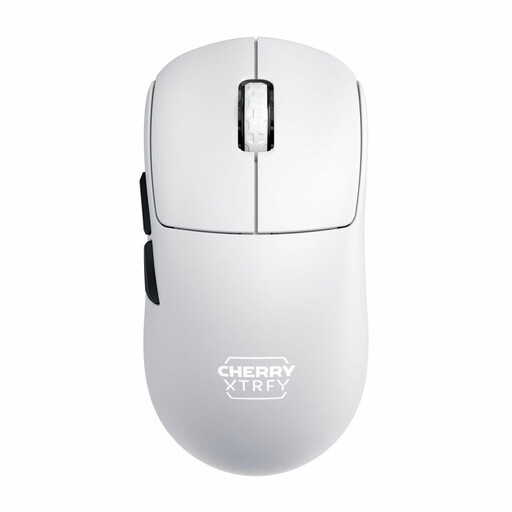
Why It Stands Out: The M68 Pro is engineered purely for esports performance. Its most outstanding feature is the 8,000 Hz polling rate, which enables extremely low click latency and exceptionally smooth cursor movement. Combined with the Pixart 3395 sensor and a weight of just 55 grams, it delivers maximum speed and precision. Despite its low weight, the shell is solid and robust.
Pros:
Who It's For: For competitive gamers and esports enthusiasts seeking the most technologically advanced equipment to compete at the highest level. This mouse is ideal for users with high-refresh-rate monitors who can take full advantage of 8K technology.
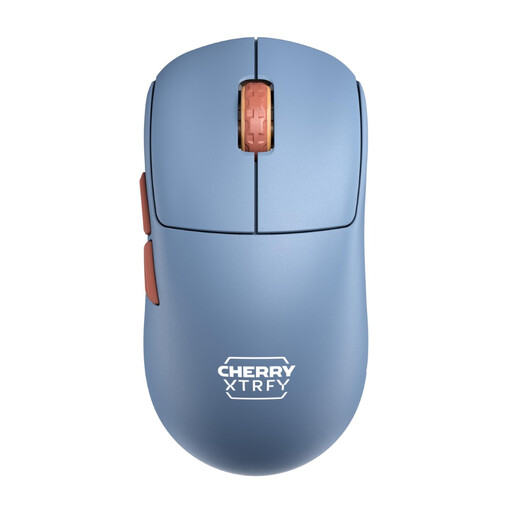
Why It Stands Out: The M68 Wireless shares the same thoughtful shape and ultralight design as the Pro version, weighing in at an even lighter 53 grams. It also relies on the proven Pixart 3395 sensor and a stable 2.4 GHz connection but operates at the standard 1,000 Hz polling rate. This makes it a powerful yet more accessible esports mouse.
Pros:
Who It's For: For ambitious gamers looking for an extremely lightweight and precise wireless mouse who don't necessarily need an 8K polling rate. It offers professional-grade performance for a wide range of competitive games.
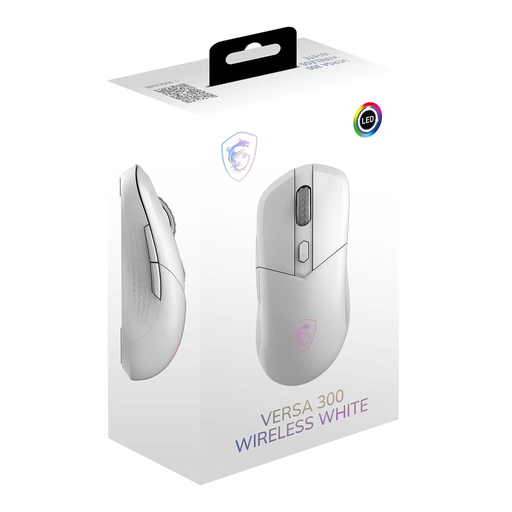
Why It Stands Out: The MSI Versa 300 stands out for its flexibility. Weighing in at 60 grams, it is also very lightweight and offers maximum versatility thanks to its tri-mode connectivity (2.4 GHz, Bluetooth 5.3, wired). The optical sensor with up to 8,000 DPI and durable Kailh switches make it a reliable tool for both gaming and productivity tasks.
Pros:
Who It's For: For gamers and users who need a versatile and lightweight mouse for various scenarios. The Bluetooth option makes it practical for use with laptops, while the 2.4 GHz connection delivers the performance needed for gaming sessions.
The models featured here are optimized for speed and low weight, making them ideal for FPS and MOBA games. If your focus is on MMOs or other genres that require a higher number of programmable buttons, a different type of mouse might be a better fit.
? Discover our selection of MMO Gaming Mice for models with additional side buttons and specific MMO features.
What does an 8K polling rate on a mouse mean? A polling rate of 8,000 Hz (8K) means the mouse sends its position data to the computer 8,000 times per second. Compared to the standard 1,000 Hz, this reduces latency from 1 millisecond to 0.125 milliseconds. The result is a noticeably smoother cursor movement and a faster response to inputs, which is especially beneficial on high-refresh-rate monitors.
Is a lightweight gaming mouse always the better choice? Not necessarily. A lightweight gaming mouse (typically under 65 grams) promotes fast, sweeping movements and can reduce wrist fatigue. However, some players prefer the feel and stability of a heavier mouse for more precise, controlled aiming. The choice ultimately depends on personal playstyle and preference.
What sensor is common in modern gaming mice? The Pixart 3395 sensor is currently one of the most prevalent high-end sensors in wireless gaming mice. It is known for its high precision, a high maximum tracking speed (IPS), and the absence of unwanted mouse acceleration or smoothing, making it a reliable choice for competitive gaming.