Listeners who focus on dialogue
If you listen to scenes several times to pick out words and tell speakers apart, try the voices and quieter passages with your own recording rather than relying solely on how music sounds in a review.


When learning repeatedly with downloaded audio dramas, check how clearly voices come through, whether pause and rewind controls are easy to reach, and how the headphones fit during your own recording. In noisy surroundings, a well-fitting pair with active noise cancellation (ANC) can help, but it won’t reliably block out changing conversations; if you need to hear what’s going on around you, look for a transparency mode. The download is stored on your playback device, not in the headphones.
If you listen to scenes several times to pick out words and tell speakers apart, try the voices and quieter passages with your own recording rather than relying solely on how music sounds in a review.
If you learn on the train or alongside everyday noise, look for a secure fit and a level of isolation suited to your surroundings. The WHO recommends well-fitting headphones and ANC to help prevent noise from prompting you to turn the volume up unnecessarily.
If you wear headphones for long stretches, check for pressure points and make sure the controls and battery life suit your session with the settings you’ve chosen.
When learning with downloaded audio dramas, sound quality is only part of the picture. Your listening environment, comfort and connection to your playback device matter too.
| What matters | What to look for when buying | Who it matters most to |
|---|---|---|
| Making out dialogue and quieter passages | Try listening to fast and quiet dialogue in your recording. Check the volume, pause and rewind controls on the specific model. | If I want to pick out individual words or speakers by listening repeatedly, I test clarity with my audio drama. Around 36% of consumers prioritise clear dialogue. |
| Reducing background noise | Test the fit and ANC against a typical source of noise. Check whether you can switch to a transparency mode when needed. | If background noise drowns out quiet scenes, I look for suitable isolation without expecting complete silence. Around 29% of consumers prioritise noise isolation. |
| Fit during long sessions | If possible, try the design for the length of a typical session. Check for pressure points and how it fits with glasses. | If I listen for long stretches, I want to avoid pressure on my head or ears. Around 21% of consumers focus primarily on long-term comfort. |
| Playing downloaded recordings | Check your playback device, connection and offline playback in your app. Compare battery life in the operating mode you actually plan to use. | If my recording is stored on my phone or computer, I want to play it through my headphones without any fuss. Around 14% of consumers pay particular attention to offline use and suitable battery life. |
Active noise cancellation can work differently depending on the type of noise. Voices around you may still be audible and can interfere with quieter parts of an audio drama.
If possible, test the headphones with typical background noise and check the fit rather than relying on the ANC label alone. Sony notes that noise cancellation works best with lower-pitched or consistent sounds.
Manufacturers’ battery life claims can vary depending on the operating mode. Soundcore quotes up to 40 hours with ANC and up to 60 hours in normal mode for the Space One Pro under its stated test conditions.
Compare battery life only when the ANC mode and stated test conditions are the same. Use the settings you plan to have on while you study as your guide.
JBL notes that some versions of the Tour One M3 are sold without SMART Tx. CHIP identified the Medion LIFE HX-1 Pro model it tested as MD43772; don’t assume other versions are identical just because they share the same name.
Before buying, check the full model number and what’s included with the specific version.
The WH-1000XM6 are over-ear headphones, while the WF-1000XM5 are compact in-ear headphones. That gives you two different designs to choose from for listening to audio dramas.
The Tour One M3 is an over-ear model tested for longer listening sessions.
The 2nd Generation QuietComfort Ultra Headphones are an over-ear option for buyers who value noise isolation.
The MOMENTUM 4 Wireless offers adaptive noise cancellation, a transparency mode and adjustable sound.
The Space One Pro is a foldable over-ear model with documented media controls and a choice of listening modes.
This selection includes wireless headphones and in-ear models for listening to your audio drama recording. For each model, check the fit, playback controls and connection to your playback device.
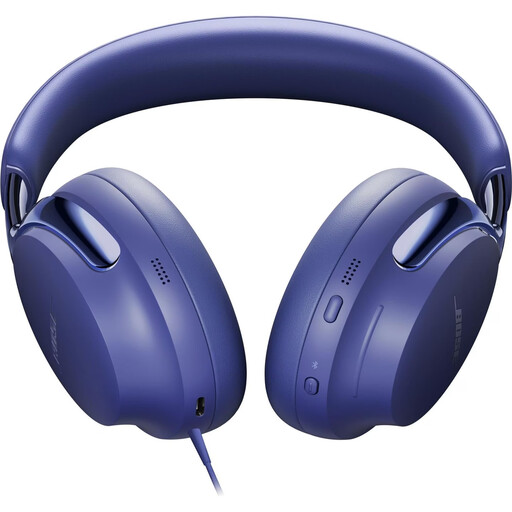 No image available
If you’re considering this wireless Bose model, check the fit and controls when replaying your recording.
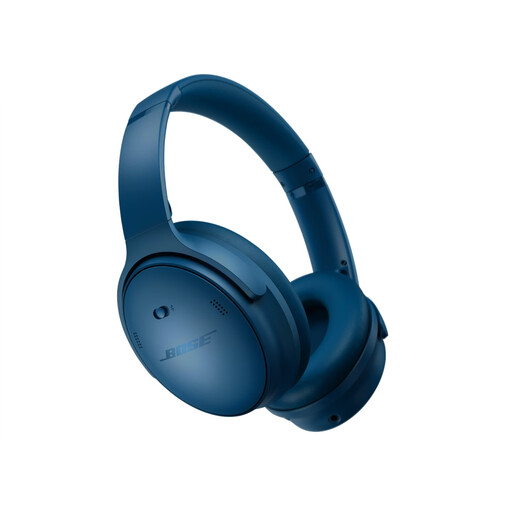 No image available
If you’re considering wireless Bose headphones for listening repeatedly, try using the pause and rewind controls with your app.
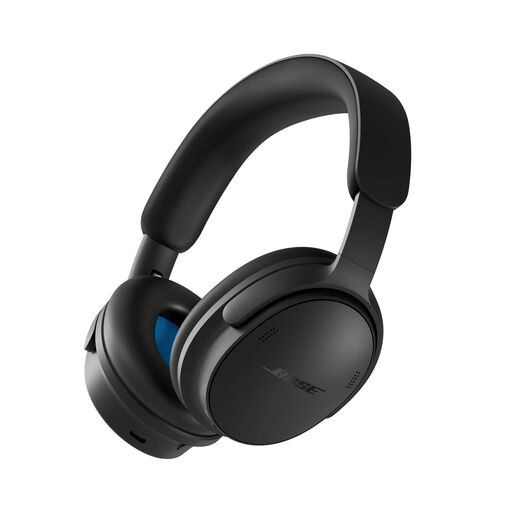 No image available
Check whether the fit and controls of this wireless Bose model suit your repeated listening sessions.
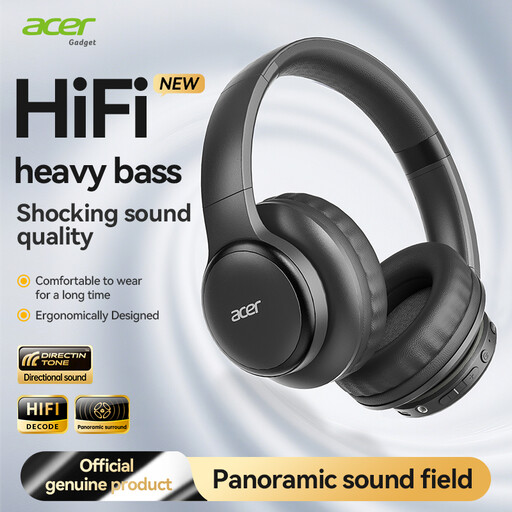 No image available
The foldable design could be a good choice if you want to take your headphones between study locations; try the media controls with your playback app.
Bluetooth 5.3; foldable design.
 No image available
If you prefer in-ear headphones, check that they’re comfortable for a typical listening session and that the playback controls are easy to use.
Bluetooth 5.4; Type-C charging case.
No, not just because you’ve downloaded it. If the recording is stored on your playback device, check that it plays offline and connects to your headphones. Bluetooth and playback features don’t, by themselves, mean the headphones have internal storage for your files.
You shouldn’t rely on it to do that. Sony explains that noise cancellation works best with lower-pitched or consistent sounds; changing speech may still be audible.
Pair them with your playback device and test pause, resume, volume and, if available, EQ settings with your recording. Soundcore documents play and pause, as well as volume buttons, on the Space One Pro; check the controls on other models separately.
The WHO recommends keeping the volume low, taking regular breaks and using well-fitting headphones or ANC so that background noise doesn’t tempt you to turn the volume up. Its guidance on possible listening times is based on the actual sound level, not on a guaranteed safe position for the volume control.