Attentive dialect listeners
You listen to certain passages repeatedly and want to follow subtle details of speech at a comfortable volume. The best way to check clarity is to use a recording of your own.


For listening to regional dialect recordings, choose wireless headphones that let you follow your own recording clearly at a comfortable volume and connect reliably to your playback device. If you listen somewhere noisy, check the fit and ANC; in a quiet room, comfort and ease of use may matter more. None of these features, on its own, proves that the headphones will make regional dialects easier to understand.
You listen to certain passages repeatedly and want to follow subtle details of speech at a comfortable volume. The best way to check clarity is to use a recording of your own.
You want to follow recordings despite distracting background noise, and need to consider how much isolation you need and whether you still want to hear what’s going on around you.
You listen for longer periods and pay particular attention to fit, regular breaks and battery life in the mode you actually use.
| Consideration | What to check when buying | Who is this most important to? |
|---|---|---|
| Speech details and volume | Listen to one of your own recordings, including a quiet passage and a challenging one; check the volume controls and, where available, sound adjustments. | If I want to listen to individual dialect passages repeatedly, I look for clear playback at a comfortable volume. Around 31% of consumers put speech details first. |
| Background noise | Try the fit and ANC in a typical listening environment; consider whether you need to remain aware of other people. | If background noise distracts you at home or on the move, compare noise isolation and ANC without expecting them to block everything out. Around 25% of consumers prioritise reducing background noise. |
| Fit and battery life | Try the design for a typical listening session; compare battery life only for the same operating mode. | If I listen to longer recordings, a comfortable fit and battery life suited to my listening mode are important. These are the main considerations for around 19% of consumers. |
| Connection to your device | For TVs, check for Bluetooth audio or A2DP support and, where relevant, A/V synchronisation. | If you switch between a TV, smartphone and computer, you’ll want headphones that connect reliably to the devices you already own. Around 13% of consumers give the greatest weight to device compatibility. |
| Purchase and ongoing costs | Choose only the features you need; compare the seller, warranty terms and any available service options for the specific offer. | If I mainly listen in a quiet room, I don’t want to pay for features I’ll hardly use. Around 12% of consumers put cost first. |
ANC can reduce background noise, but it can’t block every sound or make an unclear original recording clearer. soundcore notes that the Space One Pro cannot completely block out human voices.
Listen to a passage of your own recording in your usual surroundings, both with and without ANC.
soundcore claims up to 40 hours with ANC and up to 60 hours in Normal mode for the Space One Pro. The manufacturer’s figures are based on tests using specific music tracks at 50% volume with an iPhone.
Compare the battery life quoted for the mode you actually plan to use.
For the Bluetooth audio connection described by Sony, the TV must support A2DP.
Before buying, check the audio output and, where relevant, A/V synchronisation for your specific TV model.
The WH-CH720N is an over-ear model with ANC and multipoint connectivity, aimed at people who switch between playback devices.
The Tune range includes different designs and features, which you can compare based on fit and whether you need ANC.
The Space One Pro is an over-ear option with adjustable ANC and different operating modes.
The HDB 630 is an over-ear model you can include in a personal comparison of fit and playback.
The Sonos Ace is an over-ear model you can try when comparing fit and noise cancellation for yourself.
The models below are options for listening to recordings privately, including TV headphones and over-ear models with ANC. Check the connection requirements and the requirements that apply to radio equipment for the specific offer. Germany’s Federal Network Agency specifies the required CE marking and accompanying documentation, including instructions and safety information in German; CE marking is not an independent quality mark.
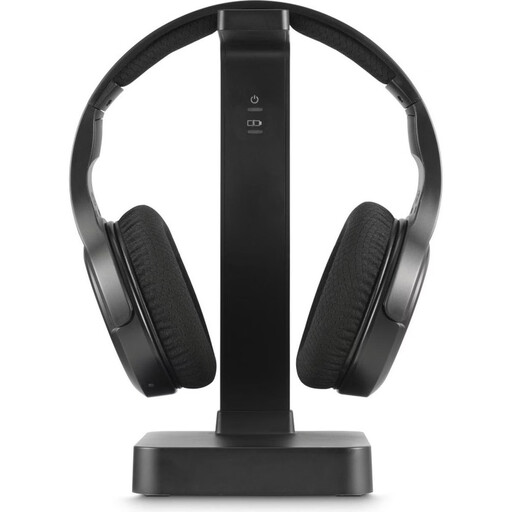 No image available
An option for watching TV privately without room speakers; the product name specifies a 2.4 GHz transmitter station and Bluetooth®.
A 3.5 mm or optical audio output is required for TV use. The product description states that an optical cable is not included.
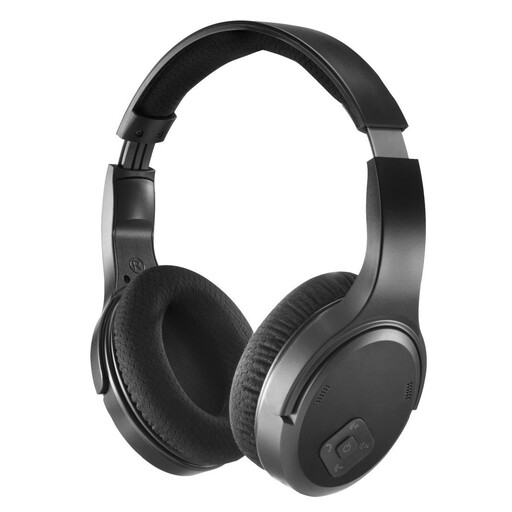 No image available
An option for watching TV privately without room speakers; the product name specifies a 2.4 GHz dongle and Bluetooth®.
The description lists a USB-A dongle and a 3.5 mm connection. Check which input is available on your TV.
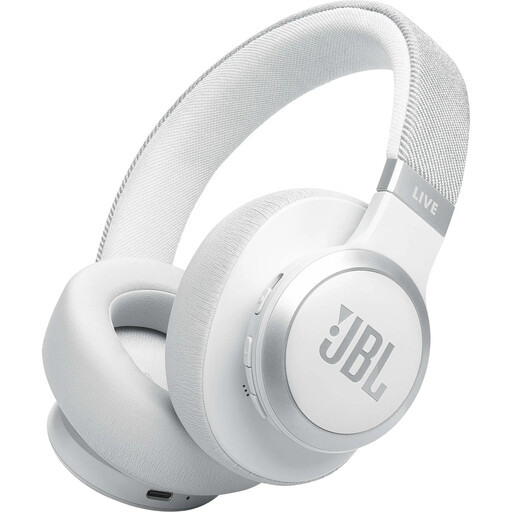 No image available
An option to compare if you want to try over-ear headphones with ANC; this does not prove they make regional dialects easier to understand.
The product name specifies wireless playback, noise cancelling and a microphone; this version is white.
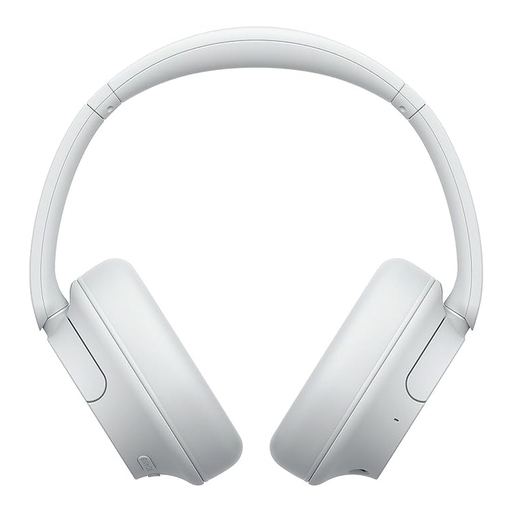 No image available
An option to compare if you’re looking for wireless over-ear headphones with noise cancelling; try a recording of your own rather than assuming the features will make dialects easier to understand.
The product name specifies the white colour and a weight of 192 g.
 No image available
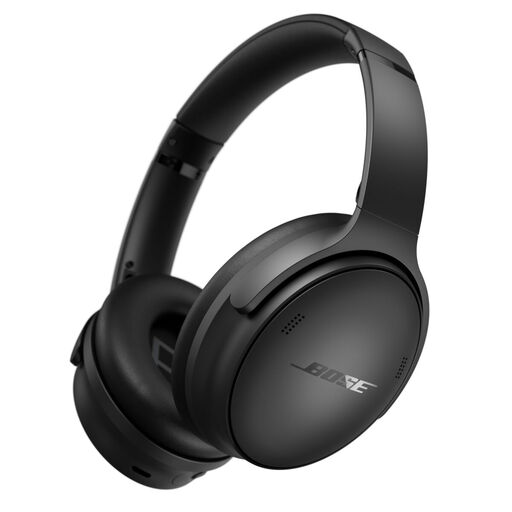
An option to compare if you’re looking for wireless over-ear headphones with noise cancelling; check the fit and playback using a recording of your own.
The product name specifies wireless noise cancelling and the black colour.
No, ANC isn’t essential. Start by listening to a recording of your own at a comfortable volume. In noisy surroundings, a good fit and ANC may help, but they don’t guarantee that a dialect will be easier to understand. ANC cannot completely block out human voices.
Check whether your TV supports Bluetooth audio via A2DP. Sony notes that Bluetooth on its own does not guarantee the desired headphone connection; also check A/V synchronisation on your specific device.
Keep the volume low and take breaks. The World Health Organization gives the example of up to 40 hours per week at an average of 80 dB, but only four hours at 90 dB. These figures relate to sound pressure and exposure time, not to specific volume control settings.
Check the fit during a listening session of the kind you’d typically have, and follow the care instructions for the specific model. For the Space One Pro, soundcore notes that gaps between the ear cushion and your ear can affect ANC performance.
As a rule, your statutory rights under the warranty are with the seller; any additional manufacturer’s guarantee is voluntary and does not replace those rights. The Verbraucherzentrale says that, if a product is faulty, the first step is to ask for it to be put right by repair or replacement.
Radio equipment placed on the market or put into service in Germany must meet the applicable conformity requirements. Germany’s Federal Network Agency specifies CE marking and the required accompanying documents, including instructions and safety information in German. CE is not an independent quality mark; check the details for the specific offer.