Follow the dialogue closely
If you listen to passages of text and subtle vocal details more than once, what matters is how clear the dialogue sounds in the recording you’re listening to – not just a general music rating.


Choose headphones based on how clear the dialogue sounds in the specific theatre recording you’re listening to, how comfortable they are to wear for long periods and whether they connect reliably to your playback device. In a quiet setting, a well-fitting pair without powerful ANC may be enough. If background noise is distracting, a good fit and noise cancellation can help, but they can’t guarantee clear dialogue. For filmed performances, test a section with visible lip movements: Bluetooth SIG notes that Bluetooth transmission can introduce a delay.
If you listen to passages of text and subtle vocal details more than once, what matters is how clear the dialogue sounds in the recording you’re listening to – not just a general music rating.
For a full performance, choose a design that stays comfortable over time. Check the padding, clamping force or how the ear tips fit.
If you’re analysing gestures and stage action as well, check the audio-visual synchronisation with your own playback source, as well as the connection.
Start by listening to a comparable section of dialogue, then check the fit, background noise and connection with the device you actually use.
| What matters when buying | What to check | Who is it important to? |
|---|---|---|
| Dialogue clarity | Listen to a similar recording, including voices and quiet passages; check whether you can adjust the volume precisely. | If I’m analysing individual phrases and nuances, I want to be able to follow the voices in my recording clearly. That’s why around 31% of consumers prioritise understanding the dialogue. |
| Listening with minimal distractions | Check the fit and isolation; if needed, compare ANC and a switchable ambient mode. | If I’m listening without room speakers and background noise distracts me, isolation and the option to hear my surroundings again are important. Around 25% of consumers prioritise listening with minimal distractions. |
| Comfort during long recordings | Try the padding, clamping force or ear tips for an extended period; check the battery life stated for the relevant operating mode. | When I’m listening to a full performance, I want to be able to wear my headphones comfortably for a long time. Around 19% of consumers focus primarily on comfort during long listening sessions. |
| Audio and video | Test a filmed section with your own device and the app you use; check whether you need a transmitter and what’s included. | If I’m assessing facial expressions and dialogue at the same time, I want the lip movements and audio to line up as closely as possible. Around 13% of consumers prioritise connectivity and audio-visual synchronisation. |
| Upfront cost | Compare only the features you need; check the exact version and what’s included. | If I mainly listen in a quiet setting, I don’t want to pay for features I won’t use. Around 12% of consumers prioritise the upfront cost. |
The fit and background noise affect how much noise cancellation helps, and the recording itself also makes a difference.
Where possible, test similar dialogue passages at a moderate volume rather than relying on the ANC specification alone.
JBL notes that some versions of the Tour ONE M3 are sold without SMART Tx. This could be important when connecting to your audio source.
Check the exact version and what’s included against the connections on your playback device.
If your source requires a transmitter, you may need to buy one separately.
For the 2nd Generation Bose QuietComfort Ultra, Bose quotes up to 30 hours of battery life, or 23 hours with 360-degree sound.
Compare battery-life figures only when they refer to the same operating mode.
The Tour ONE M3 is an over-ear option. JBL describes SMART Tx as a way to connect to USB-C or analogue sources.
The 2nd Generation QuietComfort Ultra Headphones have an over-ear design with adjustable ANC and EQ.
The WH-1000XM6 may appeal if you switch between devices or want to use an ambient mode.
The MOMENTUM 4 Wireless is an over-ear model with an adjustable EQ and transparency mode.
Space A40 is a compact in-ear alternative if you’d rather not wear over-ear headphones.
The following wireless over-ear and in-ear headphones are worth considering for longer listening sessions and different environments. They vary in design, noise cancellation and connectivity, among other features.
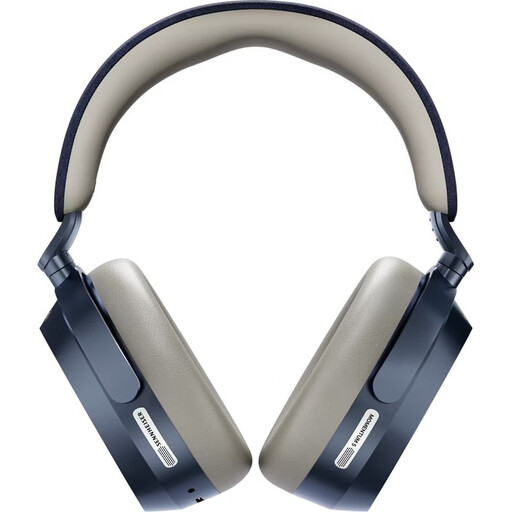 No image available
The over-ear design may suit longer listening sessions; try them on for an extended period to check the fit.
The product name lists ANC, Bluetooth 5.4 and up to 57 hours of battery life. A charger isn’t included, according to the listed contents.
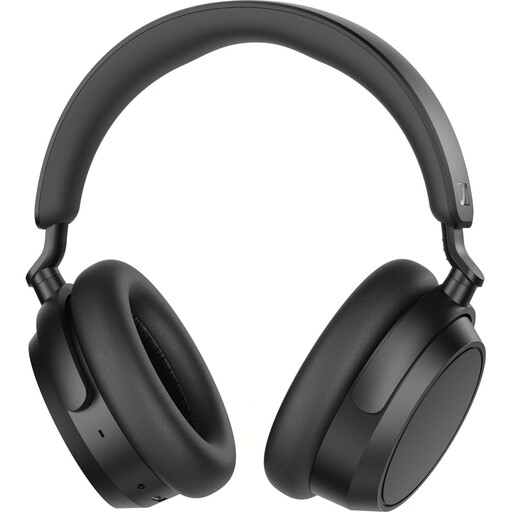 No image available
This over-ear model may suit longer listening sessions; compare the fit with your comfort needs.
The product name lists ANC, Bluetooth 5.2, multipoint and 50 hours of battery life. A charger isn’t included, according to the listed contents.
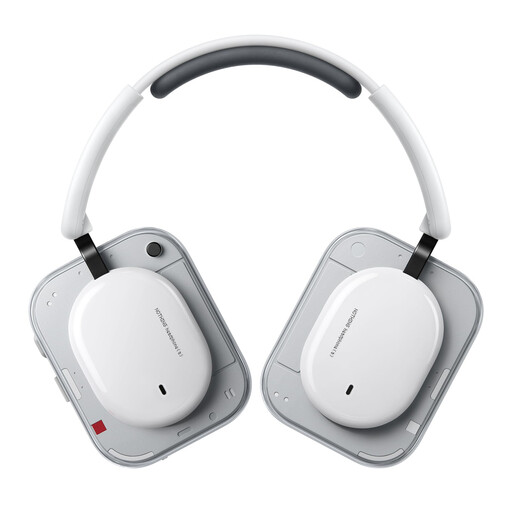 No image available
The over-ear design may suit longer listening sessions if the padding and clamping force feel comfortable.
The product name lists 40 mm drivers, LDAC, ANC, Bluetooth and wired connections, plus up to 135 hours of battery life.
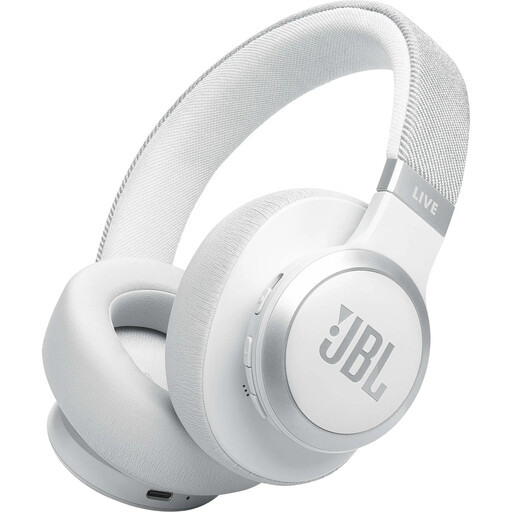 No image available
These wireless over-ear headphones may suit longer listening sessions; test their comfort and dialogue playback with your recording.
The product name lists noise cancelling and a microphone. Check audio-visual synchronisation with your own playback device.
 No image available
The true wireless in-ear design is a compact alternative to over-ear headphones; check that the ear tips remain comfortable during longer sessions.
The product name lists ANC. Check the fit and dialogue clarity with your own recording.
Connect them to the playback device you intend to use and test a section with visible lip movements. Bluetooth SIG notes that Bluetooth audio can be delayed. Check whether your particular combination of device and app compensates for this.
Not as a first step. Check the fit and possible sources of background noise, and keep the volume as low as is practical for you. The WHO gives a maximum of 40 hours per week at an average of 80 dB as a guide; the recommended listening time falls at higher levels. This doesn’t indicate the actual level produced by any particular pair of headphones.
Your statutory rights for faulty goods apply against the seller and are separate from any voluntary guarantee. Online purchases generally come with a 14-day right to cancel; check the terms of your specific contract and any possible exceptions. The Verbraucherzentrale explains the difference.
Look for clear product and manufacturer details, along with the required markings and documentation. The Bundesnetzagentur lists CE marking, product identifiability, manufacturer details and declarations of conformity among the points it checks as part of its market surveillance. A statement on a retailer’s website alone doesn’t confirm that a specific product is compliant.