As a Joybuy Product Recommendation Officer, my mission is to provide you with clear and objective information. Securing your home or property shouldn't be complicated. However, many are deterred by the complex installation of traditional surveillance systems, which require drilling through walls and running cables. A battery-powered outdoor security camera offers a flexible and straightforward solution.
This article serves as your guide. It explains the key features to look for when making your selection and presents a range of models for different use cases, enabling you to make an informed decision.
What to Look for When Choosing a Battery-Powered Outdoor Camera
Choosing the right model depends on your individual needs. The following three criteria are crucial for making a practical decision.
1. Resolution and Night Vision Quality
Image quality is critical for the usability of the footage. A higher resolution allows you to see details like faces or license plates more clearly.
- 2K Resolution (QHD): Offers a clear level of detail that is sufficient for most home use cases, such as monitoring entryways or gardens.
- 4K Resolution (UHD): A 4K security camera delivers four times the pixel count of Full HD, enabling exceptional detail, even when digitally zooming in. This is particularly useful for monitoring larger areas or when maximum clarity is essential.
Performance in the dark is just as important. A security camera with colour night vision uses sensitive sensors (e.g., Starlight sensors) and often integrated spotlights to produce colour images even in low light. This provides significantly more information than traditional black-and-white infrared footage.
2. Connectivity: Wi-Fi or Cellular (4G)?
The type of connection determines where you can use the camera.
- Wi-Fi Cameras: Most battery-powered cameras connect to the internet via your home Wi-Fi network. A Wi-Fi security camera system, often including a base station (hub), can improve signal stability and extend the cameras' battery life. This option is ideal for use around the house, as long as sufficient Wi-Fi coverage is available.
- 4G Cameras: A 4G security camera uses its own SIM card and the cellular network to establish a connection, making it completely independent of a Wi-Fi router. This makes it the ideal solution for remote locations like holiday homes, construction sites, horse paddocks, or allotments without a fixed internet connection.
3. Weather Resistance and Power Supply
An outdoor camera must be able to withstand the elements. Pay attention to the IP (Ingress Protection) rating. A weatherproof wireless outdoor camera should have at least an IP65 rating, which offers protection against water jets from any angle. IP66 provides protection against powerful water jets and is even more robust.
Battery life is a key factor for convenience. Manufacturer specifications (e.g., "up to 180 days") are estimates that are influenced by the frequency of motion detection, recording length, and ambient temperatures. Some models offer the option to connect an optional solar panel to continuously charge the battery and minimise maintenance.
Top Outdoor Camera Picks
Based on the criteria mentioned, we have compiled a selection of models that cover a variety of needs.
TP-Link Tapo C420S2 – The Complete Starter System
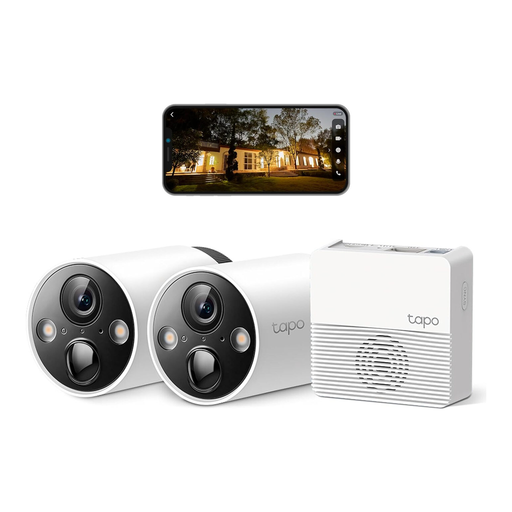
TP-Link Tapo C420S2 Wireless Outdoor Security Camera System
- Why it stands out: This kit includes two cameras and a central hub. The hub creates its own stable network for the cameras, making the connection more reliable and conserving battery life. It's a well-designed solution for covering multiple areas.
- Advantages:
- 2K QHD resolution for clear images.
- Colour night vision thanks to a Starlight sensor.
- Smart AI detection of people, pets, and vehicles to reduce false alarms.
- Local storage on a microSD card (up to 256 GB) via the hub.
- Weather-resistant with an IP65 rating.
- Who is it for? Homeowners and renters who want a reliable and easy-to-install solution for monitoring two areas, such as an entrance and a garden, and who value a stable system.
Tapo C460 – For Maximum Image Detail and Endurance
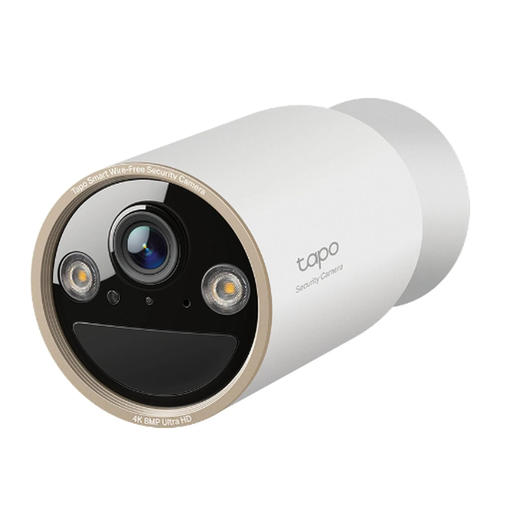
Tapo C460, 4K Battery Security Camera
- Why it stands out: The Tapo C460 sets a high standard for image clarity with its 4K UHD resolution. Combined with a powerful battery and robust weather resistance, it's designed for demanding users.
- Advantages:
- Extremely high 4K UHD (8MP) resolution for maximum detail detection.
- Long battery life of up to 200 days (according to manufacturer specifications, depending on usage).
- Colour night vision with a Starlight sensor and integrated spotlights.
- High weather resistance with an IP66 rating.
- Flexible installation with a magnetic mount.
- Who is it for? For users who don't want to compromise on image quality and need a single, powerful security camera with an app for a critical area that is also highly weather-resistant.
Reolink Go-Series-G330 – The Self-Sufficient Solution for Places Without Wi-Fi
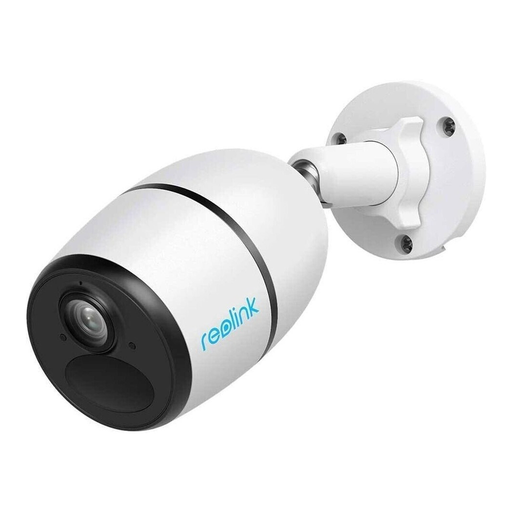
Reolink Go-Series-G330 Security Camera
- Why it stands out: Its independence from a Wi-Fi network is its unique selling point. With integrated 4G LTE connectivity, this camera can be used virtually anywhere there is cellular reception.
- Advantages:
- Operates independently via the 4G cellular network (SIM card required).
- Good image quality with 4MP (2560x1440) resolution.
- Weather-resistant with an IP65 rating for reliable outdoor use.
- Supports local storage on a microSD card.
- Two-way audio for communication.
- Who is it for? For owners of holiday homes, construction sites, farms, boats, or other properties without Wi-Fi access who need a flexible, location-independent monitoring solution.
Looking for More Options?
The models presented here cover common use cases. If you haven't found the right product for your specific needs, you can find a wider selection in our range.
? Discover more models in the Outdoor IP Security Camera category
Frequently Asked Questions (FAQ)
How long does the battery of an outdoor security camera last?
Battery life varies greatly and depends on factors such as the frequency of motion detection, the duration of video recordings, signal strength, and ambient temperature. Manufacturer specifications range from a few weeks to several months (e.g., 180 or 200 days). In practice, recharging every 2 to 4 months with average use is a realistic estimate.
Do I need a subscription for a security camera?
Not necessarily. Many cameras, including the models featured here, offer the option to save recordings locally on a microSD card. This is a one-time investment with no recurring fees. Cloud subscriptions are optional and provide additional features like a longer video storage period, advanced AI functions, or off-site, secure storage.
How do you install a wireless outdoor security camera?
The installation is intentionally simple:
- Fully charge the camera's battery.
- Mount the included bracket in the desired location (e.g., on a wall or under a roof eave).
- Attach the camera to the bracket.
- Follow the instructions in the companion smartphone app to connect the camera to your Wi-Fi or cellular network and configure the settings. The entire process typically requires no expert knowledge and can be completed in a short amount of time.


