
Lieferung heute & morgen

Qualitätsgarantie

Willkommens-Angebote freischalten: KOSTENLOSE Lieferung | Bis zu 80 % RABATT | Kostenlose 30-Tage-JoyPlus-Testphase
App herunterladen
A wireless rechargeable LED outdoor lamp should be versatile enough to use on your balcony, patio or in the garden, when camping, or as a portable emergency light. But similar product descriptions can make it hard to choose. Claims such as ‘waterproof’, ‘long battery life’ or ‘bright’ only tell you so much without supporting technical details.
If you’re looking for a cordless table lamp or rechargeable LED light, check for these three common pitfalls before you buy.
An outdoor lamp shouldn’t just be described as weatherproof. What matters is its stated IP rating. An IP44-rated lamp is protected against solid objects larger than 1 mm and water splashes from different directions. It’s suitable for many sheltered outdoor areas, but shouldn’t be left out in the rain without protection for long periods.
IP54 offers greater protection against dust, as well as protection against water splashes. However, this rating doesn’t mean the lamp can be submerged in water. If you plan to use it near a pool or close to water, check the manufacturer’s specific installation and usage advice.
Maximum battery life is often quoted for the lowest brightness setting. With a dimmable table lamp, actual use time can be much shorter at higher brightness levels. So check the following:
A high capacity is useful, but it’s no substitute for working out how you’re likely to use the lamp.
Warm white light of around 3000 K can feel pleasant over a dining table or on the patio. For tasks, reading or even illumination, the lumen rating and light distribution are also important. A 360-degree beam can light a table more evenly, while a focused beam may be better for specific tasks.
An IP44-rated lamp may be suitable for a balcony or patio and occasional outdoor use, as long as it’s sheltered from prolonged exposure to rain. According to its stated rating, an IP54-rated lamp is also suitable for dustier environments. However, an IP rating doesn’t automatically make a lamp suitable for underwater use or powerful water jets.
A rechargeable LED lamp should be easy to charge without tools. USB charging makes it convenient to use an existing power adapter, a power bank or a suitable connection in your vehicle. Weight is another important factor for a portable lamp. A handle or non-slip base can make it easier to use on a camping table, kitchen worktop or bedside table.
A touch dimmer is useful if you regularly adjust the brightness. Check whether the lamp has several fixed settings rather than stepless dimming, and whether it remembers the last setting you used.
A compact rechargeable table lamp takes up little space, while a 125 cm-high outdoor or indoor light is more suited to use as a decorative floor lamp. For bathrooms, bedrooms or dining tables, enclosed shades and a stable base are practical features. When camping, also consider the packed size, handle and how easy it is to clean.
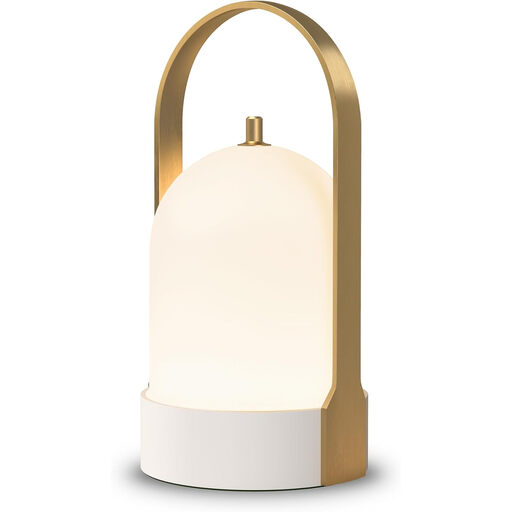
Why it suits this profile: This compact cordless table lamp is designed for balconies, dining tables, bedrooms, bathrooms and occasional camping trips. Its built-in handle makes it easy to carry.
The IP44 rating is clearly stated. Four brightness settings and a specified battery capacity of 4000 mAh make the key selection criteria easy to assess.
Four touch-controlled brightness settings, 360-degree light distribution and USB charging. According to the product details, it runs for up to 80 hours on the lowest brightness setting.
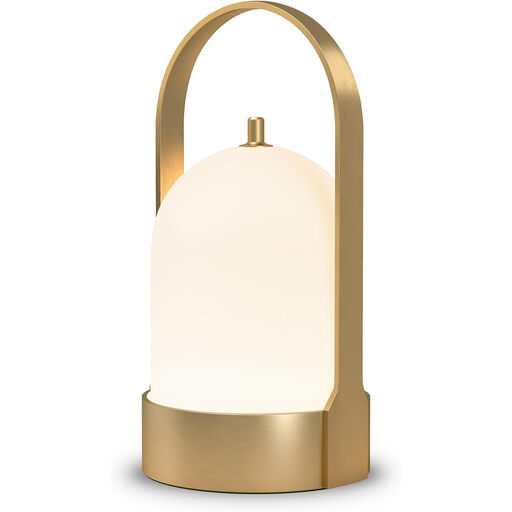
Why it suits this profile: The brass-finish version combines a portable design with a clearly stated IP44 rating. It’s suitable for indoor use and sheltered outdoor areas.
The product description specifies its IP rating, battery capacity, controls and light distribution. This makes it easier to distinguish promotional claims from verifiable features.
Four brightness settings, touch dimmer, non-slip silicone base and USB charging. According to the description, the matt cover is designed to provide even all-round illumination.
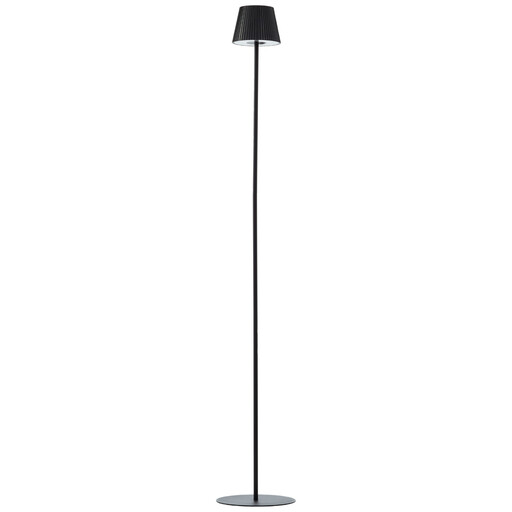
Why it suits this profile: This 125 cm-high rechargeable floor lamp is designed for patios, balconies, gardens and the transition between indoor and outdoor spaces. It’s a good choice if you need a larger light source rather than a small table lamp.
Its IP54 rating, 340 lumens and 3000 K colour temperature are all clearly specified. Even so, the lamp should be stored somewhere sheltered in extreme weather.
Three brightness settings, an integrated ICR18650 battery, 3.4 W LED output and warm white light at 3000 K. Its stated energy efficiency class is F.
We’ve put together a complete, regularly updated list of products that meet these strict selection criteria and fully comply with the safety regulations in force in the EU.
Most models charge via USB. Before you buy, check whether a charging cable is included and whether you’ll need a power adapter. A power bank can be a handy way to charge the lamp while you’re out and about, as long as the output and cable are compatible.
Battery life depends on the battery capacity, brightness setting, temperature and age of the battery. Manufacturers often quote figures for the lowest brightness setting. For a more realistic estimate, expect a shorter run time at maximum brightness.
LEDs use little energy compared with many older types of light bulb. The exact electricity cost depends on the lamp’s power, charging losses and how long you use it each day. For a 3.4 W lamp, you can estimate consumption based on how long it’s used and your electricity tariff. It’s also worth considering how often the battery needs charging and whether it’s stored and looked after properly when not in use.