
Lieferung heute & morgen

Qualitätsgarantie

Willkommens-Angebote freischalten: KOSTENLOSE Lieferung | Bis zu 80 % RABATT | Kostenlose 30-Tage-JoyPlus-Testphase
App herunterladen
A wireless gaming mouse can give you more freedom of movement at your desk and eliminate cable drag while gaming. However, wireless gaming mice vary significantly in terms of sensor, wireless connection, weight, ergonomics and software. A high DPI figure alone therefore says little about whether a model suits your hand, playing style and hardware.
Before buying, you should check three common marketing traps in particular:
The DPI figure describes the adjustable sensitivity. A high-DPI gaming mouse offers plenty of configuration options, but a high maximum figure is no guarantee of precise input. For competitive gaming, consistent tracking, controllable behaviour at low sensitivities and a stable wireless connection are what matter.
The polling rate is measured in hertz. At 1,000 Hz, the computer theoretically polls the mouse 1,000 times per second. 8,000 Hz reduces the polling interval even further. This can be appealing for an esports gaming mouse, particularly when using high refresh rates. However, check whether your PC, monitor and game can make meaningful use of this setting. For everyday use, 1,000 Hz is sufficient for many users.
A lightweight gaming mouse weighing around 53 to 61 grams can make fast movements easier. However, a low weight is not automatically more ergonomic. Hand size, preferred grip style and weight distribution are the deciding factors.
Pay attention to:
An ergonomic right-handed gaming mouse may fit your hand better during long sessions than a symmetrical model. Left-handed users, meanwhile, should look for side buttons that can genuinely be used comfortably and a well-balanced shape.
For gaming, 2.4GHz RF wireless with a USB receiver is generally the relevant operating mode. Bluetooth is particularly suitable for laptops, secondary devices and low-power connections. A wireless gaming mouse with multiple modes offers greater flexibility, although you should check whether all functions are available in every mode.
USB-C is practical nowadays, as many households already have a compatible cable. It is still important to check whether the mouse can continue to be used in wired mode while charging. With a gaming mouse offering long battery life, you should also always consider the stated runtime together with the polling rate and lighting.
Programmable buttons can be useful for macros, profiles or additional commands. However, competitive games are governed by the rules of the relevant game or tournament. Any installable software should also be compatible with your operating system and clearly state which settings are saved to the mouse’s internal memory.
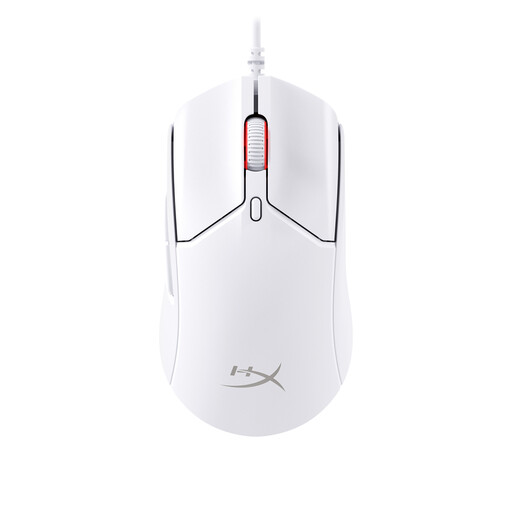
Why this product suits this profile: This model combines 2.4GHz wireless, Bluetooth 5.1 and USB operation with a weight of around 61 g. Its six programmable buttons and USB-C charging port cover typical requirements without making the feature set unnecessarily complicated.
The manufacturer’s specifications list the operating modes and battery life separately: up to 100 hours is stated for Bluetooth, while 2.4GHz is specified with up to 1,000 Hz.
26,000 DPI, 61 g weight, six programmable buttons and three connection types.
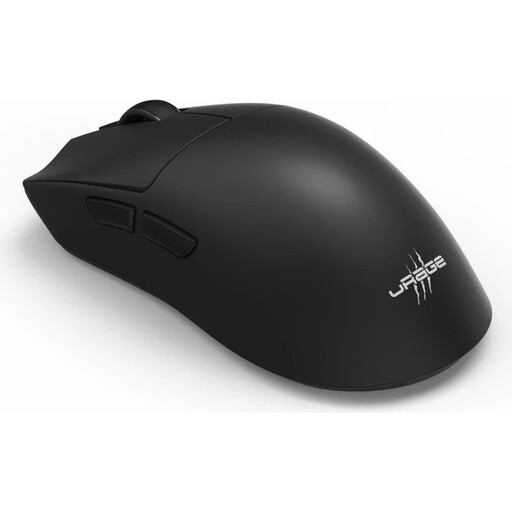
Why this product suits this profile: The combination of a 57 g weight, 2.4GHz RF, Bluetooth 5.3 and six programmable buttons is designed for users looking for plenty of technical headroom and flexible device connections.
The specifications list 8,000 Hz, a 0.125 ms response time and 26,000 DPI separately. This makes it easier to assess the figures in relation to your game, system and personal settings.
57 g weight, USB-C, up to 72 hours of battery life and dual-wireless connectivity.
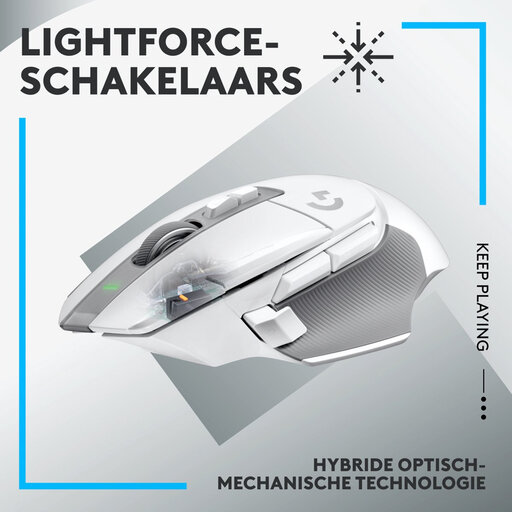
Why this product suits this profile: If you need lots of commands or also use your mouse for productivity, you get 13 programmable buttons, a dual-mode scroll wheel and built-in profile storage.
The higher weight of 102 g is clearly stated. This lets you realistically assess before buying whether the extra buttons matter more to you than an especially lightweight design.
13 programmable buttons, USB-C, up to 140 hours of battery life and 25,600 DPI.
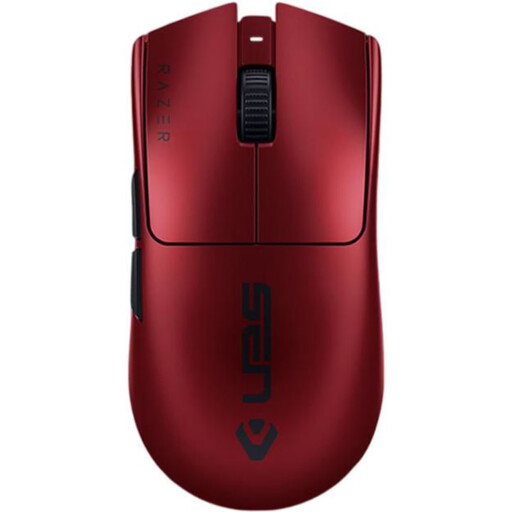
Why this product suits this profile: With a weight of 54 g, 35,000 DPI, 8,000 Hz and up to 95 hours of battery life, this model is aimed at users who want to combine low weight with high adjustment values.
The 8K function is identified as HyperPolling technology. At the same time, USB-C cable operation and the specific wireless technology are clearly documented.
54 g weight, six programmable buttons, 35,000 DPI and 2.4GHz wireless with USB-C operation.
We have put together a complete, regularly updated list of products that fully meet these strict selection criteria and the safety regulations applicable in the EU.
A wireless gaming mouse can be suitable for esports if it offers a stable 2.4GHz connection, a suitable USB receiver and low input lag. For tournaments, you should also check which devices and settings are permitted. Bluetooth is less obvious than a dedicated RF receiver for many competitive scenarios.
Battery life depends on the polling rate, lighting, wireless mode and usage. Depending on the model, product specifications state runtimes of around 72 to 140 hours. A higher polling rate can increase energy consumption. For everyday use, therefore, it is not just the maximum figure that matters, but also the USB-C charging option and whether the mouse can be used while charging.
There is no universally suitable DPI setting. Depending on the game, screen resolution and sensitivity, many players use a considerably lower setting than the sensor’s maximum value. Start with a setting you can control comfortably and adjust it gradually. It is important that the gaming mouse reliably saves the setting and that the software works with your system.