
Lieferung heute & morgen

Qualitätsgarantie

Willkommens-Angebote freischalten: KOSTENLOSE Lieferung | Bis zu 80 % RABATT | Kostenlose 30-Tage-JoyPlus-Testphase
App herunterladen
A wok pan 30 cm with lid needs to handle several tasks in everyday cooking: searing vegetables and meat, tossing noodles, reducing sauces and steaming food. However, even when offers have similar product descriptions, the material, care requirements and hob compatibility can differ significantly.
Three common buying mistakes often lead to disappointment:
If you check these points before buying, you’ll find it easier to choose a wok pan that suits your hob and cooking style.
A wok pan for all hob types should be explicitly stated as suitable for gas, electric, ceramic and induction hobs. For wok induction, a flat base is especially important, because traditional round-bottomed woks don’t sit steadily on many British hobs and transfer heat less efficiently.
Look for the following details:
A 30 cm diameter refers to the top rim. The actual base area may be smaller. For induction, it should match the size of the cooking zone so that heat is transferred as evenly as possible.
The material determines heat behaviour, weight and care.
Coated woks such as a non-stick wok made from aluminium or stainless steel make frying easier with less sticking. They are suitable for everyday use but should not be preheated empty on a high setting. Metal utensils and abrasive cleaners can damage the surface.
A stainless steel wok is robust and flavour-neutral. Multi-layer constructions with an aluminium core can distribute heat faster and more evenly. With a ceramic or other non-stick coating, the manufacturer’s care instructions also apply.
A cast iron wok retains heat for a long time and is suitable for braising, searing and steaming. The heavy weight should be considered before buying. Enamelled cast iron doesn’t need traditional seasoning but can be damaged by extreme temperature changes or hard metal utensils.
A carbon steel wok or an uncoated wok pan develops a natural patina through seasoning and regular oiling. It can be used at high heat but requires hand washing, thorough drying and protection from rust. Acidic foods can affect the patina.
A wok with a glass lid allows you to check on steaming without constantly lifting the lid. This saves heat loss and makes it easier to prepare vegetables, fish or braised dishes. Check whether the lid is included and what temperature limits apply.
For two to three portions, a compact 30 cm wok pan is often sufficient. For larger family meals, depth, capacity and handle design are also relevant. A heavier weight can indicate good heat retention but makes tossing and cleaning more difficult.
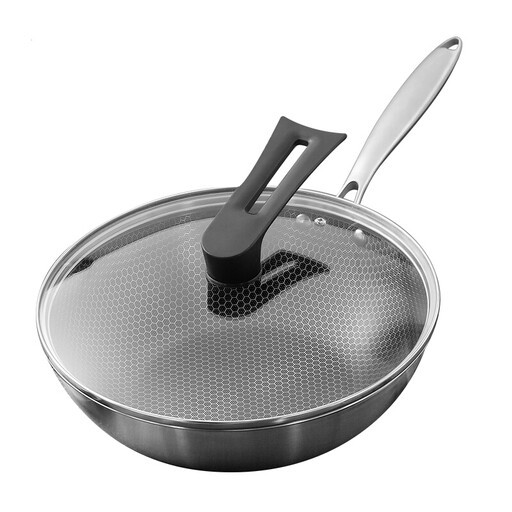
Why this product suits the profile: This 30 cm wok pan combines a stainless steel construction with a honeycomb structure and lid. According to the product details, it is intended for gas, induction and electric hobs, covering several household situations.
The details explicitly mention hob compatibility and the lid. This means you can check before buying whether the pan suits your hob.
30 cm diameter, stainless steel and an included lid; described as suitable for various cooking methods such as frying and steaming.
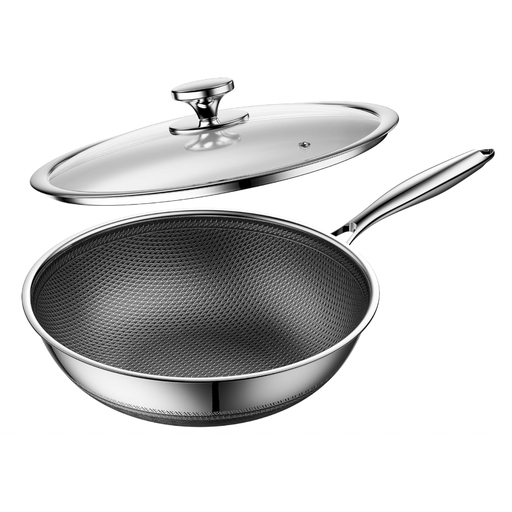
Why this product suits the profile: The three-layer construction with an aluminium core is designed for even heat distribution. The product details mention a ceramic non-stick coating without PFAS, PFOA and PTFE.
The details separate hob, oven and lid temperatures. Up to 260 °C for the oven and 148 °C for the glass lid are stated.
Induction-compatible, stated as suitable for all common hob types and described as dishwasher-safe.
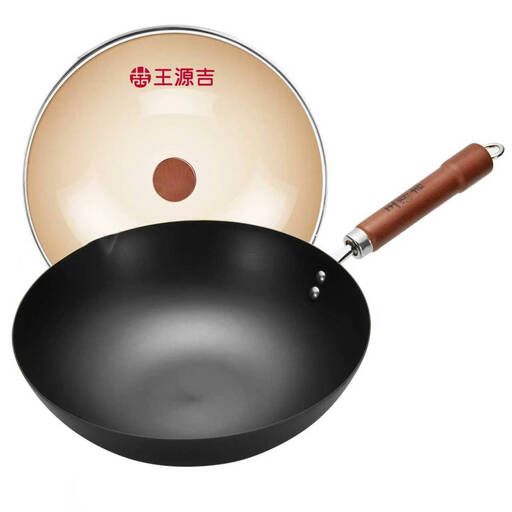
Why this product suits the profile: The flat base is described as suitable for gas, induction, electric and ceramic hobs. The uncoated carbon steel construction is aimed at households that prefer a surface that can be seasoned.
The care requirements are clearly stated: seasoning before first use, hand washing, immediate drying and a thin coat of oil for storage.
Uncoated surface, glass lid and a stated weight of 1.34 kg; suitable for 1 to 3 portions.
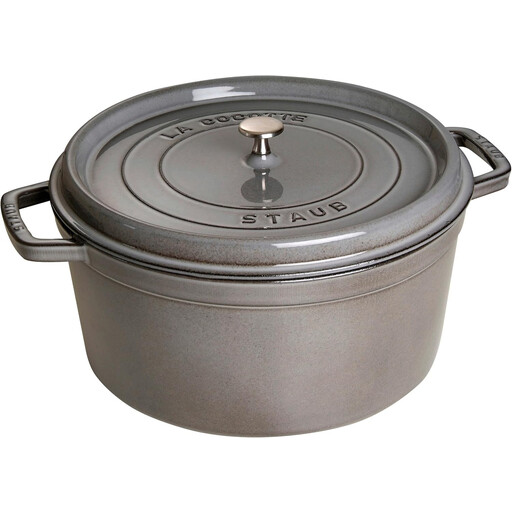
Why this product suits the profile: The enamelled cast iron offers 8.35 l capacity according to the product details and is suitable for larger quantities, braised dishes and use in the oven.
The heavy weight of approximately 8.03 kg is stated transparently. Buyers can therefore check in advance whether lifting, storing and cleaning are practical in their household.
Stated as suitable for all hob types including induction; oven use up to 250 °C and cleaning by hand or according to details in the dishwasher.
The correct cleaning method depends on the material:
When seasoning a carbon steel wok, ensure adequate ventilation. The pan gets very hot during cooking; heat-resistant gloves and a stable surface are therefore advisable.
We have put together a complete, regularly updated list of products that fully meet these strict selection criteria and the safety regulations in force in the EU.
That depends on the base. Look for explicitly stated induction compatibility and a sufficiently large, flat contact surface. If you’re unsure, a magnet test on the base can give an initial indication; the manufacturer’s details are definitive.
Enamelled cast iron and stainless steel are less demanding to care for than uncoated carbon steel when used correctly. Carbon steel can rust if exposed to moisture. Thorough drying and a thin layer of oil reduce this risk.
Coated models should only be used within the stated temperature limits. For very high temperatures, uncoated carbon steel or cast iron woks are often suitable. The respective safety and care instructions from the manufacturer also apply here.