
Lieferung heute & morgen

Qualitätsgarantie

Willkommens-Angebote freischalten: KOSTENLOSE Lieferung | Bis zu 80 % RABATT | Kostenlose 30-Tage-JoyPlus-Testphase
App herunterladen
A wok pan is ideal for vegetables, meat, fish, noodles, rice dishes and many other cooking methods. However, not every Asian-style pan is suitable for every hob or cooking style. Unclear material specifications, unsuitable sizes or misunderstood coatings often lead to disappointing purchases.
The description wok for all hob types should always be checked against the technical specifications. For induction, the pan needs a magnetic, flat base that sits securely on the hob. A traditional round wok may be unstable on an induction hob or may only heat unevenly.
So look for explicit suitability for induction, gas, electric and ceramic hobs. With an induction wok, the diameter of the contact area is also relevant. A very small base may limit the usable heating area.
A coated wok is often easy to clean and requires less oil for certain dishes. However, this does not mean that it is suitable for the highest temperatures or for preheating while empty. Follow the manufacturer’s instructions regarding temperature, kitchen utensils and cleaning.
Many coated models are designed for use with wooden, silicone or plastic turners. Metal turners and scouring pads can damage the surface. A ceramic or non-stick coating is also not automatically scratch-resistant under every type of use.
A 28 cm wok pan or 30 cm wok pan can be practical for two to three portions. For family meals, 32 cm or more is often the better choice. Height, capacity, weight and the available space on the hob are also important.
A large wok offers more room, but it also takes up more storage space and may extend beyond the heating area on small hobs. Before buying, also check whether the lid will fit inside your cupboards or drawers.
A coating can make it easier to release delicate ingredients. Check whether it is designed for high temperatures and whether the wok is dishwasher-safe. For many models, hand-washing with a soft sponge helps preserve the quality of the surface for longer.
Uncoated pans require more practice, but with suitable kitchen utensils and careful maintenance they can be used for many years. With a carbon-steel wok, oiling and thorough drying are part of regular care.
A wok with a lid expands the range of dishes you can prepare. It is practical for braising, steaming and keeping food warm. A glass lid lets you monitor the cooking process, while a metal lid often feels more robust. A steam vent can help regulate the release of steam.
Pay attention to the handle design and check whether the handles or lid knob become hot during cooking. On heavy cast-iron models, an additional helper handle can make handling easier.
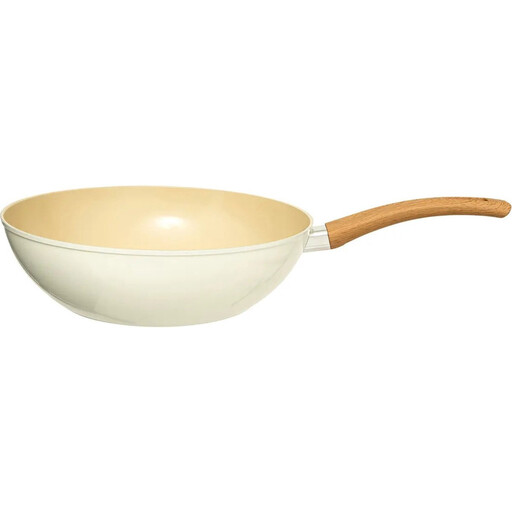
Why this product suits this profile: Made from recycled aluminium, this 29 cm wok is comparatively lightweight at 630 g and is specified as suitable for gas, induction, ceramic and electric hobs. Two non-stick layers make it easier to get started.
Its stated compatibility with four hob types reduces the risk of choosing an unsuitable base. Despite being dishwasher-safe, the care instructions recommend hand-washing.
Low product weight, 29 cm diameter and soft-touch handle.
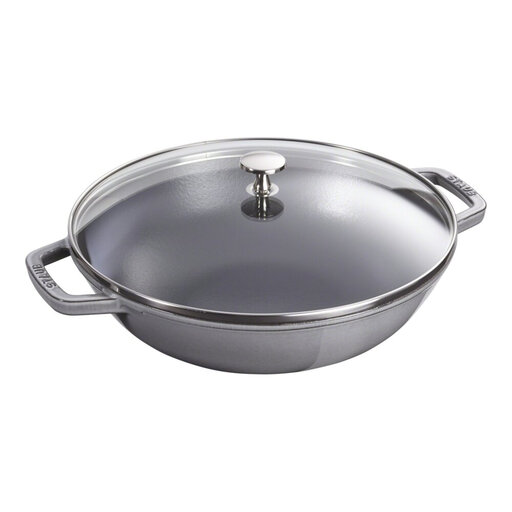
Why this product suits this profile: This 30 cm cast-iron wok with glass lid is specified as suitable for all hob types, including induction, as well as for use in the oven. Its enamelled interior is designed for various cooking methods.
The manufacturer’s specifications state the compatible hob types, oven suitability and a precise capacity of 4.5 l. Instructions to preheat slowly and avoid metal utensils remain important.
Cast-iron construction, glass lid, 30 cm diameter and oven suitability.

Why this product suits this profile: This 32 cm stainless-steel wok has a three-layer construction with an aluminium core, a metal lid and an adjustable steam vent. It is specified as suitable for gas, electric, ceramic and induction hobs.
The uncoated stainless-steel surface avoids creating false expectations of a delicate non-stick coating. However, mastering preheating and temperature control is important.
32 cm diameter, three-layer construction, metal lid and steam vent.
Before using any wok for the first time, clean it according to the manufacturer’s instructions. For coated models, soft sponges and suitable utensils are advisable. Stainless steel may be dishwasher-safe according to the product specifications, while carbon steel usually needs to be washed by hand, dried immediately and lightly oiled.
Cast iron retains a lot of heat. Allow the pan to cool after cooking before bringing it into contact with water. With enamelled cast iron, check for chips or cracks. A damaged interior should not be used further if the manufacturer advises against it.
We have compiled a complete, regularly updated list of products that fully meet these strict selection criteria and the safety regulations applicable in the EU.
Models with an explicitly designated induction base are suitable. An induction wok should sit flat on the hob and have a sufficiently large contact area. The product description should also state the specific hob type you need.
This depends on the material, use and care. A coated wok pan must not be overheated while empty and should be used with suitable kitchen utensils. A carbon-steel or stainless-steel wok is uncoated, but requires more attention to temperature, cleaning and drying.
For smaller households, 28 to 30 cm is often easy to handle. If you prepare several portions at once, you can choose a 32 cm wok or a model with a larger diameter. Also check the weight, hob size and available storage space.