
Lieferung heute & morgen

Qualitätsgarantie

Willkommens-Angebote freischalten: KOSTENLOSE Lieferung | Bis zu 80 % RABATT | Kostenlose 30-Tage-JoyPlus-Testphase
App herunterladen
A wok with lid can combine frying, searing, braising, boiling and steaming in one piece of cookware. In British households, however, it’s not just the look that determines whether a pan performs well day to day. What really matters is a flat, stable base, the actual cooking surface, the coating and the care instructions.
Author: Joybuy Product Recommendation Officer
A 30 cm wok usually measures the top rim, not the fully heated base. On induction hobs, the base diameter is therefore especially important. If the magnetic contact area is significantly smaller than the cooking zone, heat can distribute unevenly. For two to four portions, a 28 to 30 cm pan generally offers a practical balance between capacity and handling.
A non-stick wok can make releasing vegetables, fish or pasta easier. However, its lifespan depends heavily on temperature, kitchen utensils and cleaning. Even a surface marketed as a scratch-resistant wok should not be subjected to sharp edges, abrasive cleaners or being heated while empty.
With a coated wok, the specific care instructions matter more than general marketing claims. Wooden, silicone or nylon turners are the safer choice for many coatings. For stainless steel models with a honeycomb structure, some product details may indicate that metal turners are suitable; even so, sharp-edged tools should be avoided.
A wok with a glass lid lets you see your food and keeps moisture inside the cookware. However, the lid may have different temperature limits than the pan. Before using it in the oven, you must check the specifications of the particular product. Care instructions also vary: some models are dishwasher-safe, while others recommend hand washing.
A stainless steel wok with a multi-layer construction can distribute heat more evenly across the base and sides. Models made with 304 stainless steel are often described in product details as food-grade stainless steel. However, stainless steel does not automatically have non-stick properties. A honeycomb structure or an additional internal coating can reduce sticking, but it doesn’t replace proper temperature control.
A ceramic wok in many offers isn’t solid ceramic, but metal with a ceramic non-stick coating. This surface can be interesting for healthy cooking with little oil, but should mainly be used on low to medium heat. Terms like “PFAS-free”, “PTFE-free” or “PFOA-free” should only be considered if they are stated for the specific product.
A wok for induction needs a magnetic, flat base. For gas, electric and ceramic hobs, the manufacturer’s specifications are also relevant. Some products explicitly state suitability for all four hob types. For infrared or halogen hobs, separate enquiries may be necessary.
Also make sure the base sits stably on the hob. A heavily curved base may be less suitable on a flat ceramic hob, whereas a flatter base is more practical for different hob types.
A 30 cm wok is suitable for larger portions of vegetables, noodle dishes or family meals. 28 cm is usually easier to store in smaller kitchens and is more manageable for one to three people. A 32 cm model offers more volume, but needs correspondingly more space and can be heavier, including the lid.
A glass lid should have a sturdy handle, a well-finished rim and a good fit. For frequent braising or steaming, higher sides are more practical than with a shallow frying pan.
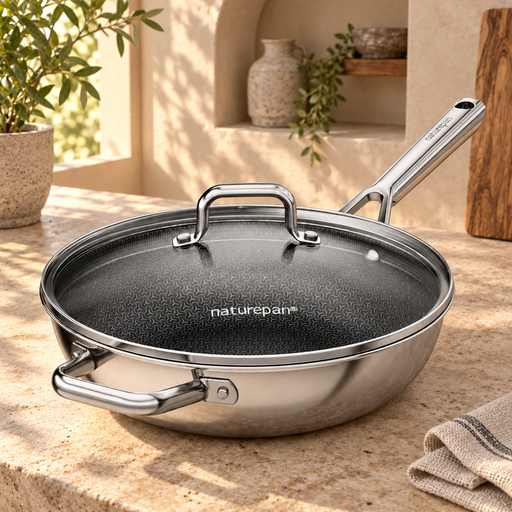
Why this product fits the profile: The 28 cm pan with high sides and a matching lid is ideal for everyday portions, vegetable stir-fries, sauces and braised dishes.
Hob types, temperature limits and care instructions are clearly stated. The lid must be removed for oven use.
Multi-layer stainless steel body, ceramic coating, 28 cm diameter and suitability for induction, gas, electric and ceramic hobs.
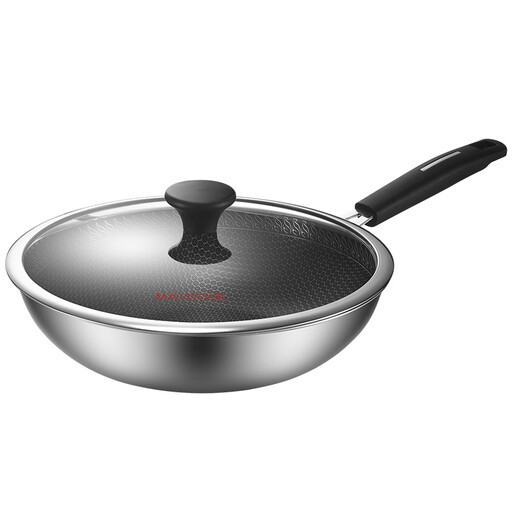
Why this product fits the profile: The 30 cm wok combines a three-layer stainless steel body with a ceramic internal coating, honeycomb structure and transparent glass lid.
The product details explicitly state hob compatibility for induction, gas, electric and ceramic hobs, and recommend hand washing.
304 stainless steel, three-layer construction, ceramic non-stick interior and glass lid with heat-insulated handle.
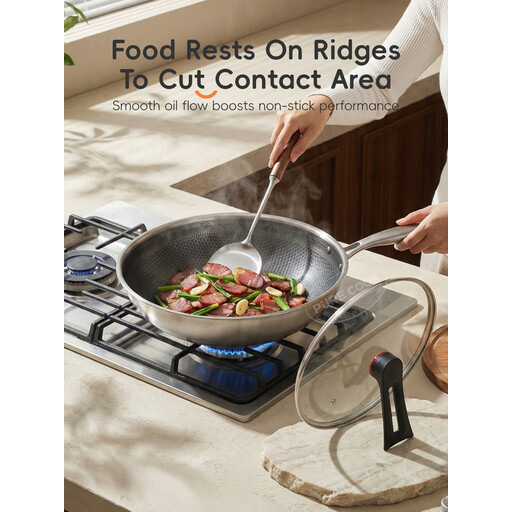
Why this product fits the profile: The larger format is aimed at heavy users and households that fry, braise or prepare larger quantities for several people.
With a 32 cm diameter it offers more working surface; before buying, check storage space, weight and the size of your induction zone.
Three-layer 304 stainless steel, honeycomb structure, glass lid and suitability for gas, induction and electric ceramic hobs.
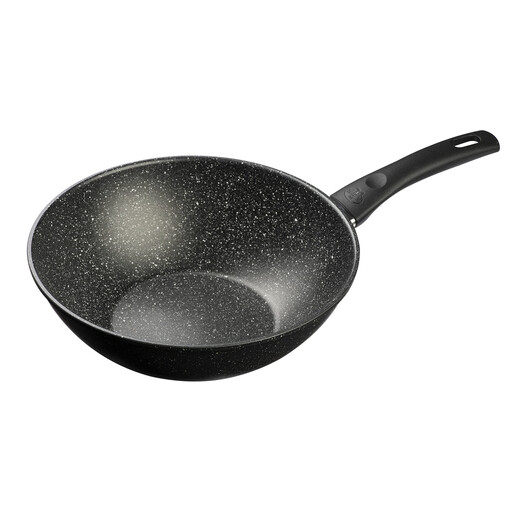
Why this product fits the profile: The more compact wok pan is designed for quick stir-fries, vegetables, fish, meat and pasta dishes on different hob types.
The details state a four-layer Nerolite coating, a maximum oven temperature of 160 °C and suitability for all common hob types.
28 cm diameter, induction base, stated suitability for gas, electric and ceramic hobs, and dishwasher-safe product information.
We’ve put together a full, regularly updated list of products that fully meet these strict selection criteria and the safety regulations in force in the EU.
28 to 30 cm is versatile for many private households. 32 cm offers more volume for family portions, but needs more storage space and a sufficiently large cooking zone.
No. A wok for induction needs a magnetic base. Check the specific manufacturer’s information and compare the base diameter with the size of your induction zone.
It’s not possible to give a general lifespan. It depends on heat, use, kitchen utensils and cleaning. Low to medium temperatures, hand washing and avoiding sharp metal tools can protect the surface. If you see visible chipping or warping, stop using the cookware.