
Lieferung heute & morgen

Qualitätsgarantie

Willkommens-Angebote freischalten: KOSTENLOSE Lieferung | Bis zu 80 % RABATT | Kostenlose 30-Tage-JoyPlus-Testphase
App herunterladen
Women's shapewear can create a smoother silhouette under dresses, business outfits or jeans. However, the key is not the strongest possible compression, but the combination of the right cut, the correct size and a suitable intended use. Buying solely based on eye-catching marketing claims can result in pressure marks, visible edges or a garment that is barely practical for everyday wear.
Overly tight tummy-control underwear does not automatically provide better shaping. It can dig in, shift when sitting or create uncomfortable pressure around the stomach, bust and thighs. The relevant information is provided by the individual manufacturer. Many styles use waist and hip measurements together with a size chart.
Seamless shapewear reduces visible seams, but does not guarantee that the edges will remain discreet under every fabric. Wide leg openings, a torso that is too short or an unsuitable colour can show through under close-fitting clothing. For light-coloured clothing, skin tones are often more practical than black, while dark colours may be less noticeable under dark fabrics.
A post-operative compression bra or post-operative compression bodysuit is not the same as an everyday shaping bodysuit. Following breast or cosmetic surgery, the compression level, wearing time and fastening type must be agreed with the medical practice treating you. Product descriptions are not a substitute for medical advice.
For the office, everyday wear or events, shapewear with medium compression is often a practical starting point. It can smooth the waist, stomach, hips and thighs without enclosing the body as firmly as a high-control full-body shaper.
A women's body shaper with stronger shaping is more suitable for shorter periods of wear and outfits where a defined silhouette is desired. When trying it on, you should be able to breathe freely. Numbness, tingling, pain or noticeable skin discolouration are signs that you should remove the garment.
Look for adjustable straps, a practical gusset fastening and flat leg openings. These details have a greater impact on everyday practicality than decorative elements.
Nylon and elastane are often combined because they are stretchy and retain their shape. The material composition should be clearly stated. In the products featured here, the specified blends range, for example, from 74 % nylon and 26 % elastane to 77 % nylon and 23 % elastane.
Hand washing, air drying and avoiding bleach or tumble dryers can help protect the garment's elasticity. Before buying, you should also check whether the care instructions fit in with your everyday routine. A garment that can only be hand-washed may require longer drying times and careful rotation with a second style.
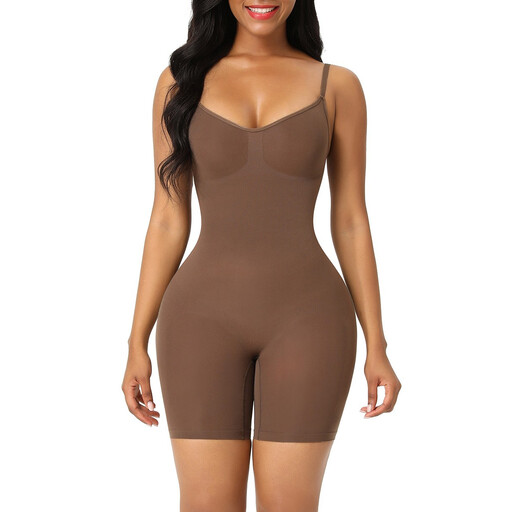
Why this product suits this profile: The seamless mid-thigh bodysuit combines tummy control, bust support and a thigh section for a range of everyday outfits. Adjustable straps and a crossover gusset are designed to make putting it on and taking it off easier.
According to the product information, the size selection is based on waist and hip measurements. If you fall between sizes, the larger size is recommended rather than deliberately ordering too small.
77 % nylon and 23 % elastane, seamless construction, adjustable straps and a medium-length leg reaching to the thigh.
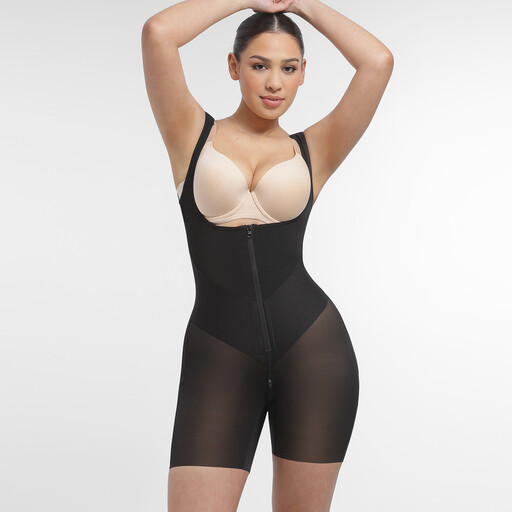
Why this product suits this profile: This style is aimed at shoppers looking for a full-body solution with adjustable straps, a front fastening and defined tummy and waist shaping. According to the product information, it is designed for medium compression.
The design specifies concrete features rather than promising purely visual results: an 11 cm wide V-shaped waistband, three-row fastening, a zip fastening at the gusset and laser-cut leg openings.
Double-layered material sections, mesh panels, U-shaped bust support and three adjustable shoulder straps; the stated compression level is medium.
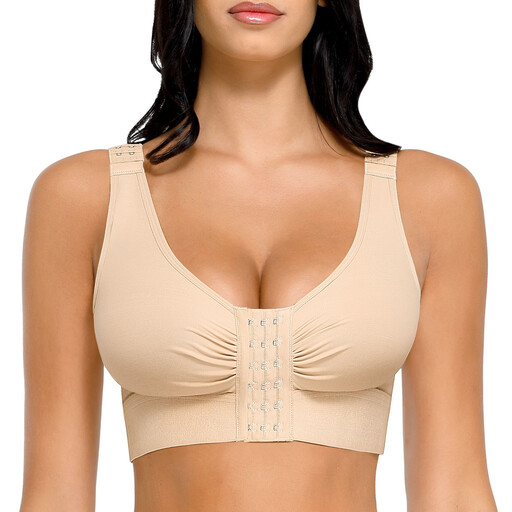
Why this product suits this profile: The front-fastening support bra is designed for easy fitting and adjustable width. This can be practical if your mobility is restricted; after an operation, it should only be used with medical approval.
Rather than relying on a one-size-fits-all design, the product information states that this style has a front fastening with eight rows of hooks and moulded cups. The treating medical practice must assess whether it is suitable after a procedure.
53 % nylon and 47 % elastane, moulded cups, breathable construction and an adjustable front fastening with eight rows of hooks.
We've put together a complete, regularly updated list of products that fully meet these strict selection criteria and the safety regulations applicable in the EU.
Put on a bodysuit slowly, starting from the bottom and working upwards, and distribute the material evenly. Creases around the waist, gusset or knees can cause pressure marks. With a front fastening, the hooks should not remain under maximum tension for extended periods. Before wearing it for the first time over a longer period, check that you can sit, walk and breathe comfortably.
According to the product information, most of the styles mentioned can only be hand-washed. Do not use bleach, iron the garment, dry-clean it or tumble-dry it unless the care label states otherwise. Flat air drying helps the material retain its shape.
After an operation, follow the instructions provided by your medical team. A post-operative compression bra or Fajas bodysuit must not be tightened independently or worn for longer than recommended. If you experience increasing pain, severe pressure, circulation problems or unusual skin reactions, stop using the compression garment and seek medical advice.
Measure your waist and hips directly against the skin or over thin underwear wherever possible. Compare the measurements with the size chart for the specific style. If you fall between two sizes, the larger option is recommended for many of the products mentioned here. The key is even shaping without the garment digging in.
This depends on the compression level, cut and your personal comfort. Start by wearing it for a shorter period and take breaks. Regular everyday shapewear should be assessed differently from a post-operative compression bodysuit. After a procedure, the duration of wear must be determined solely by your doctor's instructions.
Its lifespan depends on the material, how often it is worn, the size and how it is cared for. Frequent washing at high temperatures, heat from a tumble dryer and a fit that is permanently overstretched can affect elasticity more quickly. Hand washing, flat air drying and alternating between several garments can help extend their everyday use.