
Lieferung heute & morgen

Qualitätsgarantie

Willkommens-Angebote freischalten: KOSTENLOSE Lieferung | Bis zu 80 % RABATT | Kostenlose 30-Tage-JoyPlus-Testphase
App herunterladen
For demanding tours in the Alps or long hikes in low mountain ranges, choosing the right footwear is crucial. An ill-fitting boot can not only compromise comfort but also pose a safety risk. However, the market for women's waterproof hiking boots is filled with marketing promises that often obscure more than they clarify. Before you make a purchase, it's essential to know the most common pitfalls that lead to disappointment and unnecessary expense.
The 3 Most Common Misconceptions When Buying Hiking Boots:
To avoid a bad purchase, you should focus on objective, technical features. These three parameters are non-negotiable for the performance and safety of your boots in difficult terrain.
A robust hiking boot must protect the foot from external elements. Look for an abrasion-resistant upper and an integrated protective toe cap. This shields your feet from impacts against rocks or roots. For tours in alpine terrain, high-cut women's hiking boots (Category B/C or C) are recommended, as the high collar stabilises the ankle and protects against twists. Another critical feature is a fully integrated, breathable and waterproof membrane. It keeps water out while allowing sweat to escape as water vapour, ensuring a balanced foot climate.
The sole is your direct connection to the ground. For hiking boots for challenging terrain, two aspects are central:
A good women's mountain boot must fit snugly without creating pressure points. Classic lacing allows for good customisation but can loosen on long tours. An advanced alternative is hiking boots with a quick-lacing system. These systems, often operated with a dial, allow for micro-adjustable, one-handed tightening—even with gloves on. The pressure is distributed evenly, and readjustments can be made in seconds, which is a particular advantage when conditions change (e.g., feet swelling).
Based on the criteria above, we have identified a model specifically designed for experienced female hikers who value technical performance and reliability.
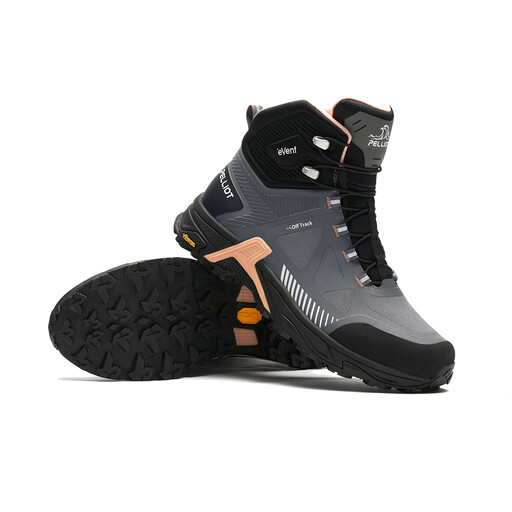
Why it's a match: This boot is aimed specifically at users who regularly undertake demanding trekking or mountain tours. The construction is designed for durability and protection in unpredictable terrain, from heavy-duty hikes to technical scrambles.
The integrated, breathable, and waterproof membrane provides reliable protection from moisture. The robust overall construction with a protective toe cap prioritises stability and safety over minimal weight. The special lug pattern of the sole is designed for strong grip on wet rock and loose scree.
The Fitgo quick-lacing system allows for precise, one-handed adjustment in seconds. The high-cut upper, combined with the abrasion-resistant material, offers comprehensive protection and support for the foot.
We have compiled a complete, up-to-date list of products that meet strict selection criteria for use in demanding terrain.
Clean your boots of coarse dirt with a brush and lukewarm water after every tour. Avoid aggressive cleaning agents or machine washing, as these can damage the membrane. Let the boots air dry at room temperature, never on direct heat sources like radiators or in direct sunlight. Regularly applying a waterproofing treatment to the upper material supports the membrane's function by preventing the outer fabric from becoming saturated with water.
This depends on personal preference, but quick-lacing systems offer objective advantages. They allow for very fast and precise adjustment of the fit, which is particularly useful when feet swell during a long tour. The pressure distribution is often more even, and the system is less likely to loosen on its own. Especially in the cold or when wearing gloves, the one-handed operation is a significant comfort gain.
The break-in period depends heavily on the material and stiffness of the boot. Robust women's trekking boots made from synthetic materials often require a shorter break-in period than stiff leather boots. It is recommended to first wear the new boots for daily activities and on shorter walks before undertaking a long tour. Pay attention to any potential pressure or friction spots and adjust the lacing accordingly. Plan for at least several short to medium-length hikes to properly break them in.