
Lieferung heute & morgen

Qualitätsgarantie

Willkommens-Angebote freischalten: KOSTENLOSE Lieferung | Bis zu 80 % RABATT | Kostenlose 30-Tage-JoyPlus-Testphase
App herunterladen
Published July 28, 2026 by Joybuy Product Recommendation Officer
Reverberation, echoes, and distracting noise can disrupt concentration in the office and undermine relaxation in your living room. Wood acoustic panels promise a solution that blends functionality with modern design. However, the market is flooded with products whose promises often outweigh their actual performance. Before you invest, it's crucial to understand the most common pitfalls that can lead to a poor investment.
This guide will help you identify the key features and make an informed choice that noticeably improves both aesthetics and room acoustics.
Many products look appealing at first glance but quickly prove to be inadequate. Pay close attention to these three points to avoid disappointment:
To reduce reverberation and create pleasant room acoustics, you should check three technical aspects. These determine the quality and effectiveness of your new acoustic wall.
The invisible core of every acoustic panel is the backing on which the wood slats on the wall are mounted. There are significant differences here:
The visible slats not only contribute to the look but also influence sound diffusion through their shape and spacing.
Before buying, check how the panels are installed. The most common methods are:
Pay attention to the dimensions of individual panels and the total area a set covers to correctly calculate your needs.
Here are some recommendations tailored to different user profiles and use cases.
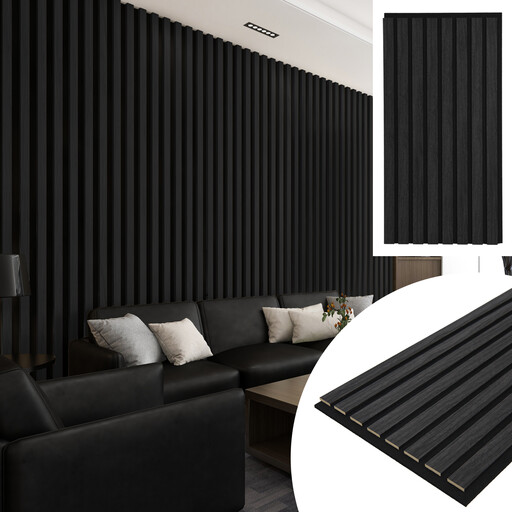
Why This Fits Their Persona: Ideal for those who want to create a stylish accent without covering an entire wall. The 4-panel set is perfect for acoustically and visually enhancing specific areas like a workspace or TV corner. The modern grey oak look complements many interior styles.
This panel uses a dense felt backing instead of cheap foam, ensuring noticeable sound absorption. The simple installation with adhesive strips also avoids hidden installation costs.
Combines a realistic wood look with an effective felt backing. The set is designed for easy DIY installation and is ideal for smaller projects.
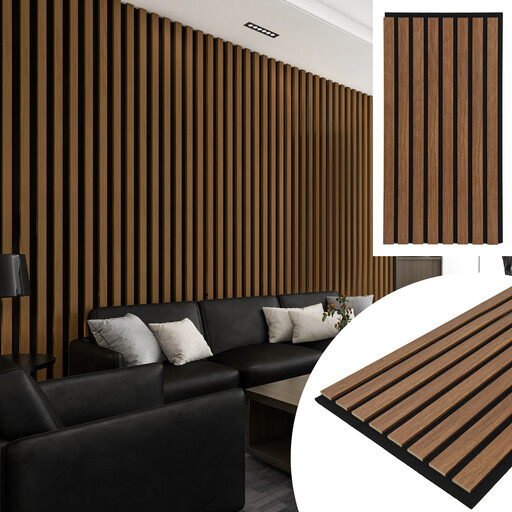
Why This Fits Their Persona: Perfect for office acoustic panels or the home office, where speech clarity during calls and concentration are crucial. The high-quality walnut finish creates a professional and warm atmosphere. The panels are specifically designed for noise reduction and echo control.
This product bypasses the material trap by combining a slatted structure with a dense felt backing, explicitly designed for sound absorption rather than just being decorative.
Focused on functional noise reduction for work environments. The elegant walnut finish professionally enhances any room. Installation is straightforward.
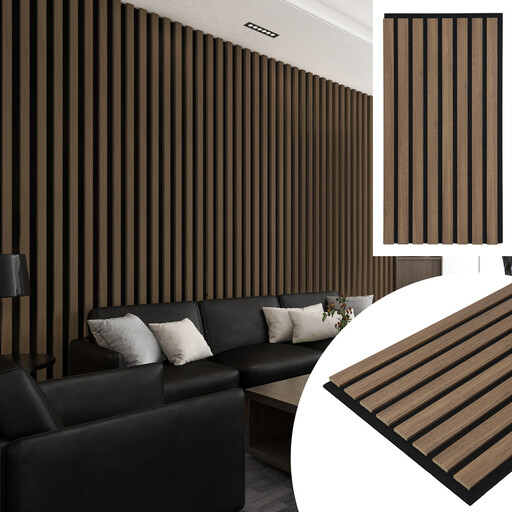
Why This Fits Their Persona: Covering 3.6 m?, this 20-pack is ideal for creating a full accent wall in a living room or home theatre. The combination of MDF slats, real wood veneer, and felt backing offers a robust and effective solution for larger areas.
This product relies on a clear material declaration: an MDF core with real wood veneer and a felt backing. It avoids the material deception trap and offers installation flexibility with the choice between adhesive and screws.
Large set for extensive coverage. High-quality material combination for good acoustic properties and a durable, premium look.
We have compiled a complete, up-to-date list of products that fully meet these strict selection criteria and safety standards.
1. How many acoustic panels do I need for a room? There's no one-size-fits-all answer, as it depends on the room size, furnishings, and the desired effect. A common recommendation is to cover about 15-25% of a room's wall surface, starting with the wall opposite the main sound source (e.g., speakers or a workstation). Often, covering a single wall or even just partial areas is enough to achieve a noticeable improvement.
2. Can I install wood acoustic panels myself? Yes, most modern acoustic panels are designed for DIY installation. Lighter panels can often be simply glued to the wall with a suitable construction adhesive. For a permanent and very stable installation, especially with heavier panels or on the ceiling, screwing them onto a wooden sub-frame is recommended. Always check the product description for the recommended installation method.
3. Do acoustic panels reduce noise from neighbours? It's important to make a key distinction here: acoustic panels are primarily designed for sound absorption, meaning they reduce reverberation and echo within a room. This improves room acoustics and speech clarity. For wall soundproofing—blocking noise coming from outside or from neighbouring apartments—they are only partially effective. That requires structural measures with high mass (e.g., special insulation boards, decoupled walls). While acoustic panels might offer a slight improvement, they are not a dedicated soundproofing solution.