
Lieferung heute & morgen

Qualitätsgarantie

Willkommens-Angebote freischalten: KOSTENLOSE Lieferung | Bis zu 80 % RABATT | Kostenlose 30-Tage-JoyPlus-Testphase
App herunterladen
A reverberant room can disrupt concentration in a home office, distort the sound of music, or impair speech clarity during conversations. Wood acoustic panels offer a solution that blends functionality with modern design. However, the market is crowded, and not every product delivers on its visual promise. Before you make a decision, it's crucial to understand the most common pitfalls that can lead to an unsatisfactory result.
This guide will help you identify the key quality markers and make an informed choice for your needs.
Many products look appealing at first glance but prove to be inadequate upon closer inspection. Pay special attention to these three points to avoid a bad investment:
To make the right choice, you should focus on three objective criteria. These determine the acoustic effectiveness as well as the durability and appearance of your new wall covering.
A high-quality acoustic panel consists of three layers that work in synergy:
The typical slatted wood wall is not just a design feature. The three-dimensional structure of the slats breaks up sound waves before they are absorbed by the felt. This effect, known as diffusion, scatters the sound throughout the room, contributing to more balanced acoustics. The combination of diffusion (from the slats) and absorption (from the felt) makes these panels particularly effective.
Thoughtful product design is evident in flexible installation options. Ideally, a panel set should offer both choices:
Based on the criteria above, we have identified several products suited for specific users and room situations.
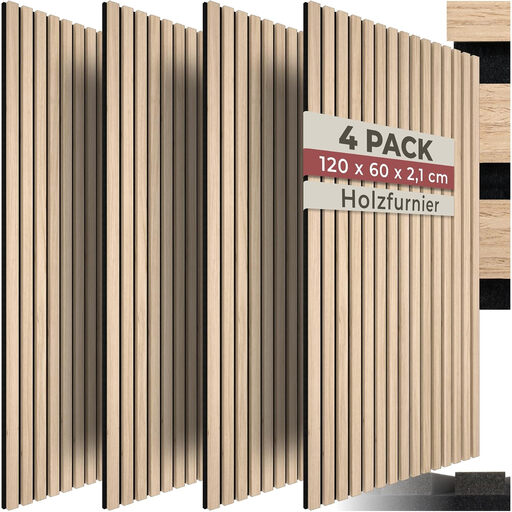
Why This Fits Their Persona: Ideal for renters who want to create a stylish accent wall without damaging the building's structure. The 4-piece set is perfect for smaller areas, and the explicitly mentioned drill-free mounting option offers maximum flexibility.
This set explicitly offers the choice between adhesive and screw mounting, thus avoiding the trap of inflexible installation. Its construction of an MDF core, real wood veneer, and acoustic felt prevents material deception.
Modular, renter-friendly installation; high-quality oak veneer finish for modern wood wall panelling.

Why This Fits Their Persona: Anyone who relies on clear audio quality for video conferences in their home office needs a large-scale solution. This 20-piece set covers 3.6 m? and is ideal for panelling an entire office wall to create a professional, quiet work environment.
The large-area coverage with a material composition designed for sound absorption addresses the problem of ineffective piecemeal solutions. The use of low-VOC materials ensures good indoor air quality in the office.
Large set for effective acoustic treatment of entire walls; suitable for use as acoustic panels for offices; made with healthy, non-toxic materials.
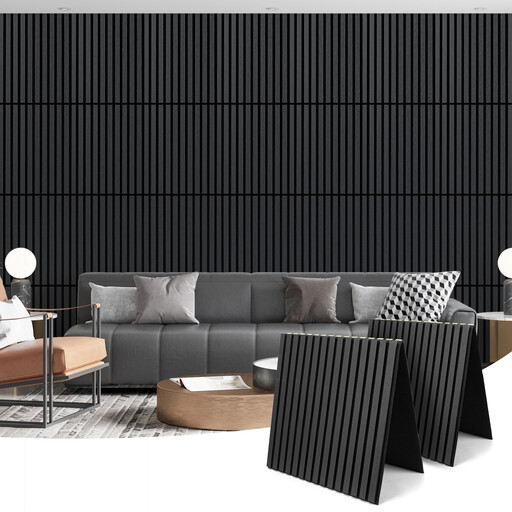
Why This Fits Their Persona: For gaming setups or podcasting corners, targeted sound absorption behind the microphone or speakers is often crucial. The foldable design allows for quick, tool-free assembly and flexible positioning to specifically minimise reflections.
This product solves the mounting problem in an innovative way. The foldable design is inherently flexible and requires no permanent alterations to the wall, making it ideal for purpose-driven and adaptable use.
Tool-free, quick assembly via a folding mechanism; ideal for targeted acoustic treatment of work or hobby areas.
We have compiled a complete, up-to-date list of products that fully meet these strict selection criteria and applicable safety regulations.
1. How many acoustic panels do I need for my room?
A general recommendation is to cover about 15% to 25% of a room's total wall surface with absorbent materials to achieve a noticeable reduction in reverberation. It's best to start with the wall surface directly opposite your main sound source (e.g., speakers or where you speak). Treating two adjacent walls can also be very effective in minimising standing waves in corners.
2. Can wood acoustic panels also serve as soundproofing against a neighbouring apartment?
It's important to make a key distinction here. Acoustic panels are primarily designed for sound absorption, meaning they improve the acoustics within a room by reducing reverberation. They are not an effective solution for wall soundproofing, which is intended to block the transmission of sound between rooms. Soundproofing typically requires structural measures with high mass, such as building a decoupled wall.
3. How do you clean and maintain slatted wood wall panelling?
Maintenance is straightforward. For regular cleaning, simply dust the panels with a soft duster, a microfibre cloth, or the brush attachment of your vacuum cleaner on a low suction setting. Avoid using water or harsh cleaning agents, as they could damage the wood veneer and the felt.