
Lieferung heute & morgen

Qualitätsgarantie

Willkommens-Angebote freischalten: KOSTENLOSE Lieferung | Bis zu 80 % RABATT | Kostenlose 30-Tage-JoyPlus-Testphase
App herunterladen
Distracting echo in the living room, muffled conversations during video conferences in the home office, or a generally chaotic soundscape—many modern living and working spaces face acoustic challenges. Hard surfaces like concrete, glass, and parquet reflect sound waves, leading to unpleasant reverberation. Wood acoustic panels offer a solution that is both functional and aesthetic. They combine sound-absorbing properties with the warm, appealing character of modern wood wall panelling.
This article serves as a guide. It explains what to look for when making your selection and presents a range of products that can help improve your room's acoustics.
The variety of acoustic panels is vast. To make an informed decision, several technical and design aspects are relevant.
An acoustic panel typically consists of two main components: a visible surface and a sound-absorbing backing material.
Not every room requires the same acoustic treatment. Consider what goal you are trying to achieve:
The installation method should match your DIY skills and living situation.
Based on the criteria mentioned, we have compiled a selection of products that meet various design and functional requirements.
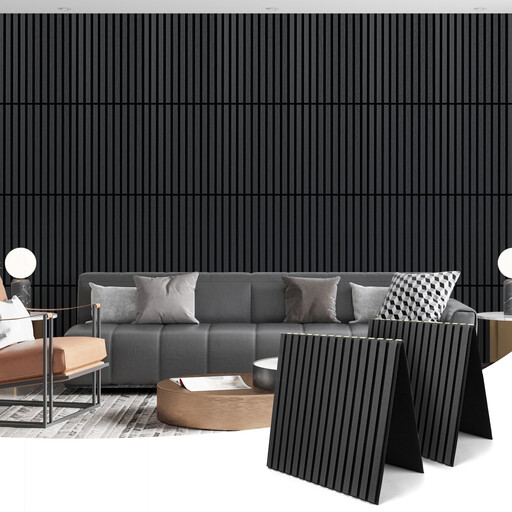
What makes it special: This set from LONGKING stands out with its foldable design. The two 120x60 cm panels can be easily folded and stored away when not in use. The core of high-density absorbent material is covered with black fabric and set in a wooden frame, making it a flexible and mobile solution for temporary setups.
Pros:
Who is it for? Ideal for content creators, musicians, or home office users who need a straightforward, non-permanent solution to improve recording quality or speech clarity in various environments.
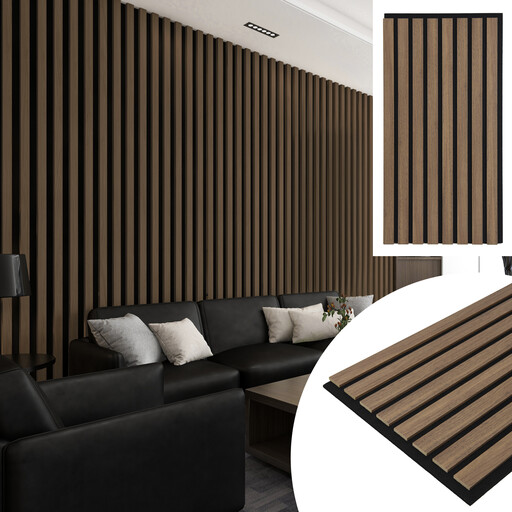
What makes it special: These panels from LONGKING combine a sophisticated aesthetic with acoustic functionality. The set includes four panels (30x60 cm each) featuring a striking 3D wood slat structure in a dark walnut finish. The slats diffuse sound, while the dense felt backing absorbs reverberation.
Pros:
Who is it for? Perfect for design-conscious homeowners and renters looking to create an accent wall in their living room, bedroom, or office while noticeably improving the room's acoustics.
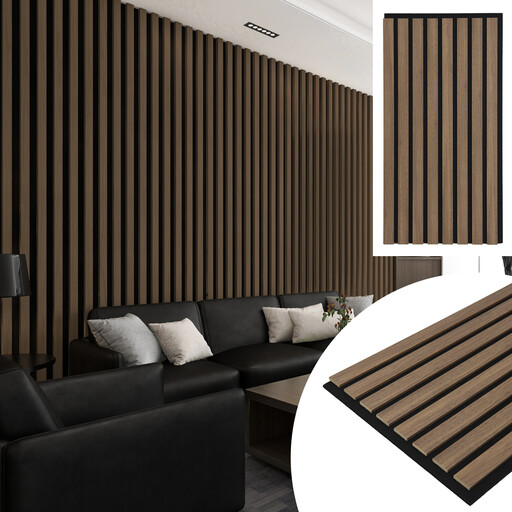
What makes it special: The Art3d set is designed for larger projects. With 20 panels (30x60 cm each), it can cover a total of 3.6 m?. The panels consist of an MDF core with a walnut wood veneer and an acoustic felt backing. This construction aims to dampen distracting noise while creating an elegant, modern wall surface.
Pros:
Who is it for? An excellent choice for a large-scale acoustic and visual upgrade of conference rooms, large living rooms, home cinemas, or professional studios where a uniform look across a larger area is desired.
The selection presented here covers common applications. However, if you are looking for more specific designs, different wood types, or alternative formats for your wall design, it's worth exploring our broader selection.
Discover more decorative wall panels and find the perfect solution for your project.
Go to Category: Decorative Wall Panels on Joybuy.de
1. How many acoustic panels do I need for my room? The required quantity depends on the room size, furnishings, and existing surfaces. A general recommendation is to start by covering about 15–25% of the surface area of one or two opposing walls. It is often wise to begin with a smaller number of panels and add more if needed until the desired acoustic effect is achieved.
2. Do acoustic panels also provide soundproofing from the neighbouring apartment? It is important to distinguish between sound absorption and soundproofing. Acoustic panels are primarily sound absorbers. They reduce reverberationwithin a room, thus improving its acoustics. However, they offer only limited soundproofing against noise that penetrates the building structure from the outside (e.g., impact noise, loud music from a neighbour). For that, structural soundproofing measures are required.
3. Can you cut wood acoustic panels to size yourself? This depends on the product's construction. Panels consisting only of a felt board with slats on top can often be cut with a sharp utility knife between the slats or through the felt. Panels with a solid MDF backing, however, require a saw (e.g., a fine-toothed handsaw or circular saw). Always follow the manufacturer's specific instructions.