
Lieferung heute & morgen

Qualitätsgarantie

Willkommens-Angebote freischalten: KOSTENLOSE Lieferung | Bis zu 80 % RABATT | Kostenlose 30-Tage-JoyPlus-Testphase
App herunterladen
Excessive reverberation in the home office, muffled sound during movie night, or a generally disruptive background noise in the living room—many modern living spaces with minimalist decor and hard surfaces struggle with unpleasant room acoustics. The search for a solution often leads to a compromise between function and aesthetics. While traditional foam absorbers are functional, they rarely fit into a carefully curated interior design concept.
This is where wood acoustic panels offer a stylish solution. They combine the sound-absorbing properties of acoustic felt with the warm, natural aesthetic of wood. This article serves as your guide. We'll explain what to look for when making your selection and present a curated list of models that both improve room acoustics and serve as a chic design element.
Choosing the right acoustic wall panels depends on several factors. To make an informed decision, the following aspects are particularly important.
The effectiveness of an acoustic panel is largely determined by its construction. Most high-quality models consist of two main components:
The combination of absorption (from the felt) and diffusion (from the slats) creates balanced and pleasant acoustics without making the room sound "dead."
Before buying, consider how and where the panels will be installed. Most panels are designed for easy DIY installation. Common methods include:
The panels are versatile, whether used as a targeted wall sound absorber behind the TV, as a full accent wall for sound control in the living room, or to optimise acoustics in an office with acoustic panels.
Based on design, material quality, and functionality, we have compiled a selection of acoustic panels suitable for various applications.
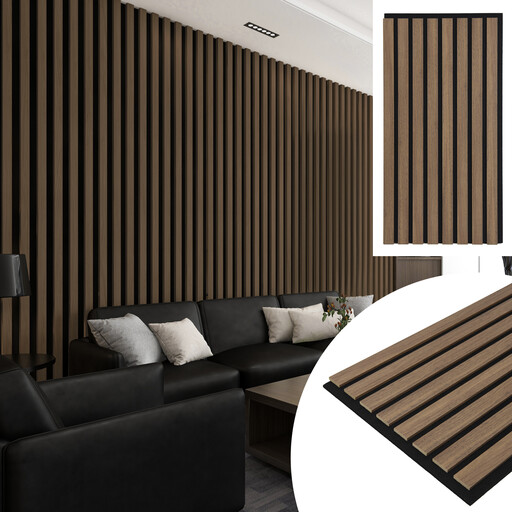
What makes it special: These panels combine a deep, rich dark walnut colour with an effective 3D structure. The slats create a striking visual pattern that effectively breaks up sound waves, while the dense felt backing ensures high absorption. The dark wood finish lends a particularly warm and premium atmosphere to any room.
Benefits:
Best for: Ideal for home cinemas, living rooms, or executive offices where a sophisticated aesthetic and a quiet sound environment are desired.
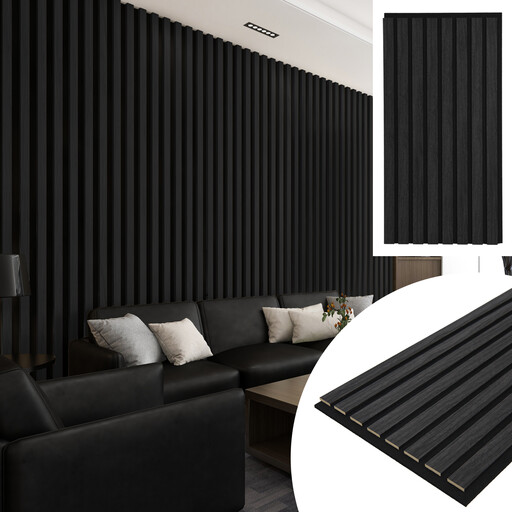
What makes it special: The grey oak version offers a modern and bright alternative to classic wood tones. The realistic oak finish pairs perfectly with Scandinavian or minimalist interior styles. The functionality remains the same: the combination of slats and felt noticeably improves acoustics.
Benefits:
Best for: Perfect for home office setups, content creator studios, or living areas that need an acoustic upgrade combined with a contemporary, bright design.
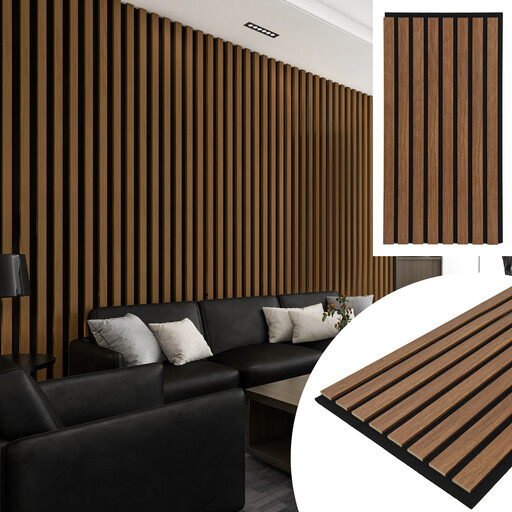
What makes it special: This model features the classic, warm tone of natural walnut wood. The deep, linear slats create an impressive three-dimensional look that adds texture and warmth to any room. The high-performance felt backing effectively absorbs unwanted reverberation and background noise.
Benefits:
Best for: An excellent choice for anyone who prefers a timeless and warm aesthetic. Equally suitable for bedrooms to create a tranquil oasis or for offices to promote concentration.
If the models presented here don't perfectly match your vision or if you prefer a different style, you can find more inspiration in our collection. Discover more options in our Designer Wall Decor category.
A general recommendation is to cover about 15–25% of a room's wall surface with sound-absorbing materials. It's best to start with the walls that reflect the most sound (typically the walls opposite your speakers or on the sides of your listening or working position). Often, partially covering one or two strategically placed walls is enough to achieve a significant improvement.
The most effective placement is at the "first reflection points." These are the spots on the walls where sound from a source (e.g., speakers or your voice) reflects first before reaching your ears. A simple way to find these points: sit in your usual listening position and have someone else walk along the side walls with a mirror. Wherever you can see the sound source in the mirror is a first reflection point. The wall behind speakers or behind your seating position are also excellent locations for wall sound absorbers.
It's important to make a key distinction here. Wood acoustic panels are primarily designed to improve room acoustics—that is, they reduce echo and reverberation within a room (sound absorption). They are not primarily intended for soundproofing, which is the process of blocking sound from entering or leaving a room. While the panels may have a minor insulating effect due to their mass, effective soundproofing from neighbours requires structural measures like a decoupled wall system.