
Lieferung heute & morgen

Qualitätsgarantie

Willkommens-Angebote freischalten: KOSTENLOSE Lieferung | Bis zu 80 % RABATT | Kostenlose 30-Tage-JoyPlus-Testphase
App herunterladen
By a Joybuy Product Recommendation Officer, August 28, 2026
A well-maintained wood floor lends warmth and elegance to any room. But that joy can quickly fade when the surface becomes dull, joints swell, or scratches mar the overall appearance. Proper wood floor care is crucial to preserving the value and look of your floor for the long term. However, many well-intentioned tips and supposed miracle cures often lead to the opposite result. Before you invest in the next product, you should know the most common and costly mistakes.
The 2 Most Common Pitfalls in Wood Floor Care:
To avoid making a bad purchase, don't be swayed by marketing promises; instead, focus on verifiable features. Proper care starts with selecting a product that is precisely tailored to your floor type and needs.
Not all wood floors are the same. For indoor care, the most important distinction lies in the surface treatment.
The best cleaning fluid is only as good as the tool used to apply it. A dripping mop can render even the best product ineffective. Modern cleaning systems offer crucial control in this area. A mop for wood floors with a wringing or spin mechanism allows you to precisely dose the moisture. This ensures you only damp-mop the floor, leaving no harmful wetness behind.
Instead of making a blanket recommendation, we have curated products for specific user profiles and their requirements.
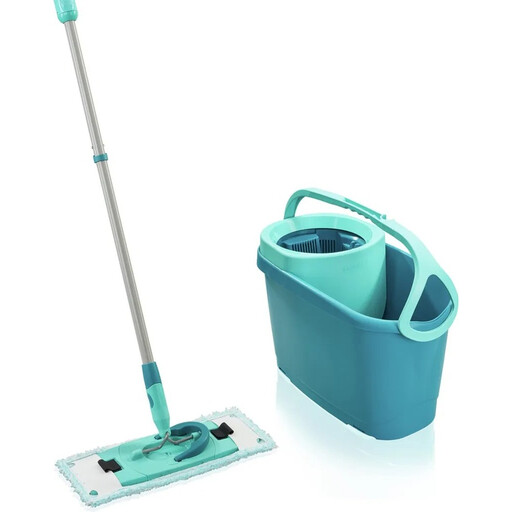
Why This Fits Their Persona: This all-in-one set is designed for users seeking an efficient and ergonomic solution for the regular care of parquet and laminate. It combines the cleaning tool and moisture control in a single system.
The patented spinning mechanism in the handle and the spin-stop function solve the problem of oversaturation. The moisture level of the mop head can be individually controlled to ensure the floor is only damp-mopped.
The system allows for wringing while standing, without bending over and without contact with dirty water. The super-soft cover is specially designed for delicate wood floors.
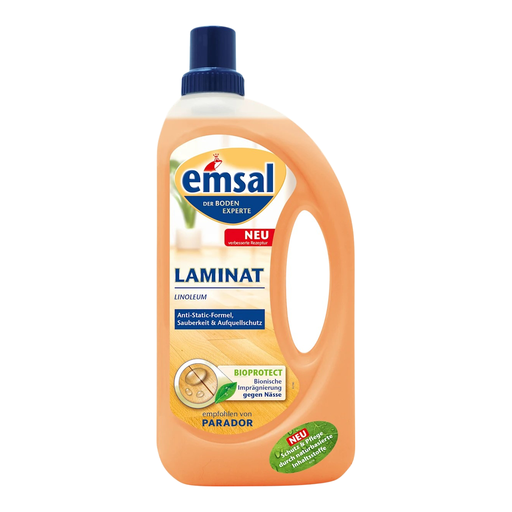
Why This Fits Their Persona: Ideal for anyone with laminate, cork, or designer floors featuring click-systems who wants to specifically protect against the main problem: swelling at the joints.
The BIOPROTECT moisture-protection formula, according to the manufacturer, protects water-sensitive joints and edges from swelling. This directly addresses the biggest weakness of laminate flooring.
Provides streak-free cleaning and gentle care. The additional emsal anti-static formula can reduce dust attraction on the floor, extending the intervals between cleanings.
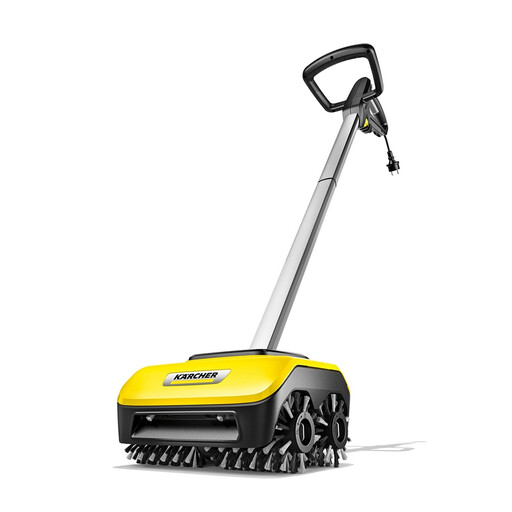
Why This Fits Their Persona: For homeowners with wood or WPC decks who are looking for a thorough yet gentle solution to remove stubborn dirt like moss and green algae without damaging the wood.
Unlike a pressure washer, which can roughen up the wood fibres, this device works with rotating brushes and a low-pressure water jet (max. 10 bar). This ensures an intensive yet gentle clean.
Two counter-rotating brush rollers ensure a uniform cleaning result right up to the edges. Water consumption is adjustable via a valve, enabling water-efficient use.
We have compiled a complete, up-to-date list of products that fully meet these strict selection criteria.
1. How often should you damp-mop a parquet floor? The frequency depends on the amount of foot traffic. In normally used living spaces, damp-mopping every one to two weeks is generally sufficient. In high-traffic areas like entryways or kitchens, a weekly cleaning may be advisable. Dry cleaning with a vacuum cleaner (using a parquet nozzle) or a dust mop should be done regularly to prevent scratches from sand and dirt.
2. Can you clean laminate with a steam cleaner? This is strongly discouraged. The combination of high temperature and moisture (steam) can cause water to penetrate deep into the joints and under the sealant layer. This almost inevitably leads to the core board swelling and permanent damage to the laminate floor. Instead, always use cleaners specifically designated for laminate and a well-wrung-out mop.
3. What is the difference in caring for oiled versus sealed parquet? The main difference lies in the surface structure. Sealed parquet has a closed lacquer layer that protects the wood from dirt and moisture. Care is aimed at cleaning and maintaining this layer. Oiled parquet is open-pored; the oil soaks into the wood and protects it from within. Here, the care product must not only clean but also be replenishing (e.g., with wood soaps) to nourish the wood and prevent it from drying out and becoming brittle.