
Lieferung heute & morgen

Qualitätsgarantie

Willkommens-Angebote freischalten: KOSTENLOSE Lieferung | Bis zu 80 % RABATT | Kostenlose 30-Tage-JoyPlus-Testphase
App herunterladen
A utility knife with a wooden handle is more than just a tool—it combines functionality with classic aesthetics. But with this popular tool type, the difference in quality quickly becomes apparent. Many buyers get frustrated with models that look great but fail quickly under real-world use. Before you make a decision, it's crucial to understand the typical weaknesses often hidden behind an attractive exterior.
The three most common problems with low-quality models are:
To avoid a bad purchase, you should focus on three core technical features. These determine the durability, safety, and real-world usability of your new work knife.
The blade is the heart of any utility knife. While many manufacturers use standard steel, SK5 steel has proven itself for demanding tasks as a professional cutter or work knife. This is a Japanese carbon steel known for its high hardness and excellent edge retention.
For a folding utility knife, the locking mechanism is crucial for safety. The two most common systems are the liner lock and the slide lock.
Both systems are safe as long as they are precisely manufactured. Make sure the blade has absolutely no play when locked.
A wood handle utility knife should not only be visually appealing but also feel good in your hand. An ergonomically shaped handle allows for better force transfer and fatigue-free work. The wood should be smoothly sanded and ideally treated to protect it from moisture.
Another practical detail, especially for tradespeople, is a sturdy belt clip. It ensures the knife is always within reach and doesn't have to be searched for in a toolbox.
Based on the quality criteria mentioned, we have identified several models suitable for different users and their requirements.
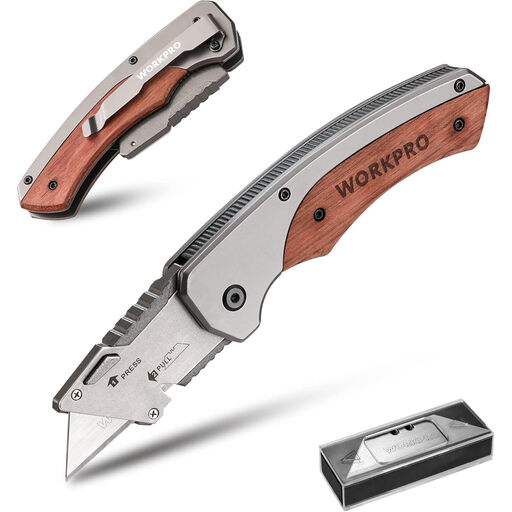
Why This Fits Their Persona: Ideal for the classic DIYer who needs a reliable and straightforward tool for everyday tasks like opening packages, cutting cardboard, or light craft projects. The design is focused on durability and ease of use.
The solid liner lock mechanism prevents the dreaded blade wobble. The quick-change mechanism is tool-free and reliable, avoiding the frustration of a complicated replacement.
Combination of a sturdy metal body and a mahogany wood handle; includes 10 SK5 replacement blades and a belt clip for high portability.
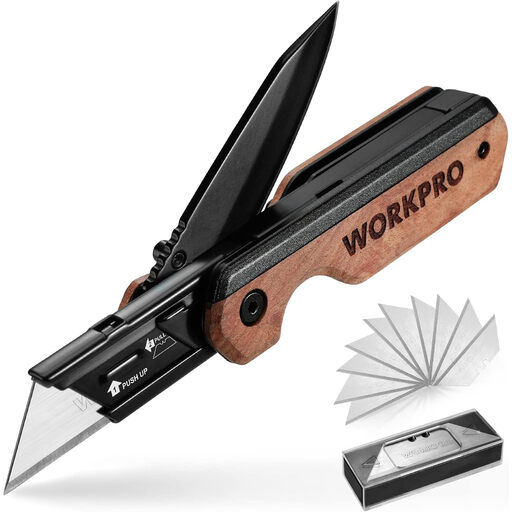
Why This Fits Their Persona: Perfect for professional users or ambitious DIY enthusiasts who need a versatile tool for various cutting tasks. The 2-in-1 function eliminates the need for a second knife.
The mahogany wood handle is high-quality and durable, bypassing the problem of cheap, splintering wood. The liner lock mechanism ensures a secure lock for both blades.
Combines a standard folding knife with a professional utility knife. The blade change for the trapezoid blade is tool-free and fast.
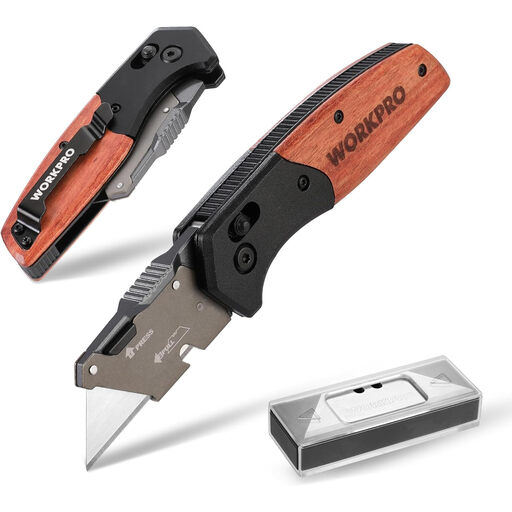
Why This Fits Their Persona: For users who place the highest value on safe and straightforward operation. The external slide lock offers a visually clear and robust lock that is easy to operate with one hand.
The innovative slide lock mechanism provides an exceptionally stable blade lock, bypassing the uncertainty of some liner lock systems. The tool-free blade change is intuitive and prevents frustration.
External slide lock for secure one-handed operation; very lightweight at only 130g; hybrid handle made of aluminum alloy and natural wood for comfort and durability.
We have compiled a complete, up-to-date list of products that fully meet these strict selection criteria and adhere to rigorous safety standards.
First, ensure the blade is fully locked if it's a folding knife. Then, press the button or lever for the quick-change mechanism. Carefully pull the old blade straight out. Insert the new blade into the holder until you hear it click into place. Check for a secure fit before using the knife again. Always dispose of old blades safely, for example, in a dedicated blade disposal container.
SK5 is a type of high-carbon steel known for its high hardness and good edge retention. This means the blade stays sharper for longer than blades made from simpler steel. It is ideal for cutting materials like carpet, thick cardboard, vinyl flooring, leather, or plastic. For general DIY and trade use, an SK5 blade is an excellent choice.
To maintain the longevity and appearance of the wooden handle, you should protect it from excessive moisture. Wipe the knife dry after use. If needed, the handle can occasionally be treated with a thin coat of a suitable wood care oil (e.g., linseed or tung oil). This nourishes the wood, protects it from drying out, and enhances the grain. Allow the oil to soak in well, then buff off any excess with a clean cloth.