
Lieferung heute & morgen

Qualitätsgarantie

Willkommens-Angebote freischalten: KOSTENLOSE Lieferung | Bis zu 80 % RABATT | Kostenlose 30-Tage-JoyPlus-Testphase
App herunterladen
Modernising flooring presents a challenge for many, often involving significant effort and expense. Wood-look interlocking tiles offer a systemic solution for the quick, tool-free renovation of indoor and outdoor surfaces. This article analyses the technical properties and applications of the most common material types to provide a solid basis for an informed decision.
Choosing the right interlocking tile primarily depends on the intended location and the associated material requirements. The two dominant materials on the market are WPC (Wood-Plastic Composite) and Vinyl (Polyvinyl Chloride).
WPC tiles are made from a composite of wood fibres and thermoplastics. This material blend aims to combine the aesthetic qualities of wood with the durability and weather resistance of plastic.
Wood-look vinyl tiles are a flexible and slim alternative. They are made entirely of plastic and are available in various designs, including self-adhesive vinyl tiles.
| Property | WPC Interlocking Tiles | Vinyl Interlocking / Adhesive Tiles | | :--- | :--- | :--- | | Main Material | Wood-Plastic Composite | Polyvinyl Chloride (PVC) | | Primary Application | Outdoor (patio, balcony) | Indoor (kitchen, bathroom, living areas) | | Installation Height | Higher (approx. 2-3 cm) | Low (approx. 2-5 mm) | | Water Resistance | Weather-resistant | Waterproof | | Installation System | Click system on a support grid | Tongue-and-groove or self-adhesive | | Subfloor Requirement | Solid, level subfloor | Very smooth, clean subfloor |
Based on technical specifications and practical utility, we present two products that cover different use cases.
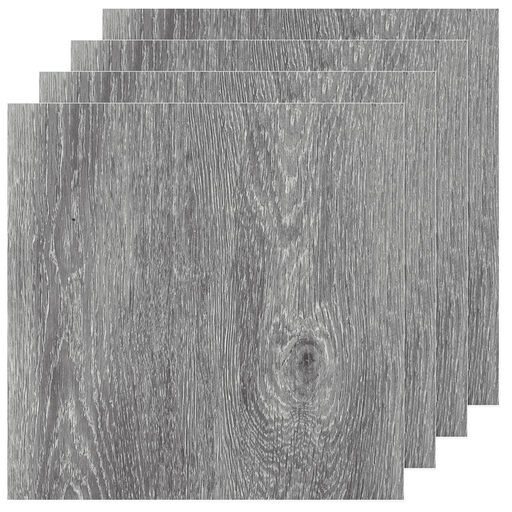
Why we recommend this product These self-adhesive vinyl tiles offer easy-to-install flooring without the need for additional tools. The "peel-and-stick" principle allows for quick application directly onto an existing, smooth floor. The minimal material thickness is ideal for renovation projects where the overall floor height is a critical factor.
Advantages:
Who it's for: This product is aimed at renters and DIY enthusiasts looking for a cost-effective, temporary, or semi-permanent solution for indoor spaces. It is especially practical for quickly upgrading kitchens, bathrooms, or hallways with a level subfloor.

Why we recommend this product The Woltu WPC tiles are designed for permanent outdoor use. According to the manufacturer, the material consists of 60% FSC-certified wood fibres and 32% plastic, ensuring high resistance to weathering. The click system enables a floating installation without needing to be screwed to the subfloor.
Advantages:
Who it's for: This product is intended for homeowners and apartment dwellers seeking a durable, low-maintenance solution for their wood-look balcony tiles or patio areas. The modular design is well-suited for creating custom outdoor spaces.
The products featured here represent two common use cases. For projects requiring a specific colour scheme or a uniform design, exploring a wider selection may be beneficial. Discover more options in our Grey Wood Flooring category.
1. Can interlocking tiles be installed over an old tiled floor? Yes, installation over existing tiles is possible, provided the subfloor is solid, clean, and level. WPC tiles can bridge minor irregularities in grout lines. For thin, self-adhesive vinyl tiles, a very smooth surface is crucial, as grout lines might otherwise show through. If necessary, the old tiled floor should first be smoothed with a levelling compound.
2. How much maintenance do wood-look interlocking tiles require? Maintenance is generally low. Outdoor WPC tiles can be cleaned with a brush and water. Indoor vinyl floors can simply be damp-mopped. You should avoid using harsh cleaning agents to prevent damage to the material's surface.
3. Are interlocking tiles suitable for underfloor heating? Suitability for underfloor heating depends on the specific product. Thin vinyl tiles are often suitable due to their good thermal conductivity. With thicker WPC tiles, heat transfer may be reduced. It is essential to check the manufacturer's specifications on the product data sheet, as not all products are approved for this use.