
Lieferung heute & morgen

Qualitätsgarantie

Willkommens-Angebote freischalten: KOSTENLOSE Lieferung | Bis zu 80 % RABATT | Kostenlose 30-Tage-JoyPlus-Testphase
App herunterladen
Echoing conversations, reflected gaming audio and unclear recordings can all affect how you use a room. Wood slat acoustic panels can reduce sound reflections from hard walls while also serving as decorative wall cladding. However, their construction, coverage and installation methods can vary considerably.
Sound-absorbing wall panels primarily improve the acoustics of a room. They absorb some of the sound energy that hits them, which can reduce echo and reverberation. However, they do not automatically stop voices, music or other noise travelling through a wall into the next room.
That’s why wall panels for reducing echo are often a good choice for a home office, podcast room or gaming room. If you expect a significant reduction in noise between two flats, you’ll usually need additional structural measures.
Decorative wood slat wall cladding can look expansive in product photos. What matters, though, is the actual coverage. A set of four 60 x 30 cm panels covers a total of 0.72 m² when arranged in a 120 x 60 cm layout. You’ll need several sets to cover an entire feature wall.
Before you buy, measure the wall and take sockets, radiators, doors and furniture into account. In many living spaces, treating the areas with the strongest reflections may be enough. A recording studio, on the other hand, needs more targeted planning.
Adhesive can make installation easier, but it won’t stick equally well to every surface. Textured wallpaper, dust, flaking paint or an uneven wall can all affect how securely panels stay in place. If you’re renting, also check whether removing the adhesive could damage the wallpaper or plaster.
Screws generally provide a secure mechanical fixing, but they leave holes. Your choice should depend on the wall material, the weight of the panels and how long you plan to use them.
Many 3D wood acoustic panels consist of an MDF backing, a wood veneer or decorative finish, and a felt backing. The slats create a textured surface, while the felt acts as a sound-absorbing layer. Check that the product description clearly specifies the materials, type of veneer and backing.
For products intended for indoor use, details about VOC emissions may be relevant. “Low-VOC” means a reduced level of volatile organic compounds, but it is not a blanket guarantee about every aspect of indoor air quality. If anyone in your household is sensitive, good ventilation after installation is a sensible precaution.
60 x 30 cm acoustic panels can be combined in different ways and are suitable for smaller sections of wall. For larger sets, compare the total coverage and layout:
Also check the weight of each panel. This will help you decide whether adhesive, screws or an additional supporting frame is suitable.
For video calls, treating selected reflective surfaces behind your desk or beside your workspace is often enough. Soundproofing panels for a home office can help make speech sound clearer in the room, but they’re no substitute for good microphone positioning.
For studio acoustic panels or a podcast room, you’ll also need to consider the ceiling, floor, windows and shape of the room. A single decorative wall covering won’t necessarily reduce every frequency range to the same degree. If you’re recording, compare test recordings made before and after installation where possible.
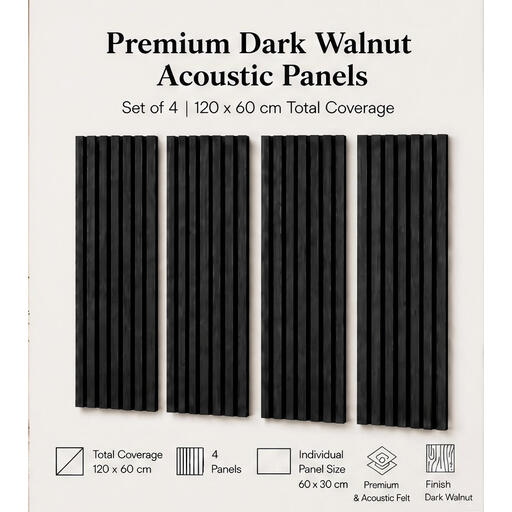
Why this product suits this profile: This compact set of four panels is ideal for creating a single treated surface in a home office, living area or gaming room.
The stated size of 60 x 30 cm per panel and total coverage of 0.72 m² make it easier to work out how much you’ll need before buying.
MDF core, Grey Oak veneer and felt backing; product details state that the panels can be installed with adhesive or screws.
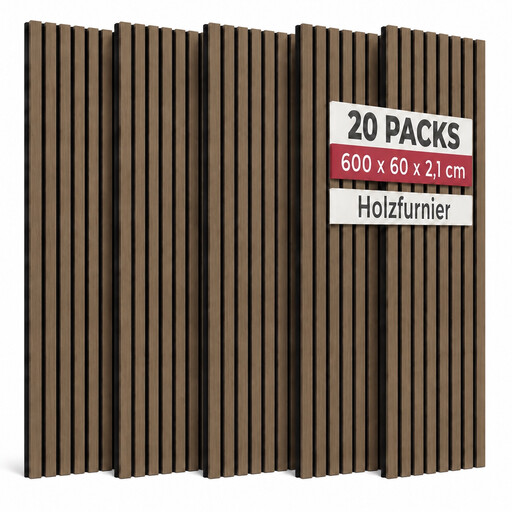
Why this product suits this profile: This larger set is a good choice if you’re planning a continuous feature wall in a living room, office or studio.
With 20 individually listed panels and 3.6 m² of total coverage, it’s easier to calculate how much material you’ll need for a larger area.
20 panels measuring 60 x 30 cm; product details specify MDF with walnut veneer and a felt backing.
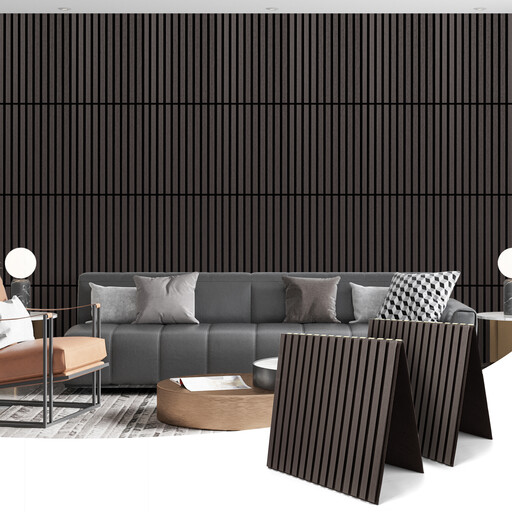
Why this product suits this profile: The foldable design is worth considering for podcast rooms, recording corners and gaming rooms if you want a flexible wall-mounting option.
The product details specify two 120 x 60 cm panels and a foldable, interlocking design, rather than an undefined standard size.
Real wood veneer according to the product description; foldable design and tool-free installation according to the supplier.
We’ve put together a comprehensive, regularly updated list of products that meet these strict selection criteria and fully comply with the safety regulations in force in the EU.
Before installation, make sure the wall is dry, clean and as even as possible. If you’re using adhesive, it’s worth testing it on an inconspicuous area first. If you’re using screws, make sure the wall plugs and fixings are suitable for the wall material.
Don’t install the panels directly in front of radiators unless the manufacturer’s instructions say this is suitable. Carefully remove dust from the wood slats and felt backing with a suitable brush attachment. Harsh cleaning products can damage the veneer or felt surface.
It depends on the fixing method and the condition of the wall. Adhesive installation can avoid drilling holes, but it won’t necessarily come away without leaving marks. Check the adhesive strength, surface and terms of your tenancy agreement. Screws are more secure for permanent installation, but they do leave visible holes.
There’s no set number. Measure the wall area and take the room size, furniture and hard surfaces into account. For a workspace, treating an area behind or beside your desk may be enough. In a studio or podcast room, you should consider several reflection points and, where appropriate, the ceiling.
Their lifespan depends on how they’re installed, humidity, physical wear and tear, and how they’re cared for. A dry indoor environment, suitable fixings and careful cleaning can help keep them in good condition. Before buying, also check the warranty, returns and installation information for the product you’re considering.