
Lieferung heute & morgen

Qualitätsgarantie

Willkommens-Angebote freischalten: KOSTENLOSE Lieferung | Bis zu 80 % RABATT | Kostenlose 30-Tage-JoyPlus-Testphase
App herunterladen
A reverberant room can disrupt concentration in the home office, compromise the audio quality of recordings, or diminish the immersive experience of gaming. A wooden acoustic panel promises to solve this problem while also serving as a stylish design element. However, the market is filled with products whose performance often falls short of expectations. Before making a purchase, it's crucial to know the most common pitfalls and understand what features truly make a panel effective.
This guide will show you what to look for to find a functional and aesthetically pleasing solution for your room's needs.
Many products advertise acoustic properties but are based on a design that prioritises aesthetics over function. These three points frequently lead to disappointment:
To make an informed decision, you should check three core parameters. These will help you separate the wheat from the chaff and find a solution that is both acoustically and visually impressive.
The effectiveness of an acoustic panel depends directly on its construction. A high-quality acoustic wood wall cladding typically consists of three layers:
Look for a detailed description of the materials used. Terms like "high-density acoustic felt" or "fibreglass core" are positive signs.
The previously mentioned NRC value is a scale from 0 to 1. A value of 0 means no absorption (like a concrete wall), while a value of 1 indicates complete absorption. Effective acoustic panels often have an NRC value of 0.75 or higher.
Equally important is which frequencies the absorption is optimised for. Human speech primarily occupies the mid-frequency range. For good sound absorption in a home office or for a studio wall panel, it is crucial that the panel is effective in this range.
A single, small panel will hardly change the acoustics of an entire room. Sufficient coverage is necessary for a noticeable improvement. A rule of thumb suggests that about 15–25% of the wall surface in a room should be treated to achieve a significant effect. Therefore, acoustic panel sets are often a practical and cost-effective solution. Also, check the mounting system. Lightweight panels with well-designed mounting solutions can be installed without special tools and removed if necessary without causing significant damage to the wall.
Based on the criteria mentioned, we have identified products suitable for different user profiles and use cases.
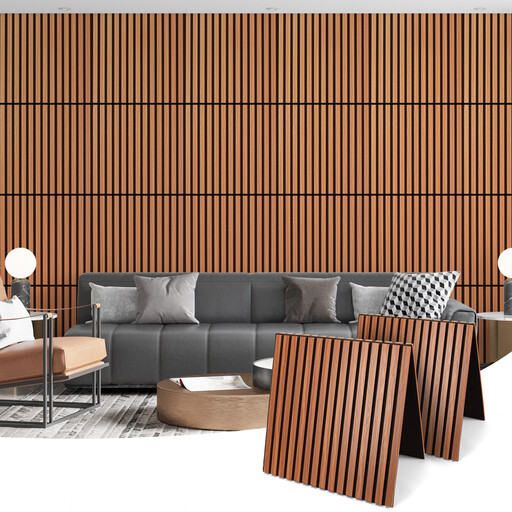
Why This Fits Their Persona: Ideal for users who need clear speech intelligibility in video conferences and want to create a professional yet warm room atmosphere. The teak finish blends elegantly into modern office environments.
This set uses a high-density fibreglass wool core to effectively absorb sound, rather than just serving a decorative purpose. The foldable design simplifies installation.
Combines functional sound absorption with an attractive wood aesthetic. The 2-pack set provides good baseline coverage for a workspace.
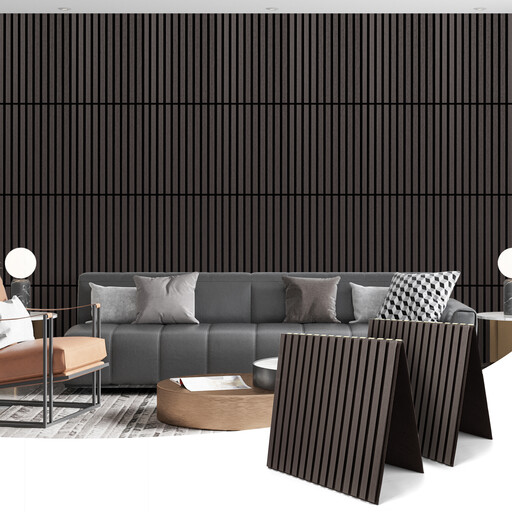
Why This Fits Their Persona: Perfect for podcasters, streamers, and musicians who require professional audio quality for their recordings. The dark walnut finish creates an ideal backdrop for modern gaming room acoustics or a recording studio.
The foldable 3D design increases the surface area, thereby improving sound diffusion and absorption compared to simple, flat panels. This ensures a more effective reduction of standing waves.
Effective reduction of echo and reverberation for clear recordings. The walnut finish with real wood veneer looks very high-end in on-camera setups.

Why This Fits Their Persona: For users whose main goal is an aesthetic wall design with wood and added organization. It breaks up flat wall surfaces, which can minimally aid in sound diffusion, but it primarily serves as a design and storage element.
This product is honestly positioned for what it is: a high-quality, decorative wall shelf. It avoids the pitfall of promising an acoustic effect that it doesn't primarily deliver.
Offers practical storage space and a modern wood-and-metal aesthetic. According to the manufacturer, it uses FSC-certified wood. Note: This is a decorative element, not a primary sound absorber.
If you're looking for more designs and functional solutions to improve your room's acoustics and aesthetics, explore our curated selection of products based on objective criteria.
1. How many acoustic panels do I need for a room? A general recommendation is to cover about 15–25% of the wall surface area to achieve a noticeable improvement. Start with the surfaces that directly reflect sound waves, such as the wall behind your speakers or microphone and the wall opposite it. In a typical home office, even two to four larger panels can make a significant difference.
2. Do acoustic panels damage the wall upon removal? This depends on the installation method. Mounting with screws leaves small holes that are easy to repair. Some adhesive strips can damage paint or wallpaper upon removal. Look for products that come with well-designed mounting systems, or use special, residue-free removable adhesive strips if you live in a rental property.
3. What is the difference between soundproofing and sound absorption? These terms are often confused. Soundproofing aims to block the transmission of sound from one room to another. This requires mass, such as thick walls. Sound absorption, the function of acoustic panels, reduces reverberation and echo within a room. Therefore, a wooden acoustic panel improves room acoustics but does not make the room soundproof to external noise.