
Lieferung heute & morgen

Qualitätsgarantie

Willkommens-Angebote freischalten: KOSTENLOSE Lieferung | Bis zu 80 % RABATT | Kostenlose 30-Tage-JoyPlus-Testphase
App herunterladen
By: Joybuy Product Recommendation OfficerDate: July 28, 2026
An echoey room can disrupt concentration in a home office and detract from the comfort of your living room. Wooden acoustic panels offer a solution that combines function with aesthetics. However, the market is flooded with products whose promises often outweigh their actual performance. Before you invest, it's crucial to understand the most common pitfalls that lead to unsatisfactory room acoustics and unnecessary expenses.
Many buyers are swayed by an appealing 3D wood-effect wall panel design without verifying its acoustic properties. Another common mistake is underestimating the installation effort; a supposedly simple self-adhesive acoustic panel can quickly become a problem on an unsuitable surface.
This guide will help you navigate these and other traps. We focus on the critical technical features that distinguish a decorative panel from an effective sound absorber for your wall.
To make an informed decision, you should examine three core parameters. These determine whether a panel effectively absorbs sound or merely serves a decorative purpose.
The foundation of any effective acoustic panel is its backing material, usually a specialised felt. This is where the first critical difference lies:
The slats mounted on the felt are not just for looks. Their composition contributes to sound scattering (diffusion) and influences the overall performance.
The mounting method has a direct impact on longevity and acoustic performance.
Based on these objective criteria, we have curated products for different user profiles and projects.
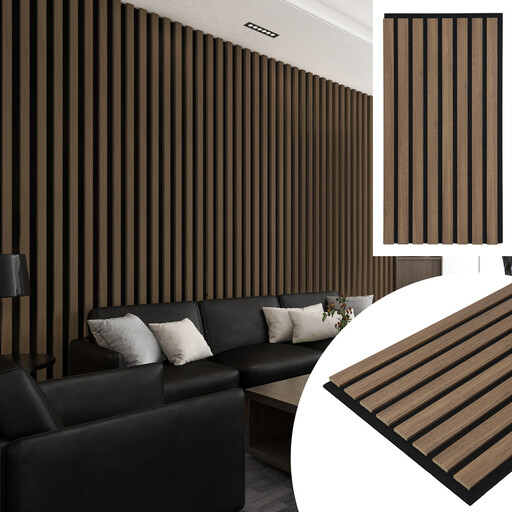
Why This Fits Their Persona: Ideal for users who want to combine a noticeable reduction in reverberation with a high-end, modern wood aesthetic for their living room, studio, or office.
This panel avoids the "decoration-only" trap by using a dense acoustic felt backing and slats made of MDF with a real wood veneer, which are proven to absorb sound.
Complete set of 20 panels covering an area of 3.6 m?. Flexible installation with either adhesive or screws.
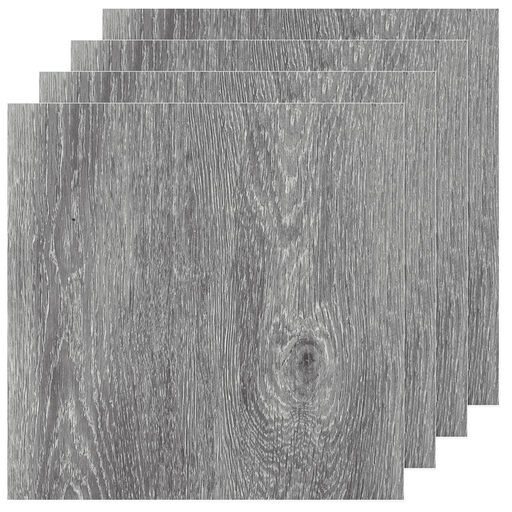
Why This Fits Their Persona: For users looking to update their flooring as part of an acoustic upgrade to create a cohesive overall look. These tiles complement the wood aesthetic of the panels.
Instead of a complex and expensive flooring installation, this product allows for a quick, clean, and cost-effective renovation that visually matches the wooden acoustic panels.
Water-resistant and suitable for damp areas like kitchens and bathrooms. Simple peel-and-stick installation with no special tools required.
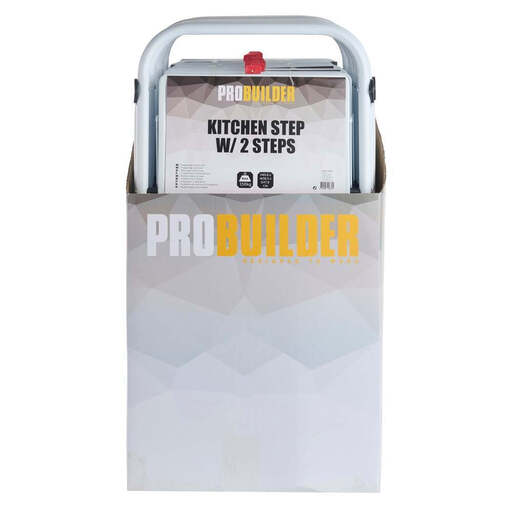
Why This Fits Their Persona: For the practical DIY enthusiast who values safety and precision when installing wall panels. A stable step stool is essential for positioning panels accurately and without risk of accidents.
Prevents the dangerous use of wobbly chairs or unsuitable climbing aids. It ensures a secure footing for precise work, which helps avoid miscuts and messy installations.
Safety-tested according to EN 14183. Supports up to 150 kg and folds ultra-flat (4.7 cm) for easy storage.
We have compiled a complete, real-time list of products that fully satisfy these strict selection criteria and UK safety regulations.
It's important to distinguish between sound absorption and soundproofing. Acoustic panels are primarily designed for sound absorption, meaning they reduce reverberation and echo within a room. They improve speech intelligibility and create a more pleasant acoustic environment. However, they are not a substitute for true soundproofing, which aims to block the transmission of sound through a wall. While a panel may slightly reduce sound transmission, effective insulation against noise from outside or neighbouring apartments requires structural measures (e.g., adding mass to the wall).
Yes, most acoustic panels can be cut to size to fit around corners, sockets, or specific room dimensions. The felt backing can typically be cut with a sharp utility knife. For the wood or MDF slats, a saw with a fine-toothed blade is recommended to achieve clean edges without splintering. A circular saw or a Japanese saw is well-suited for this. It is advisable to cut from the back of the panel to protect the veneer on the visible side.
The required quantity depends on the room size, the current reverberation time, and the desired effect. A general recommendation is to cover about 15% to 25% of a room's total wall surface area to achieve a noticeable improvement. Ideally, start on the wall opposite the primary sound source (e.g., speakers, television) or on two adjacent walls to minimise standing waves. For an accurate calculation, measure the length and height of the wall to be covered and compare the result with the coverage per package specified by the manufacturer.