
Lieferung heute & morgen

Qualitätsgarantie

Willkommens-Angebote freischalten: KOSTENLOSE Lieferung | Bis zu 80 % RABATT | Kostenlose 30-Tage-JoyPlus-Testphase
App herunterladen
A reverberant room can disrupt concentration in a home office, compromise the sound in a home cinema, or make an otherwise quiet living space feel uncomfortable. Wooden acoustic panels offer a solution that combines function and design. However, the market is filled with products whose promises often outweigh their actual performance. Many buyers invest in panels that are visually appealing but acoustically ineffective or prove difficult to install.
This guide highlights the crucial features you should look for to make an informed decision and avoid common purchasing pitfalls.
Before you invest, it's important to understand the most common issues that can lead to disappointment.
To separate the wheat from the chaff, focus on three technical features. These determine the acoustic performance as well as the durability and aesthetics of your wooden wall cladding.
The foundation of any good acoustic panel is a combination of a sturdy core material and a functional felt.
The visible side of the panel, the slatted wall, is important not only for aesthetics but also for acoustics.
The installation method should suit your living situation.
Based on the criteria above, we have identified several products suited for specific user profiles and their needs.
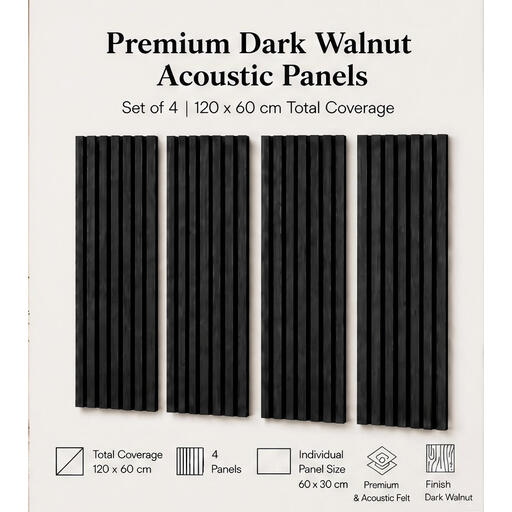
Why this product is a match: The modern grey oak finish complements many contemporary interior styles. The modular set of 4 is ideal for creating an accent wall behind a desk or TV without altering the entire room. The adhesive mounting option is particularly relevant for renters.
This set avoids the pitfall of complicated installation with its adhesive-friendly option. The construction, featuring an MDF core and acoustic felt, ensures it is not just a decorative sham.
Flexible, renter-friendly installation options and a modern design that serves as a functional decorative element.
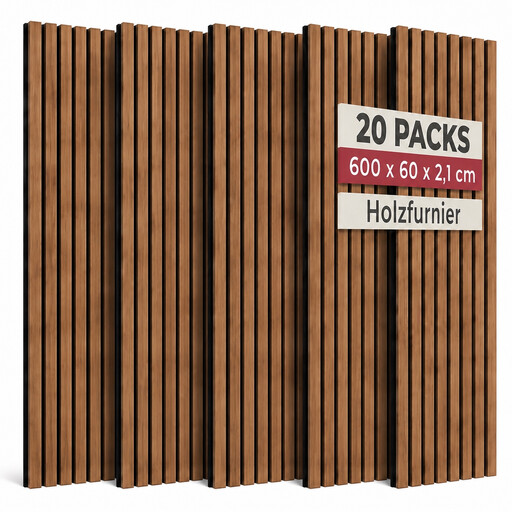
Why this product is a match: Anyone outfitting a home cinema, music room, or studio needs a large-scale solution. This 20-panel set covers 3.6 m? (38.75 sq ft), allowing for comprehensive acoustic treatment of an entire wall to minimise first reflections and flutter echo. The elegant walnut finish creates a high-end atmosphere.
This product avoids the trap of insufficient sound absorption through its generous coverage and high-quality material construction. It is clearly designed for a functional application, not just as a small decorative piece.
Large-area coverage for optimised room acoustics and a sophisticated look suitable for dedicated media rooms.
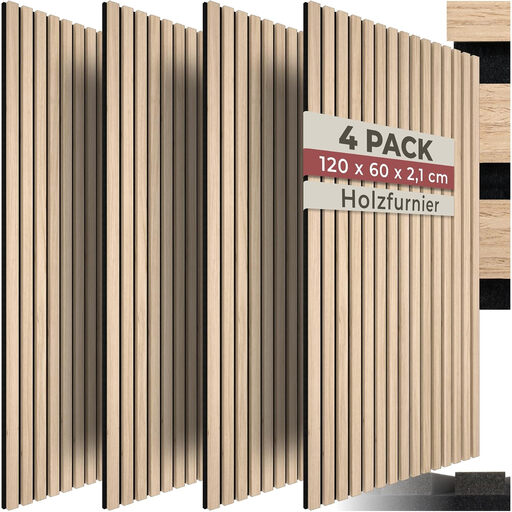
Why this product is a match: A balanced solution is needed for the home office. This set, with its classic oak finish, improves speech clarity in video conferences by reducing echo, while also serving as a professional and appealing background. The size is sufficient for targeted treatment of the area behind the workspace.
It combines targeted acoustic function with high-quality aesthetics. This allows it to avoid the trap of being either purely decorative or purely functional and unattractive. The construction is designed for performance.
A balance of function and aesthetics with a versatile oak wood finish, ideal for both work and living spaces.
We have compiled a comprehensive, up-to-date list of products that meet these strict selection criteria.
1. How many acoustic panels do I need for a room? The required quantity depends on the room size, furnishings, and the desired effect. As a rule of thumb, treating 15-25% of the wall surface (typically on one or two walls) will already lead to a noticeable reduction in reverberation. For targeted applications like a home office or home cinema, treating the wall behind the sound source (speakers, person) or at the first reflection points is often sufficient.
2. Can wooden acoustic panels block noise from outside? It's important to make a distinction here: acoustic panels are primarily designed for sound absorption, not soundproofing. They reduce reverberation and echoes within a room, making the acoustics more pleasant. However, they are not designed to effectively block noise from neighbours or the street. That requires structural soundproofing measures.
3. Is the removal of self-adhesive acoustic panels truly residue-free? Residue-free removal largely depends on the wall's surface (wallpaper, plaster, paint) and the quality of the adhesive used. With most modern mounting adhesives, removal without major residue is possible, but it's possible that the top layer of paint or parts of the wallpaper may be damaged. It is recommended to test the adhesion on an inconspicuous area before applying panels to the entire surface.