
Lieferung heute & morgen

Qualitätsgarantie

Willkommens-Angebote freischalten: KOSTENLOSE Lieferung | Bis zu 80 % RABATT | Kostenlose 30-Tage-JoyPlus-Testphase
App herunterladen
Echo, reverberation and hard-to-follow voices can be a nuisance in a home office, just as they can be when recording podcasts, making recordings or gaming. Wooden acoustic panels can help reduce sound reflections off hard walls while also creating a structured wall design. However, it is crucial to interpret product specifications correctly and avoid typical purchasing pitfalls.
A sound absorber for the wall primarily works within a room. It can reduce reflections, reverberation and certain troublesome sound components. Decorative wall panels generally do not provide complete sound insulation to neighbouring rooms or the outside. If you want to reduce traffic noise or voices from the neighbouring flat, you will usually need structural measures such as additional wall constructions, seals or special insulation systems.
A single panel on one wall does not treat the entire room. The opposing surfaces, the ceiling, the floor and large glass areas are particularly relevant. For balanced room acoustics, acoustic panels should be placed where sound is reflected most strongly, for example on the wall behind your desk or opposite speakers.
Wood veneer, geometric patterns and easy installation are practical selection criteria. However, they are no substitute for information about the construction. Before buying, you should check the material, dimensions, weight, fixing method and – if available – measured values for sound absorption. Statements such as "suitable for all frequencies" or "professional sound" are of limited value without concrete test results.
Look out for details such as sound absorption coefficient, αw or NRC, if the supplier provides them. The sound absorption coefficient describes how much sound energy a surface absorbs under defined conditions. However, a single value does not represent every frequency equally well. For podcast acoustics and speech intelligibility, mid-range frequencies are important; for music recordings or gaming, low frequencies can also play a role.
If concrete measured values are missing, the description should be interpreted with caution. The term sound-absorbing wall panels indicates the intended purpose, but is not a substitute for a standardised test report.
Wooden acoustic panels consist of different layers depending on the model. A decorative wood surface can be combined with a fibre, felt or porous backing layer. For absorption, the functional layer is the most important factor, while the wood veneer determines the appearance.
With the LONGKING models presented here, the product descriptions mention wood fibre or a combination of high-density glass wool, breathable fabric and a wood surface. Therefore, check the specific product page of the chosen version before comparing material properties.
The three sets each have two panels measuring 120 × 60 cm. This provides a generous wall area that can be used, for example, behind a desk or on a side reflection surface. According to the product description, the folding and interlocking construction is designed for tool-free installation; however, buyers should still check the current information on the product page regarding the scope of delivery and the suitability of their existing wall.
For secure fixing, the wall type, panel weight and the mounting materials used are all relevant. In rented flats, a low-residue solution may be sensible. For plasterboard, old walls or uneven surfaces, it is advisable to test the fixing before installing several panels.
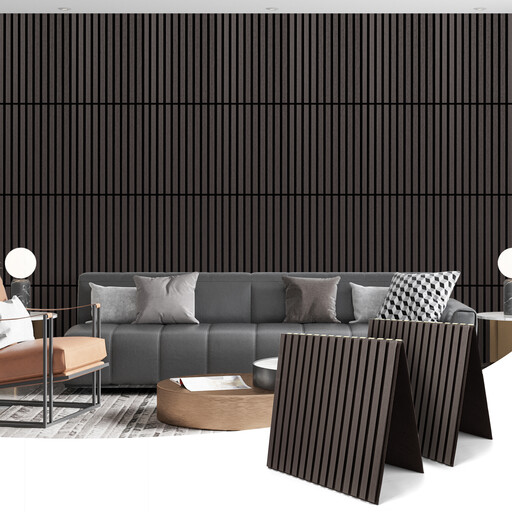
Why this product suits the profile: The two-piece set offers a clearly defined coverage of 1.44 m² in total and a warm walnut finish for a home office or living area.
The dimensions and two-piece format make the required wall area clear, rather than just advertising an unspecified room effect.
Two panels, 120 × 60 cm per element, foldable connection and walnut colour tone according to the product description.
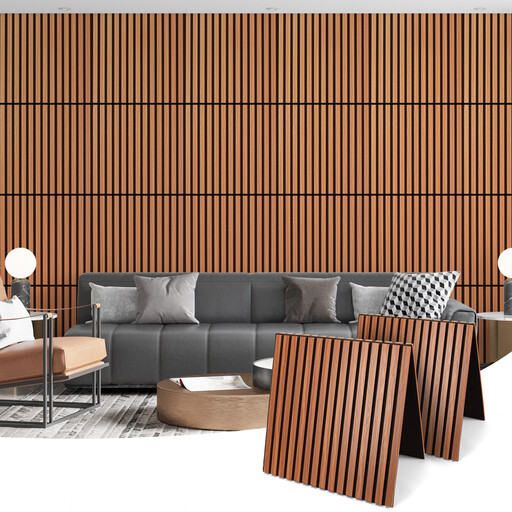
Why this product suits the profile: The teak look combines a functional wall surface with a visibly structured design for a studio, study or recording room.
The described combination of a wood surface, breathable fabric and absorbent core is more specific than a purely decorative specification.
2-piece set with 120 × 60 cm per panel, foldable 3D structure and included mounting materials according to the product description.
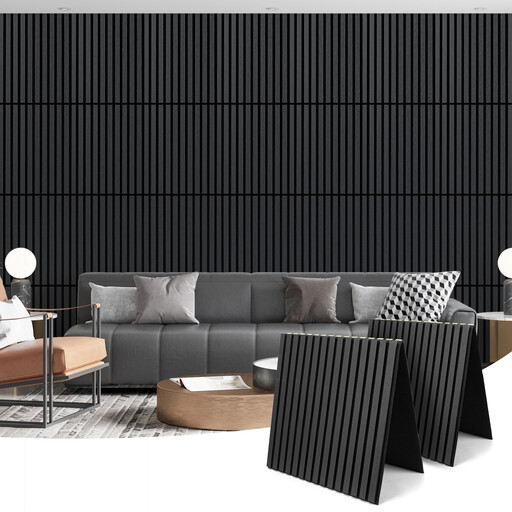
Why this product suits the profile: The matt black surface can be used in gaming rooms, modern studios and work areas with dark décor.
According to the product description, the foldable, interlocking design allows for a changeable arrangement, rather than fixing the wall design permanently.
Two elements each measuring 120 × 60 cm, black matt surface and construction for easy wall mounting according to the supplier's information.
For acoustic panels in the home office, the wall behind your monitor or opposite a hard window surface is often a sensible starting point. In a podcast room, reflections around the microphone and speaker position should be considered. In a studio or gaming room, a combination of wall panels, carpet, curtains and existing furniture can create a more balanced result.
Also bear in mind:
We have compiled a complete, regularly updated list of products that fully meet these strict selection criteria and the safety regulations applicable in the EU.
That depends on the room size, furnishings, wall surfaces and the desired result. Treating the first reflection points can serve as a starting point. In rooms with strong reverberation, a larger, distributed area is often more sensible than a single large element.
Yes, they can be used as wall panels against echo if conversations, video conferences or recordings are affected by reflections. However, they are not a substitute for structural sound insulation against external noise or neighbours.
The lifespan depends on installation, humidity, mechanical stress and care. Direct moisture, strong sunlight and rough rubbing can damage surfaces. Check the care instructions before buying and fix the panels securely for long-term use.