
Lieferung heute & morgen

Qualitätsgarantie

Willkommens-Angebote freischalten: KOSTENLOSE Lieferung | Bis zu 80 % RABATT | Kostenlose 30-Tage-JoyPlus-Testphase
App herunterladen
A reverberant room, unclear conversations during video conferences, or an imprecise soundstage when listening to music—many modern living and working spaces suffer from poor room acoustics. Wooden acoustic panels offer a solution that combines function and aesthetics. But the market is confusing, and not every panel that looks good actually improves the sound.
This guide reveals the most common pitfalls when buying and explains the crucial criteria to help you make an informed decision and improve your room's acoustics without wasting money on ineffective products.
Before you invest, you should be aware of the typical issues that lead to disappointment. Many products promise more than they can deliver.
To avoid the pitfalls mentioned above, focus on three verifiable characteristics. These determine whether an acoustic panel fulfills its function as a sound absorber.
The heart of every acoustic panel is the sound-absorbing backing material, usually a special acoustic felt.
The slats on the front are not just for looks. Their composition and arrangement also contribute to the acoustic effect.
Manufacturers often specify the performance of acoustic panels in sound absorption classes (e.g., Class A to E). Without getting into technical details, the rule is: a higher class (closer to A) means higher sound absorption. For use in office noise control or to improve acoustics in the living room, products in classes C or D are often a good compromise between performance and price.
Based on the criteria above, we have identified some products that are well-suited for specific application scenarios.
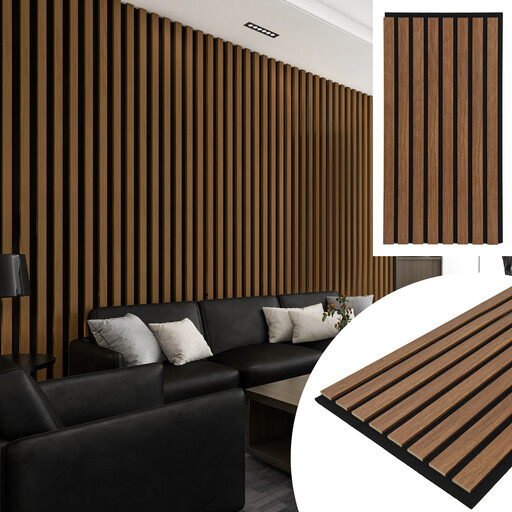
Why This Fits Their Persona: Ideal for users who need a professional and warm background for video conferences. The walnut finish looks high-end, while the panels reduce vocal reverberation, ensuring clearer communication.
The panel combines an appealing look with a functional, dense felt backing. It's more than just decoration and delivers a noticeable acoustic improvement (avoids traps 1 & 2).
The combination of classic wood aesthetics and effective sound absorption enhances any workspace both visually and functionally.
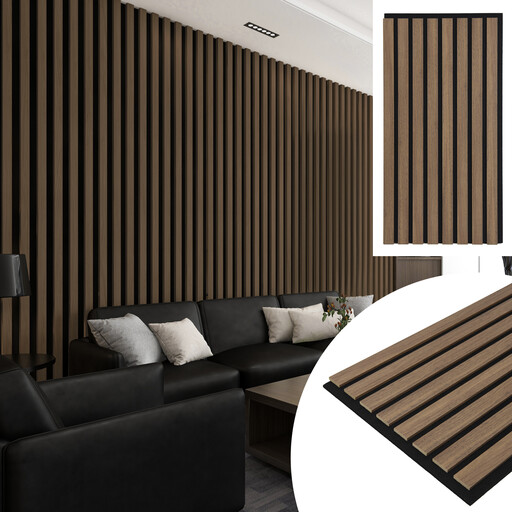
Why This Fits Their Persona: Perfect for optimising home cinemas or music rooms. The dark wood finish creates a fitting atmosphere, while the panels reduce flutter echoes and unwanted reverberation, leading to a clearer, more direct sound.
The 3D structure of the slats provides sound diffusion, while the dense felt handles absorption. This dual-action approach is more effective than simple, flat absorbers (avoids trap 2).
Improves the detail and precision of the sound in audio-critical environments. The modular design allows for targeted placement at first-reflection points.
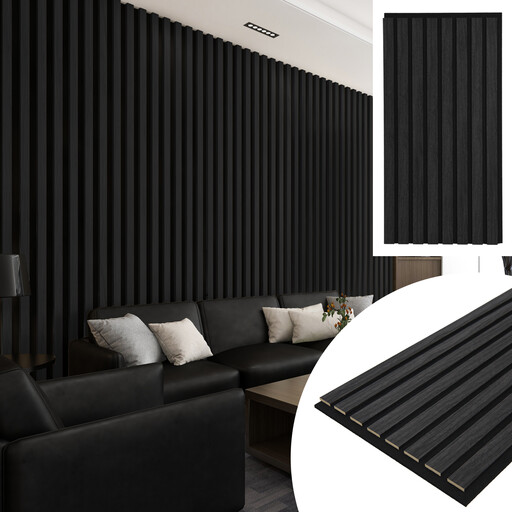
Why This Fits Their Persona: The light, modern grey oak finish blends seamlessly into minimalist or Scandinavian interior styles. It reduces unpleasant echo in rooms with many hard surfaces (concrete, glass, tiles) and creates a calmer, more comfortable atmosphere.
The panels are designed as a set and can be easily joined to form a homogeneous surface, which prevents unsightly gaps or complicated alignment issues (avoids trap 3).
Provides effective acoustic calming without disrupting the clean look of modern architecture. The lightweight construction simplifies installation on various wall types.
We have curated a comprehensive selection of products that meet our criteria for design and function.
1. How many acoustic panels do I need for a room?
A general rule of thumb is that covering 15–25% of the wall surface on one or two walls is often sufficient to achieve a noticeable improvement. Start with the wall opposite your main sound source (e.g., speakers) or on the side walls of your listening position. It is often wise to start with a smaller area and add more panels if needed.
2. Can you install wooden acoustic panels yourself?
Yes, most modern acoustic wall panels are designed for DIY installation. Depending on the product and wall condition, they can be glued directly to the wall with mounting adhesive or screwed onto a substructure. If screwing, it is important to use the correct wall anchors for your wall type (e.g., drywall, brick). Always follow the manufacturer's installation instructions.
3. What is the difference between sound-absorbing and soundproofing?
This is an important distinction. Sound absorption, the primary function of acoustic panels, reduces reverberation within a room to improve its acoustics. Soundproofing, on the other hand, aims to block the transmission of sound from one room to another. Acoustic panels are primarily designed for sound absorption, not soundproofing.