
Lieferung heute & morgen

Qualitätsgarantie

Willkommens-Angebote freischalten: KOSTENLOSE Lieferung | Bis zu 80 % RABATT | Kostenlose 30-Tage-JoyPlus-Testphase
App herunterladen
Published on: August 30, 2026 | By: Joybuy Product Recommendation Officer
Wooden acoustic panels have become a popular solution for not only adding a modern aesthetic to a room but also improving its acoustics. Whether for a home office, living room, or hobby space, the desire for less echo and a quieter atmosphere is widespread. However, the market is crowded and filled with products whose promises don't always match reality. Before you invest, it's crucial to understand the common pitfalls that can lead to disappointment and unnecessary expense.
This guide will help you cut through the noise and make an informed decision.
Many buyers focus solely on aesthetics, overlooking crucial quality features. This often leads to three problems:
To avoid these traps, you should focus your attention on objective product characteristics. Three parameters are of central importance.
The material construction is the foundation for both function and durability. High-quality wooden acoustic panels typically consist of three layers:
True acoustic panelling serves as a wall sound absorber. The combination of the wood slats on the wall and the felt behind them breaks up and absorbs sound waves instead of reflecting them directly like a smooth wall. This leads to a noticeable reduction in echo and clearer room acoustics. Pay attention to the description of the sound-absorbing properties and the presence of a felt backing.
The installation method should suit your living situation. There are two common options:
Based on these criteria, we have identified some products that are suitable for different user profiles and needs.
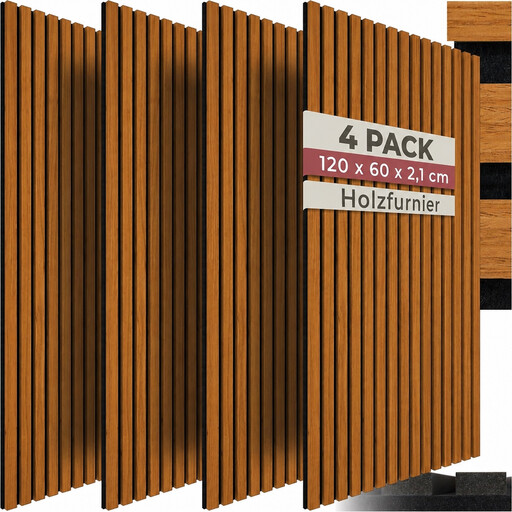
Why This Fits Their Persona: Ideal for renters who want a high-end look without permanently altering their walls. The set allows for the creation of an accent wall, and the walnut finish gives the room a warm, sophisticated atmosphere.
The product description explicitly highlights the renter-friendly adhesive installation, thus avoiding the trap of installation frustration and potential wall damage.
Combines genuine acoustic function via the felt backing with a flexible, non-permanent installation. The modular 4-panel set is perfect for smaller projects.

Why This Fits Their Persona: This set is designed for larger projects, such as panelling an entire wall in a living room or home office. The DIY enthusiast appreciates the large coverage area and the choice between adhesive and screws for a permanent solution.
The product avoids the empty acoustic promise by clearly focusing on its construction of an MDF core, oak veneer, and acoustic felt, which ensures genuine sound absorption.
Large set of 20 panels covering 3.6 m?. The classic oak look is timeless, and the dual installation options offer maximum flexibility for any DIY project.
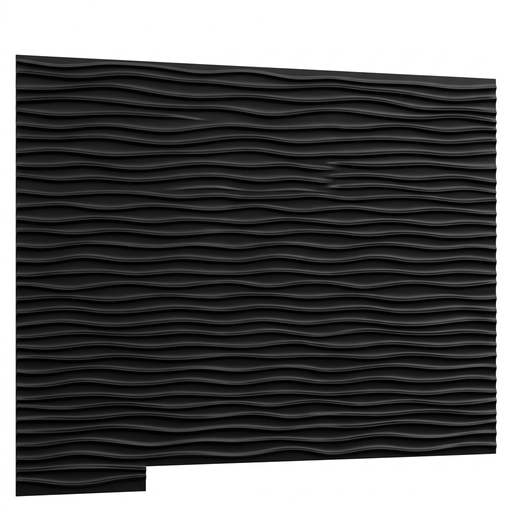
Why This Fits Their Persona: For users whose main goal is a quick, cost-effective, and purely visual upgrade. These PVC panels are ideal for creating a modern 3D accent wall without much effort.
This product avoids the material deception trap because it is clearly declared as a PVC panel and does not try to imitate real wood. The focus is honestly on the 3D texture and design.
Very simple "peel-and-stick" installation that requires no tools. The material is waterproof and washable, making it suitable for kitchens or hallways as well.
Creating a quieter, more stylish environment doesn't have to be a complicated project. Discover more designs and solutions built on functionality and ease of use.
The amount you need depends on the room size and the desired effect. For a noticeable reduction in reverberation, it's often recommended to cover about 15–25% of a room's total wall surface. A good starting point is to panel the wall directly opposite the main sound source (e.g., speakers or a television) or the wall behind your workspace.
Yes, panels with an MDF core and felt backing can be cut to size. For clean cuts through the wood slats, a circular saw or jigsaw with a fine-toothed blade is recommended. The felt on the back can be easily cut with a sharp utility knife. Always measure carefully and work on a stable surface.
It's important to make a key distinction here: sound absorption vs. soundproofing. Acoustic panels are primarily designed for sound absorption, meaning they reduce echo and reverberation within a room, thus improving speech clarity and listening comfort. However, they are not an effective means of soundproofing, which is the process of blocking sound from passing through a wall from another room (e.g., a neighbour's apartment). That requires structural measures involving high mass.