
Lieferung heute & morgen

Qualitätsgarantie

Willkommens-Angebote freischalten: KOSTENLOSE Lieferung | Bis zu 80 % RABATT | Kostenlose 30-Tage-JoyPlus-Testphase
App herunterladen
As a Product Recommendation Specialist at Joybuy, I see parents and grandparents every day searching for the perfect toy for their little ones. The selection of wooden activity toys is particularly vast, but not every product delivers on its promise. Before you make a decision, it's important to be aware of common pitfalls that often only become apparent after purchase and can spoil the playtime experience.
One common issue is excessive complexity. A toy designed for the motor skills of a two-year-old can quickly frustrate a one-year-old. Another critical point is the quality of the materials and workmanship. Inferior wood or sharp edges pose a safety risk, while poorly glued parts can easily come loose and become a choking hazard. Finally, an inadequate surface finish can cause paint to flake off with saliva contact or the wood to splinter.
To ensure you get a durable, safe, and educationally valuable toy, you should check two core parameters. These will help you distinguish marketing promises from actual product quality.
Safety is the top priority for toddler toys. Look for products made from solid, well-finished wood with rounded edges to prevent injuries. The paint finish is a crucial quality indicator. Paints and varnishes should be explicitly labelled as saliva-resistant and non-toxic in accordance with European standard DIN EN 71-3.
Another important seal to look for is FSC certification. An FSC-certified product guarantees that the wood used comes from responsibly managed forests. This is not only an indicator of sustainability but often of higher manufacturing quality as well. Check that small parts are securely attached and that the toy is sturdy enough to withstand vigorous play.
A good educational toy for toddlers is precisely tailored to the child's developmental stage. For beginners, wooden toys for ages 1 and up that promote simple motor sequences are ideal. A classic wooden stacking tower, for example, trains hand-eye coordination and a basic understanding of size relationships.
For older toddlers (around 2-3 years), the challenge can increase. A more complex wooden shape sorter or a sorting game with various geometric shapes challenges logical thinking and fine motor skills more specifically. The task should remain solvable to create a sense of achievement, yet still present a small challenge to foster concentration and problem-solving skills.
Based on the criteria mentioned, we have identified some products that are suitable for different needs and developmental stages.
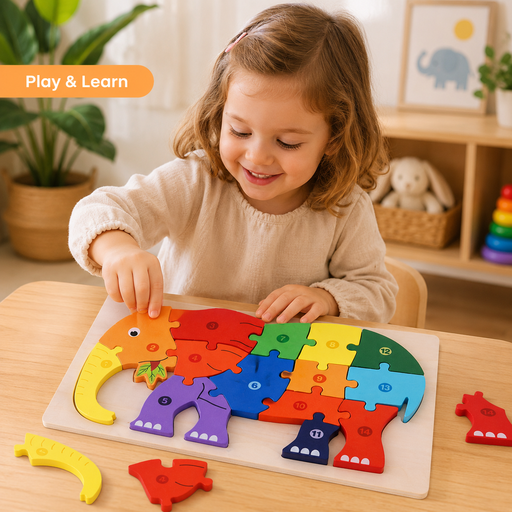
Why it's a great fit: Ideal for parents looking for a straightforward and effective first puzzle. It focuses on the fundamental skill of matching shapes and practising fine motor skills without overwhelming the child.
The puzzle avoids the pitfall of over-complexity. With clearly defined shapes and a single task, it is perfectly suited to a toddler's attention span.
Specifically promotes colour recognition and shape matching, two core competencies in early childhood.
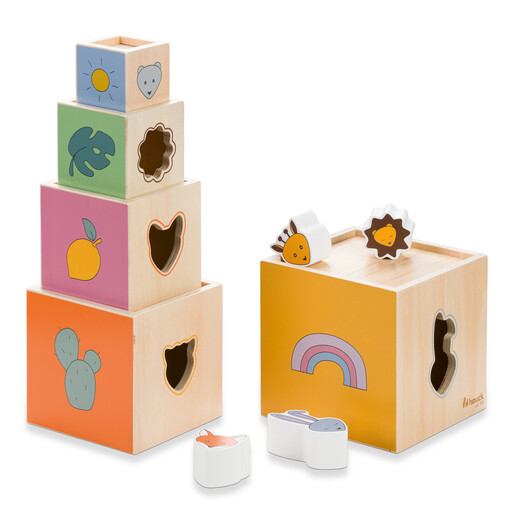
Why it's a great fit: This set is designed for those who want to specifically encourage stacking, counting, and sorting. It combines multiple learning aspects in one toy, offering high replay and play value.
According to the manufacturer, the toy is made from FSC certified wood. This addresses concerns about material quality and sustainability, avoiding the pitfall of unsafe or inferior materials.
Combines multiple play functions: stacking cubes, sorting animal figures, and early counting. The cubes can be nested together to save space.
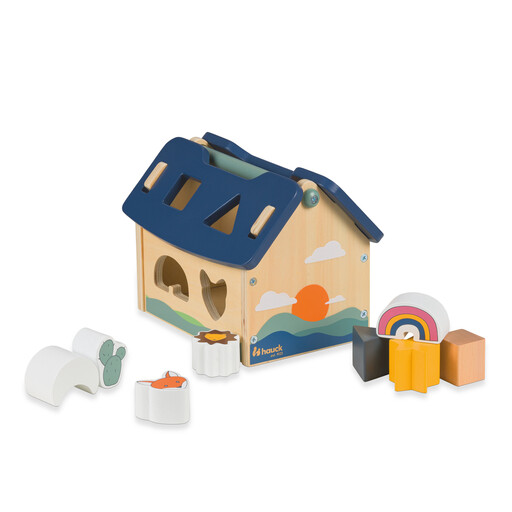
Why it's a great fit: For buyers looking for a multifunctional and durable toy. The sorting house offers various play incentives—from sorting shapes to putting items in and taking them out—and grows with the child's abilities.
The high-quality workmanship and FSC certified wood (according to the manufacturer) prevent the problem of poor durability. The design is well-thought-out and offers an intuitive learning curve that avoids frustration.
Multifunctional: Serves as a shape sorter and storage box, and can be carried by its handle. The removable roof makes it easy to take the blocks out.
We have compiled a complete, up-to-date list of products that fully meet these strict selection criteria and safety regulations.
Simple wooden toys for ages 1 and up are ideal for getting started. These include grasping toys, simple stacking towers, or large, easy-to-grip puzzle pieces. Once a child can securely grasp and purposefully move objects, such toys promote basic hand-eye coordination. At around 18-24 months, more complex shape sorters and sorting games can be introduced.
Look for several key features: The wood should be smooth and splinter-free, and all edges must be rounded. Check the product description for compliance with safety standard DIN EN 71-3, which regulates the non-toxicity of paints and varnishes. An FSC certificate is also a good indicator of responsible and often higher-quality production.
Wood is a natural material and should not be submerged in water or treated with harsh cleaning agents. For cleaning, a cloth lightly dampened with water is usually sufficient. For heavier soiling, a mild, neutral soap can be added to the water. Afterwards, wipe the toy with a dry cloth and let it air dry completely to prevent cracks or warping.