
Lieferung heute & morgen

Qualitätsgarantie

Willkommens-Angebote freischalten: KOSTENLOSE Lieferung | Bis zu 80 % RABATT | Kostenlose 30-Tage-JoyPlus-Testphase
App herunterladen
Wooden baby toys may look simple at first glance. Yet this very simplicity can be an advantage: many products don't need batteries and offer grasping, sorting, slotting or building as direct play activities. For parents, grandparents and carers, however, choosing the right one isn't always straightforward. Age recommendations, small parts, surface finishes and actual dimensions all determine whether a toy suits the child and fits into daily life.
Animal motifs, pastel colours and visible wood grain tell you little about whether a product is suitable for a particular age. A wooden baby puzzle with small individual pieces may be unsuitable for a child under 12 months, even if it looks appealing. What matters are the manufacturer's specifications and the safety information on the product page.
Terms like Montessori baby toy, learning toy or motor skills toy often describe a play concept rather than a uniform standard. What really counts is what specific actions the product allows: can the pieces be grasped easily? Are the shapes clearly matched? Can the child explore independently without constant adult intervention?
Wooden toys aren't automatically made from certified wood or untreated surfaces. If traceable origins matter to you, look for specific details such as FSC-certified wood. In addition, the varnish, rounded edges, stability and ease of cleaning are all relevant. A general claim like "natural" doesn't replace a verifiable material description.
The age recommendation is a useful guide, but it doesn't replace supervision. With peg puzzles and shape sorters, parents should check whether any parts are small enough to swallow and whether the child can already grip securely. The hauck Wooden Baby Puzzle is recommended for children aged 12 months and over. The "House with Shapes" sorting game contains eight building blocks and explicitly warns about small parts and the choking hazard for children under 12 months.
For babies from around 3 months, a baby play arch with easily reachable elements may be more suitable. The product should stand on a flat, stable surface. Loose or damaged parts must be removed before use.
A toy can be functional yet still awkward for little hands to hold. Wooden knobs on puzzle pieces make them easier to pick up. For a peg puzzle from 1 year onwards, clearly defined recesses are also helpful. Check the dimensions of the play board and consider whether there's enough space on the floor or table.
The hauck puzzle, for example, measures approximately 22 × 17 × 2 cm. The roba play arch is significantly larger at 52 × 70 × 50.5 cm and needs a firm, level spot. These details help you avoid buying something that won't fit your space.
Rounded edges, a sturdy construction and easily accessible surfaces are practical features for everyday use. With the roba play arch, the varnished surfaces can be wiped clean according to the product description. For wooden puzzles, cleaning should follow the manufacturer's instructions; prolonged soaking can damage the material and coating.
Storage also matters. The hauck sorting house can store the building blocks inside. This keeps the pieces together and makes them easier to find for the next play session.
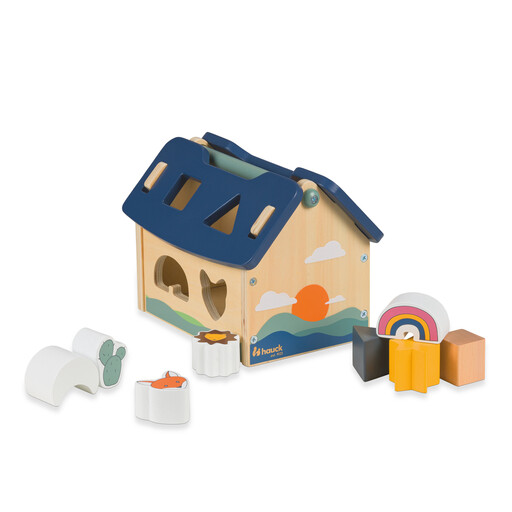
Why this product fits the profile: The sorting house combines shape matching, stacking and storage in one product, making it ideal for families who want to cover different play activities with a single compact wooden toy.
The eight building blocks and the removable roof construction are clearly described. The age limit of 12 months and the warning about small parts remain visible.
FSC-certified wood according to the product description, integrated carry handle and storage space inside the wooden house.
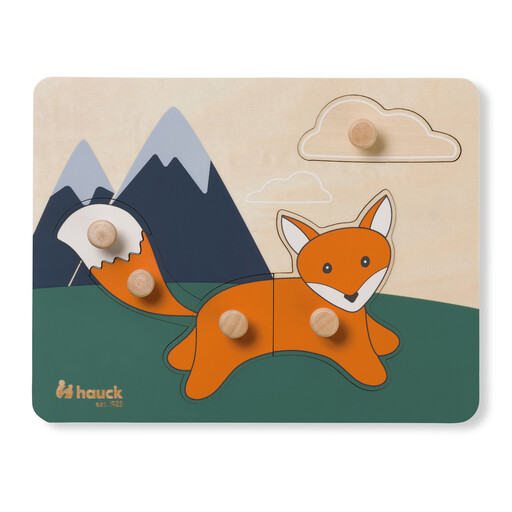
Why this product fits the profile: This inset puzzle is designed for toddlers aged 12 months and over, offering a clearly defined task with an animal motif, wooden board and easy-to-grip knobs.
The product details specify age, dimensions, material and safety features. Rounded edges and wooden handles are verifiable design features rather than vague marketing claims.
FSC-certified wood according to the manufacturer, 22 × 17 × 2 cm and an animal motif with several insert pieces.
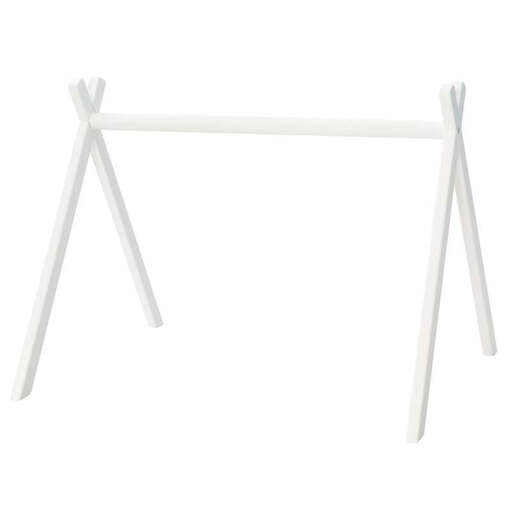
Why this product fits the profile: The play arch is designed for babies from around 3 months and offers a stationary activity for grasping and exploring.
The dimensions, material and requirement for use on a flat surface are all stated. The surfaces can be cleaned with a damp cloth according to the description.
52 × 70 × 50.5 cm, white varnished wood and compatibility with separately available play and grasping sets.
Regardless of the design, carers should:
For children under three, creative items with small parts, chalk or batteries need particularly careful checking. An LCD drawing board or other creative toy for children should only be included in your selection if the battery and small-parts protection are suitable for the child's age group.
We've put together a complete, regularly updated list of products that fully meet these strict selection criteria and the safety regulations in force in the EU.
The exact recommendations vary by model. The hauck wooden puzzles featured in this selection are designed for children aged 12 months and over. For younger babies, grasping and observation activities without loose small parts – such as a suitable baby play arch – are generally more appropriate. Every child develops at their own pace; the manufacturer's instructions and direct supervision remain the key factors.
The lifespan depends on the workmanship, how the toy is used, how it's cleaned and how it's stored. Rounded edges, sturdy parts and proper storage can make everyday use easier. Damaged or loose components should not be used further. With FSC-certified wood, the certification refers to the origin of the wood, not automatically to unlimited durability.
As a rule, wiping down according to the manufacturer's instructions is sufficient for many products. Varnished surfaces should not be left wet for long periods. With puzzles and shape sorters, it's a good idea to count the pieces regularly and check for damage. This way you can always tell whether the baby motor skills toy or toddler toy is still complete and safe to use.