
Lieferung heute & morgen

Qualitätsgarantie

Willkommens-Angebote freischalten: KOSTENLOSE Lieferung | Bis zu 80 % RABATT | Kostenlose 30-Tage-JoyPlus-Testphase
App herunterladen
By the Joybuy Product Recommendation Officer, August 29, 2026
A child's first steps are a significant milestone. A wooden baby walker seems like the ideal support—it's stable, promotes motor skills, and often has an appealing design. However, the market is flooded with models of widely varying quality. Before you make a decision that later proves impractical or even unsafe, it's crucial to understand the common pitfalls. Many products suffer from design flaws that only become apparent during daily use.
These include three main problems:
To avoid buyer's remorse, you should focus on objective and verifiable features. These three criteria are crucial for the safety and long-term value of a baby walker.
Stability is the most important criterion. A safe wooden baby walker is characterised by a wide base and a low centre of gravity. This prevents the walker from tipping over when the child pulls up on it or uses it for support. Look for the following features:
The term "wood" alone is no guarantee of quality. It is essential to pay attention to the details of the craftsmanship to ensure safety.
A good play and push walker is more than just a walking aid. It is also a developmental toy for ages 1 and up that specifically promotes a child's development. A well-designed activity centre for toddlers offers varied but not overwhelming play elements. These can include:
Such a design ensures that the walker remains interesting even after the child can walk confidently, making it a meaningful gift for a 1st birthday.
Instead of making a one-size-fits-all recommendation, we have identified models that meet specific requirements and avoid the common pitfalls mentioned.
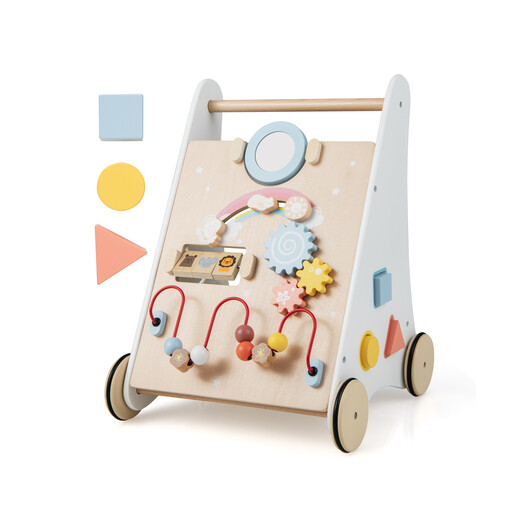
Why This Fits Their Persona: This model is aimed at parents for whom stability and material quality are top priorities. The linden wood and MDF construction provides the necessary weight to ensure a secure footing while the child practises their first steps.
The wide design and rubberised wheels actively counteract the risk of tipping. The rounded corners and smooth surface minimise the risk of injury from splinters or sharp edges.
Combines an ergonomic walking aid with 7 different play activities. The basket on the back offers practical storage space for toys.
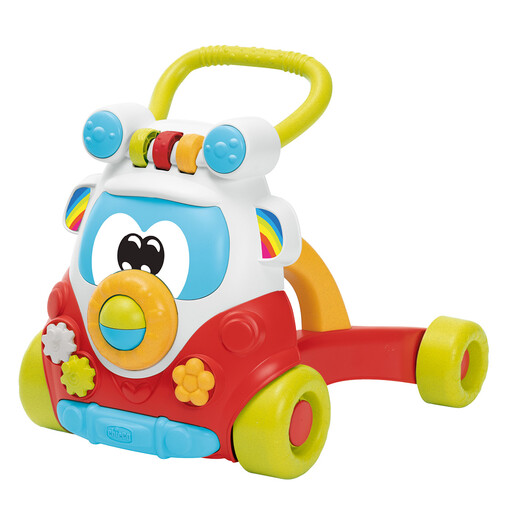
Why This Fits Their Persona: Ideal for families looking for a dual-function product. This model is a stable walking aid and an entertaining activity centre in one. Its appealing retro design makes it an eye-catcher in the nursery.
The four large wheels provide a wide and stable base, minimising the risk of tipping. The five manual play activities are specifically designed for the 9 to 24-month age group, ensuring they remain engaging for longer.
2-in-1 functionality as a walking aid and play centre. The mechanical activities promote fine motor skills without electronic overstimulation.
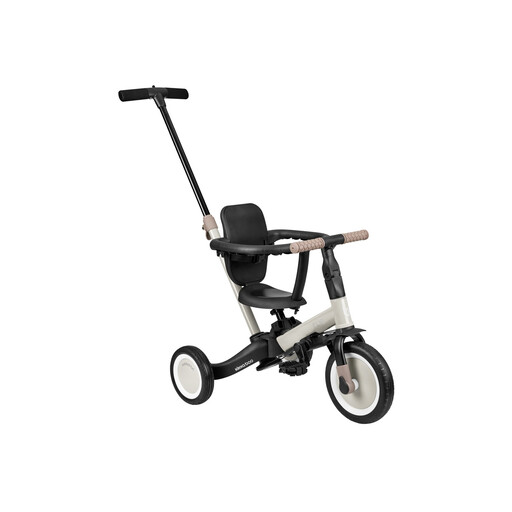
Why This Fits Their Persona: For parents seeking an investment that goes beyond the first year. This 5-in-1 tricycle supports mobility development from a push-along at age 1 to independent riding at age 5.
It bypasses the limited lifespan of a classic baby walker by adapting to the child's developmental stages. The robust steel frame ensures durability and stability in every configuration.
Extremely versatile: It transforms from a push-along to a tricycle, balance bike, and bicycle. A long-term solution that grows with your child.
We have compiled a complete, up-to-date list of products that fully meet these strict selection criteria and UK/EU safety regulations.
A baby walker is useful when a child begins to independently pull themselves up on furniture and stand. This typically occurs around 10 to 12 months of age. It's important that the walker serves as a support for existing motor skills and not as a "walking trainer" for children who cannot yet stand.
Both materials have their pros and cons. Wooden baby walkers are often heavier, which can increase stability and reduce the risk of tipping. They are considered durable and are valued for their natural feel. Plastic models are lighter, often easier to clean, and can be equipped with electronic play and sound features. The choice depends on personal priorities regarding design, material aesthetics, and functionality.
If your model has an adjustable braking system, the rolling resistance should be set relatively high at the beginning. This prevents the walker from rolling away from the child when they lean on it. As the child becomes more confident on their feet and pushes more deliberately, the resistance can be gradually reduced to allow for smoother movements. The exact adjustment process is usually described in the product manual.