
Lieferung heute & morgen

Qualitätsgarantie

Willkommens-Angebote freischalten: KOSTENLOSE Lieferung | Bis zu 80 % RABATT | Kostenlose 30-Tage-JoyPlus-Testphase
App herunterladen
Wooden and bamboo lamps combine natural materials with decorative indoor lighting. They suit boho, Japandi, Scandinavian and vintage interiors, but their look can vary considerably depending on the design. A woven bamboo lamp creates a different light effect from a wooden table lamp with a fabric shade or a wooden floor lamp with an open shade.
Before buying, it is worth taking a close look at the technical details. Otherwise, three common pitfalls can lead to unsuitable purchases:
The fitting determines which bulb can be used. An E27 bulb is suitable for many LED bulbs and decorative retro bulbs. Smaller table lamps may also use E14 fittings.
The specified maximum wattage is important:
For everyday use, LED bulbs generally have low power consumption. However, the lamp’s approved wattage remains decisive. The bulb is not included with the models listed and must be purchased separately to match the fitting.
A natural-material lamp should fit the room and furniture proportionally, as well as looking attractive. For a bedside table, a height of around 24 to 36 cm is often easier to accommodate than a 150 cm-high floor lamp. In a hallway, a compact bamboo wall lamp may be more practical than a large floor model.
Pay attention to:
Bamboo, wood, fabric and rice straw create a warmer, more textured look than a fully enclosed metal shade. Woven shades allow light to pass through the gaps. A fabric shade diffuses the light more evenly, while a metal grille can create distinctive shadows.
For many models, a soft, dry cloth is all that is needed for cleaning. Cleaning fluids and abrasive products can damage untreated surfaces, fabrics or natural fibres. Shades made from paper or rice straw should also be kept away from heat sources.
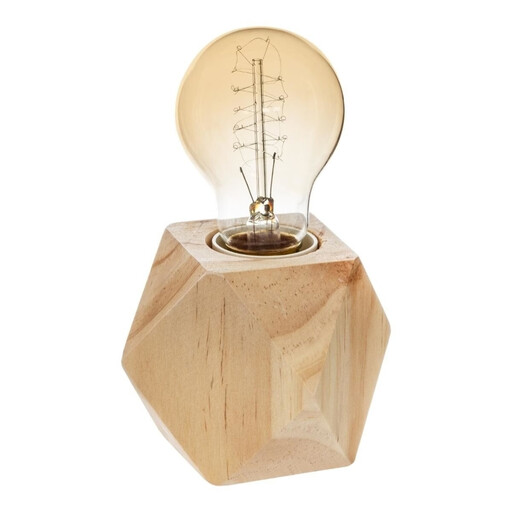
Why this product suits this profile: This compact table lamp is designed for small spaces such as bedside tables, consoles or desks. It is 8 cm high and has a diameter of 7.5 cm.
The dimensions and maximum wattage of 25 watts are clearly stated. This makes it easier to match the lamp to the available space and the desired LED bulb.
Pine wood, E27 fitting, mechanical switch and IP20 protection rating for indoor use.

Why this product suits this profile: This 150 cm-high wooden or bamboo floor lamp is designed for living rooms, reading corners and children’s bedrooms, complementing Japandi or Scandinavian interiors.
The product details specify a maximum wattage of 60 watts, a cable length of 320 cm and an assembly time of around 20 minutes. This allows you to plan the location in advance.
Three-legged construction, a 50 cm shade diameter and the option to use an external dimmer.
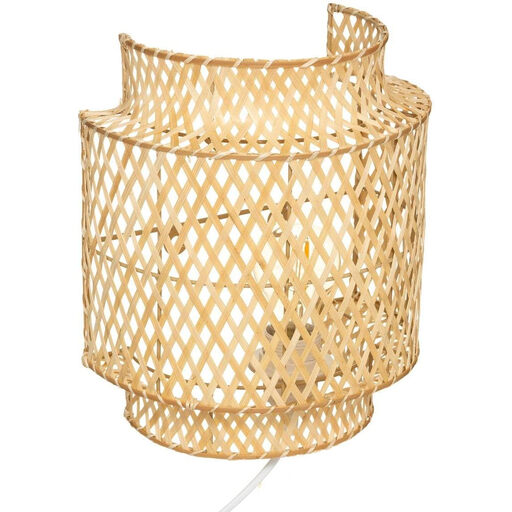
Why this product suits this profile: This bamboo lamp is suitable as decorative wall lighting in hallways, living rooms or bedrooms when permanent connection to the mains is planned.
This is explicitly an indoor lamp supplied without a bulb. The E27 fitting and maximum wattage of 40 watts make it easier to choose a suitable LED bulb.
Woven bamboo shade, compact dimensions of 23 × 15 × 28 cm and FSC information in the product details.
We have put together a complete, regularly updated list of products that fully meet these strict selection criteria and the safety regulations applicable in the EU.
The models listed are intended for indoor use. For bathrooms, covered outdoor areas or damp rooms, only use lamps whose protection rating and intended application are explicitly approved for such environments. For example, an IP20 lamp is designed for dry indoor spaces.
Lifespan depends on the quality of construction, usage, heat generation and care. The materials should be kept dry and protected from prolonged heat. With a lamp that has a replaceable bulb, the lamp itself can continue to be used even when the LED bulb is replaced later on. For certain models, such as the Liby wall lamp, a statutory minimum warranty of two years is specified.
Running costs depend primarily on the bulb’s wattage and how long it is used each day. With the same compatible fitting, a low-wattage LED generally uses less electricity than a bulb with higher power consumption. For a specific calculation, use the formula: Power in kilowatts × operating hours × electricity price per kilowatt-hour. The lamp’s maximum wattage must not be exceeded.