
Lieferung heute & morgen

Qualitätsgarantie

Willkommens-Angebote freischalten: KOSTENLOSE Lieferung | Bis zu 80 % RABATT | Kostenlose 30-Tage-JoyPlus-Testphase
App herunterladen
A wooden ceiling light combines a natural look with space-saving lighting for your living room, bedroom, hallway, kitchen or dining area. But design isn’t the only thing to consider when you buy. Terms such as wood-effect finish, warm white light and LED technology can mean very different things from one model to another.
Our guide explains which technical details matter and which styles suit different homes.
A wood-effect ceiling light may be made from plastic with a decorative finish. That’s not necessarily a drawback, but it does affect the look and feel of the material, the weight and the care it needs. If you’re expecting real wood, look for specific terms such as “wood”, “solid wood” or “wood veneer” in the product description.
It’s also important to check the material details for decorative features made from wooden beads or slats. The phrase “natural look” on its own doesn’t confirm that a product is made from real wood.
A warm-white ceiling light typically has a colour temperature of around 2,700 to 3,300 Kelvin. Colour temperature describes the look of the light, not how much light it produces. For brightness, check the luminous flux in lumens.
A model with 2,300 or 2,400 lumens can light a medium-sized room quite differently from an E27 ceiling light, whose brightness depends on the bulbs you fit.
With a wooden LED ceiling light, check whether it has an integrated LED or replaceable bulbs. An integrated LED can save space, but it isn’t necessarily dimmable. With a light that has an E27 fitting, you can replace the bulb; whether it can be dimmed depends on the bulb, the light and the dimmer you use.
So check for a specific statement such as “dimmable”, “non-dimmable” or “3-step dimming”.
Warm white light around 3,000 Kelvin is a popular choice for living rooms and bedrooms. It feels less cool than neutral white light and works well with wooden surfaces and fabric shades.
You should also check the luminous flux:
Ceiling height, wall colours and furniture also affect how bright a room feels.
The diameter should suit the size of the room and where you plan to install the light. A light around 35 to 39 centimetres in diameter is often a good choice for a bedroom, hallway or smaller living area. Larger lights or models with multiple bulb fittings can make more of a visual statement in a spacious dining area.
Check the height, too. A fabric shade, wooden beads or a longer central section may feel intrusive in rooms with low ceilings, particularly above walkways.
With an E27 ceiling light, check the maximum permitted wattage. Use only suitable bulbs and don’t exceed the rating shown on the product label.
When fitting a ceiling light, the electrical connection must only be carried out by a suitably qualified person. Details such as the protection class, indoor-use rating and, where applicable, IP20 help you assess whether a light is suitable. IP20 is intended for dry indoor spaces, not damp outdoor areas.
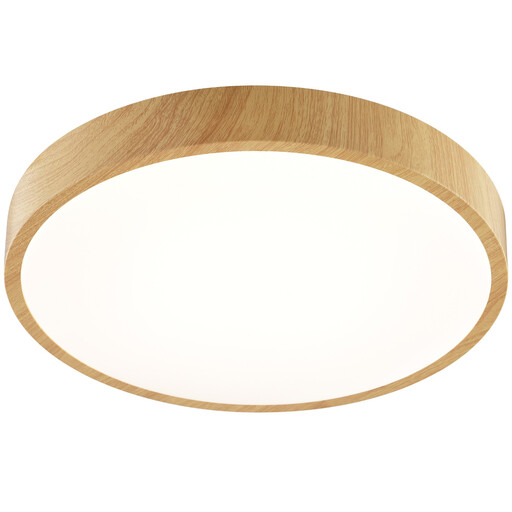
Why it suits this buyer: Integrated LED technology and a 38.5 cm diameter make this a straightforward choice for a living room, bedroom or hallway.
The product details clearly specify 24 W, 2,300 lumens, 3,000 Kelvin and “non-dimmable”, making its brightness and limitations easier to assess.
24 W LED, 2,300 lm, warm white 3,000 K and plastic with a wood-effect finish.

Why it suits this buyer: Real wood, integrated LED lighting and three-step dimming combine clear material information with added convenience for living rooms and bedrooms.
The product details distinguish between wood, plastic and metal, and specify three dimming levels as well as a memory function.
35 cm diameter, 2,400 lm, 24 W, 3,000 K, integrated LED and FSC information.
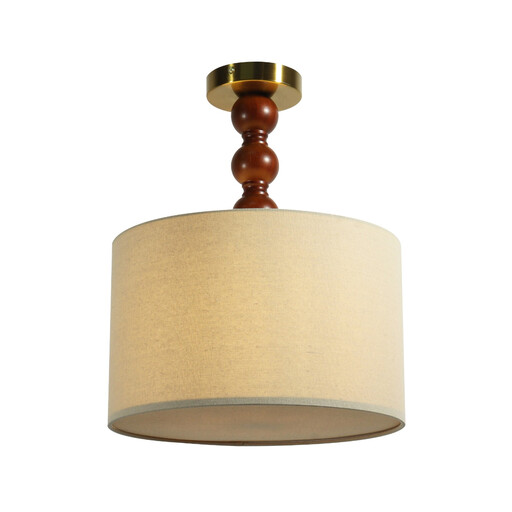
Why it suits this buyer: The linen shade with wooden and gold-tone details is a good choice if you’re looking for a decorative ceiling light with a replaceable E27 bulb.
The product details specify the linen shade’s dimensions, an E27 ceramic fitting and a maximum power rating of 60 W, making it easier to choose a suitable bulb.
E27 fitting, linen fabric shade, 35 cm diameter and suitable for indoor use.
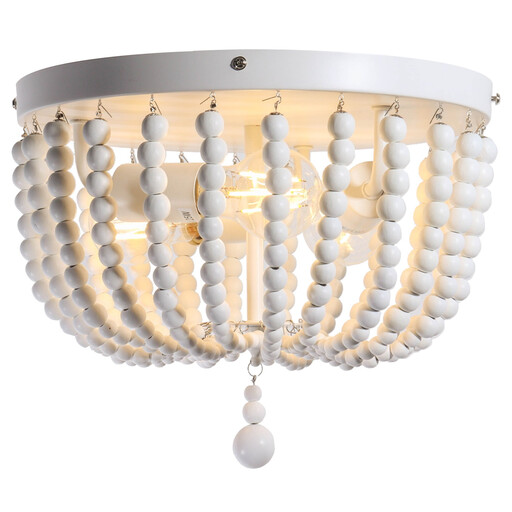
Why it suits this buyer: White wooden beads and three E27 fittings create a striking feature above a table or in a living area.
The three E27 ceramic fittings and maximum power rating of 25 W are clearly stated. Choose bulbs that meet these specifications.
Wooden bead shade, three E27 fittings, a diameter of around 32.6 cm and suitable for indoor use.
We’ve put together a complete, regularly updated list of products that meet these strict selection criteria and the applicable EU safety regulations.
Warm-white models with a colour temperature of around 3,000 Kelvin are often a good choice for bedrooms. A dimmable light lets you adjust the brightness for different occasions. Also check the diameter and height, and whether the light shines directly downwards or is diffused through a fabric shade.
Energy use depends on the wattage and how long the light is switched on. A 24 W light running for one hour uses 0.024 kilowatt hours. With an E27 ceiling light, energy use depends on the bulbs fitted. Check the product details for the specific energy efficiency class and wattage.
An E27 fitting alone doesn’t make a ceiling light dimmable. The bulb, dimmer and light all need to be compatible. For lights with integrated LEDs, the product details will state whether dimming is possible, for example, whether it has three-step dimming or is non-dimmable.