
Lieferung heute & morgen

Qualitätsgarantie

Willkommens-Angebote freischalten: KOSTENLOSE Lieferung | Bis zu 80 % RABATT | Kostenlose 30-Tage-JoyPlus-Testphase
App herunterladen
A wooden chalkboard easel is a versatile tool for both information and decoration. It combines a writable surface with a sturdy wooden frame and is used in both private and commercial settings. Choosing the right model depends on specific requirements for size, design, and functionality. This article analyses various types and presents a selection of models based on their technical specifications.
The decision to opt for a freestanding wooden chalkboard or a smaller tabletop display should be based on objective criteria. The following aspects are crucial for functionality and longevity.
The type of wood and its craftsmanship determine the easel's stability and appearance. Solid wood offers high durability, while engineered wood can provide a more uniform surface. The surface finish—whether natural, lacquered, in a vintage chalkboard style, or treated with a special stain—affects not only the look but also its weather resistance for outdoor use. The construction, typically an A-frame design, ensures a stable footing. Models with hinges allow for space-saving, foldable storage.
The dimensions of the board are critical for its intended application. Large chalkboard displays are ideal as menu boards for restaurants or as wooden wedding signs, as they ensure good readability from a distance. Smaller models, such as a tabletop chalk sign, are designed for use on counters, tables, or shelves to display prices, brief notes, or table reservations. The proportions of the writing surface should be appropriate for the planned content.
The quality of the board's surface is crucial for writing and cleaning. A smooth, non-porous surface makes writing easier and allows for residue-free erasing. It is important to check whether the writable wooden board is designed for conventional chalk, liquid chalk markers, or both. Using unsuitable markers can permanently damage the surface.
Some models offer additional features that enhance their practical utility. A chalkboard with a shelf provides space for chalk, erasers, or decorative items like small plants or products. Such integrated shelves can expand the display area and improve the overall stability of the stand.
The following selection is based on an analysis of product features and potential applications.
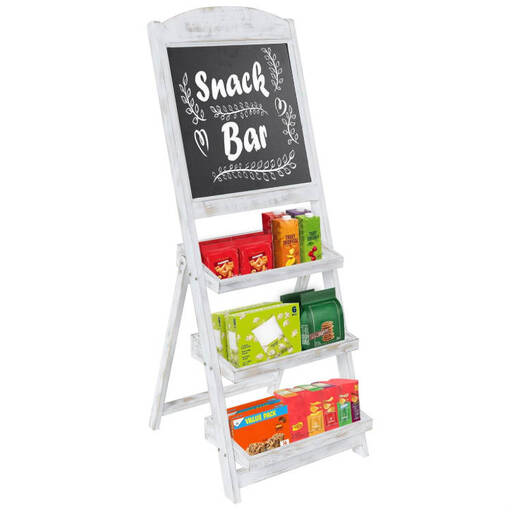
Why We Recommend This Product This model combines a writable board with three integrated shelves. The wooden construction with a "Shabby Whitewashed" finish is ideal for decorative purposes where both an information surface and storage space for decorative objects or plants are needed. Its foldable design allows for easy storage.
Product Specifications:
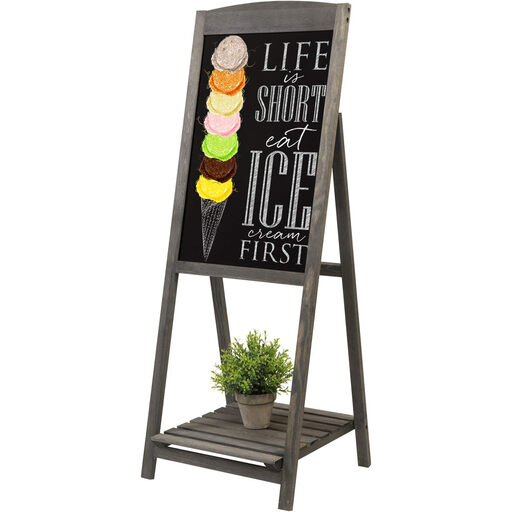
Why We Recommend This Product This A-frame wooden standing board is distinguished by its stability and generous writing surface. The vintage grey finish gives it a classic look. The bottom shelf provides space for decorative accents or for displaying small goods, and it enhances the structure's stability.
Product Specifications:
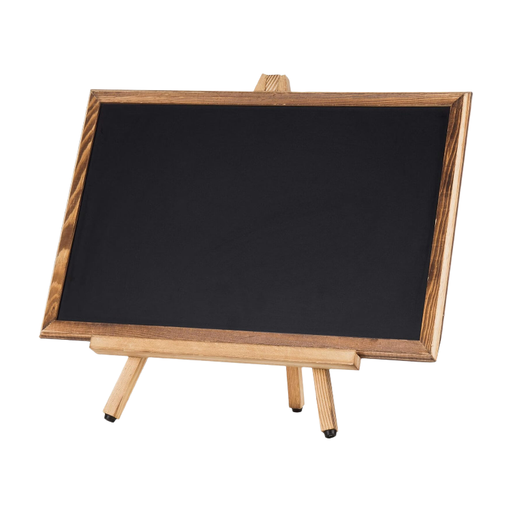
Why We Recommend This Product This compact model is designed as a tabletop display. The torched wood ("Burnt Wood") frame and detachable easel stand make it a portable solution. The board's surface offers good visibility for messages on tables or counters. According to the manufacturer, the surface is suitable for both dry chalk and liquid chalk markers.
Product Specifications:
If a chalkboard easel isn't the right solution for your needs, other organisational tools might be worth considering. For structured planning and visualising appointments or tasks, options like wall calendars or planners are available.
Discover more products in our Calendars category.
1. How do you clean a wooden chalkboard? To clean a board designed for conventional chalk, a slightly damp sponge or a soft cloth is generally recommended. For stubborn residue, a mixture of water and a small amount of vinegar can help. The board should be allowed to dry completely afterwards. Always follow the manufacturer's specific cleaning instructions.
2. What type of chalk is suitable for an easel chalkboard? This depends on the composition of the board's surface. Traditional boards are designed for low-dust chalk. Many modern surfaces are also compatible with liquid chalk markers, which produce a crisper script. Check the product description before use, as unsuitable markers can permanently damage the surface.
3. What can a chalkboard easel be used for? The applications are diverse. In the restaurant industry, it serves as a menu or specials board. In retail, it's used for customer engagement and promotional messages. At events like weddings or parties, it functions as a welcome sign, seating chart, or directional sign. In a private setting, it is used as a decorative element, a memo board, or for creative projects.